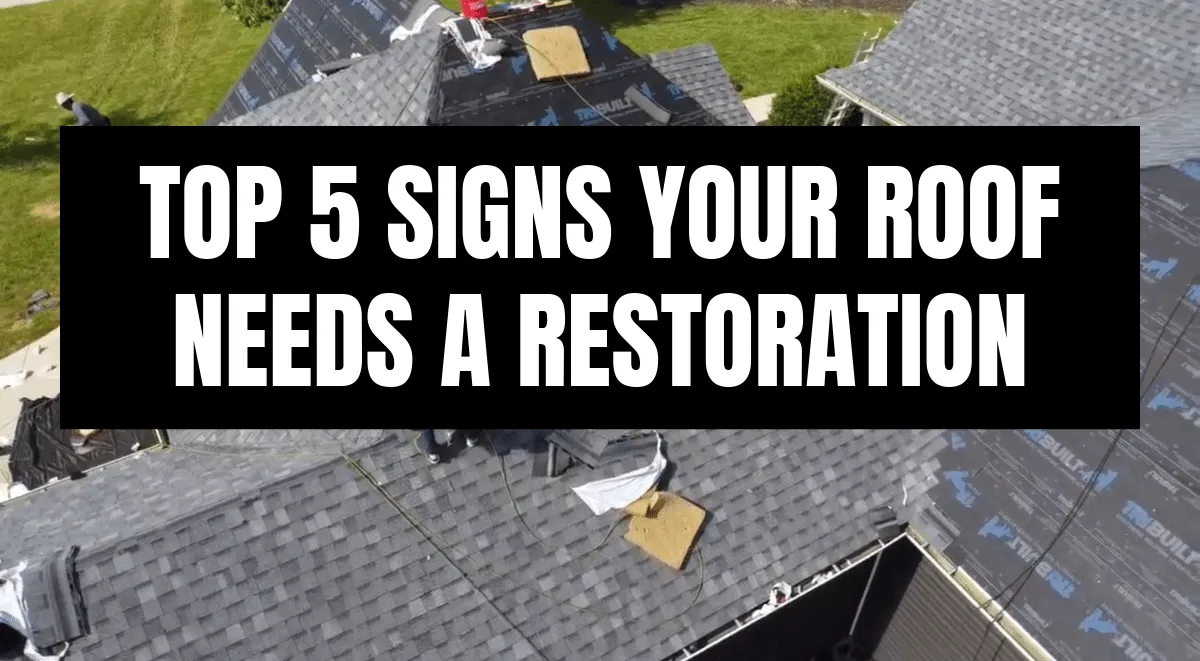
When your roof starts to show wear and tear, homeowners often assume the only solution is a full replacement. But in many cases, your roof can be saved—and its lifespan extended—with a thoughtful restoration. At Gorilla Roofing , we believe that restoration often delivers excellent value when the situation calls for it. Here are the top 5 signs your roof should be restored rather than completely replaced.
1. Surface Wear and Granule Loss—but No Structural Damage
One of the clearest indicators that your roof might be ready for restoration is visible granule loss and surface-level wear.
- Asphalt shingles protect your home using ceramic granules that shield against UV rays and water damage. When these begin to wash away, shingles lose much of their protective power; however, the roof decking below may still remain solid.
- Minor surface cracking , cupping, or dry, rigid shingles also suggest age-related deterioration, not necessarily catastrophic failure. Restoration treatments can penetrate and rehydrate shingles, extending their life rather than discarding them.
- If the roof structure remains sound, restoration can refurbish the outer layer—sealing, recoating, and rejuvenating the coating without tearing off the shingles.
In short: when damage is cosmetic and superficial rather than structural , restoration is often the smart choice.
2. The Roof Is Under ~20 Years Old and Free of Major Leaks
The age of your roof and the absence of widespread leakage are key factors in determining restoration eligibility.
- Asphalt shingle roofs typically last 20–25 years, while tile, slate, and metal options often reach 30–50+ years with proper care.
- Restoration is usually feasible when the aging roof is under ~20 years old and the underlying decking, framing, and underlayment remain intact and dry.
- Localized leaks (e.g. near flashing or one valley) can often be fixed during restoration. But if leaks are chronic across the roof or moisture is widespread, that's often a signal that the underlying structure is failing, suggesting a replacement is necessary.
- Restoration is also a viable option after storm or fire damage , as long as the roof’s frame and underlayment remain structurally sound. Many roofs survive wind, hail, or minor fire events with damage limited to outer layers—perfect candidates for targeted restoration.
Summary : If your roof is younger than about 20 years and water damage is limited in scope, restoration is often feasible and effective.
3. Recoverable Storm or Fire Damage Without Full Structural Failure
Severe weather or fire can wreak havoc on your roof, but not all damage calls for a full tear-off and replacement.
- Storm damage , such as wind-lifted shingles, fallen branches, or hail impact, can often be repaired and restored if the decking and trusses remain intact.
- After minor fire incidents , smoke and surface charring may look dramatic, but can be cleaned, treated, and sealed. In cases where framing and underlayment are unaffected, restoration offers a faster, more cost-effective solution.
- Insurance companies often recommend partial restoration to reduce claim costs and timeline disruptions, especially for asphalt, metal, and composite roofs that can be sealed or recoated.
Key point: If storm or fire damage is localized or surface-level and the roof’s skeleton is solid, restoration brings your roof back to life without full reconstruction.
Navigating a storm-damaged roof? Learn how to file your insurance claim effectively with our roof damage claim process guide .
4. Affordable Cost and Eco‑Friendly Option
In nearly every case, roof restoration costs significantly less than a full replacement, and offers environmental benefits too.
- Restoration typically costs $3,000–$10,000 , depending on roof size, complexity, materials, and extent of cleaning or coating needed.
- Replacement costs often range from $5,000–$10,000 or higher , with the average asphalt shingle roof replacement falling around $7,000–$10,000.
- Restoring your existing roof avoids the tear‑off and disposal of old shingles , reducing landfill waste and carbon footprint.
If you’re looking to save money, minimize environmental impact, or delay a costly project while maintaining roof integrity, restoration often shines.
Curious how much a full replacement would cost instead? See real breakdowns in our Roof Replacement Costs Guide .
5. You Want Quick Service with Minimal Disruption
Since roof restoration does not involve tearing off layers, the process is faster and less intrusive :
- Restoration projects can often be completed in a day or two , depending on roof size and complexity.
- With minimal tear-off, your home experiences less noise, less debris , and less visual disturbance.
- For homes with limited roof access or interior finishes that are sensitive to dust or movement, restoration lets you preserve normal routines through the process.
Summary Table: Restoration vs Replacement
When Restoration May Not Be the Right Choice
Even if restoration looks appealing, here are situations where it may not be suitable:
- Roof nearing or past 20–25 years , especially if it’s deteriorated faster due to poor ventilation or sun exposure.
- Frequent leaks or interior water damage , suggesting deck rot or failed waterproofing layers.
- Structural issues : sagging, soft spots, or evidence of rot in decking or rafters.
- Multiple layers of shingles already —some jurisdictions limit layers, and restoration becomes ineffective.
- Changing materials : if you want to upgrade material type for performance or curb appeal (e.g. switching to metal or slate), replacement is necessary.
- If local building codes or insurance considerations demand a full replacement to meet compliance or payout.
Not sure if that leak has caused more trouble inside? Check for these 5 Signs of Mold from Roof Leaks .
When Restoration Makes Sense: Example Scenarios
- Scenario A : Your asphalt-shingle roof is 14 years old, shows several bald or granule-poor patches, but has no leaks, and the shingles remain flat. Restoration can add 10+ years of life.
- Scenario B : You plan to sell in the next 2–3 years. Restoring the roof improves curb appeal at a fraction of the replacement cost.
- Scenario C : Your roof has a couple of small leaks near flashing and is showing signs of aging, but the overall structure is sound. A targeted restoration avoids replacing the entire roof.
- Scenario D : A tree branch caused a hole in one corner of the roof, but the rafters and underlayment are intact. Restoration with repairs and sealing fixes the issue without full tear-off.
Restoration or Replacement: What’s Best for Your Roof?
If your roof is under ~20 years old , shows surface wear , or has suffered localized storm or fire damage but is structurally sound , then restoration is likely your best option .
In contrast, if your roof is older, leaking broadly, sagging, or structurally compromised—or if you want a new roof system entirely—then replacement is the safer, long‑term solution.
At Gorilla Roofing, we pride ourselves on delivering top-notch roofing services with integrity and professionalism. Our team is licensed, insured, and committed to exceeding your expectations.
Call us today at (636) 295-1212 Request a FREE roofing estimate
For expert assistance and personalized restoration plans, contact Gorilla Roofing today.