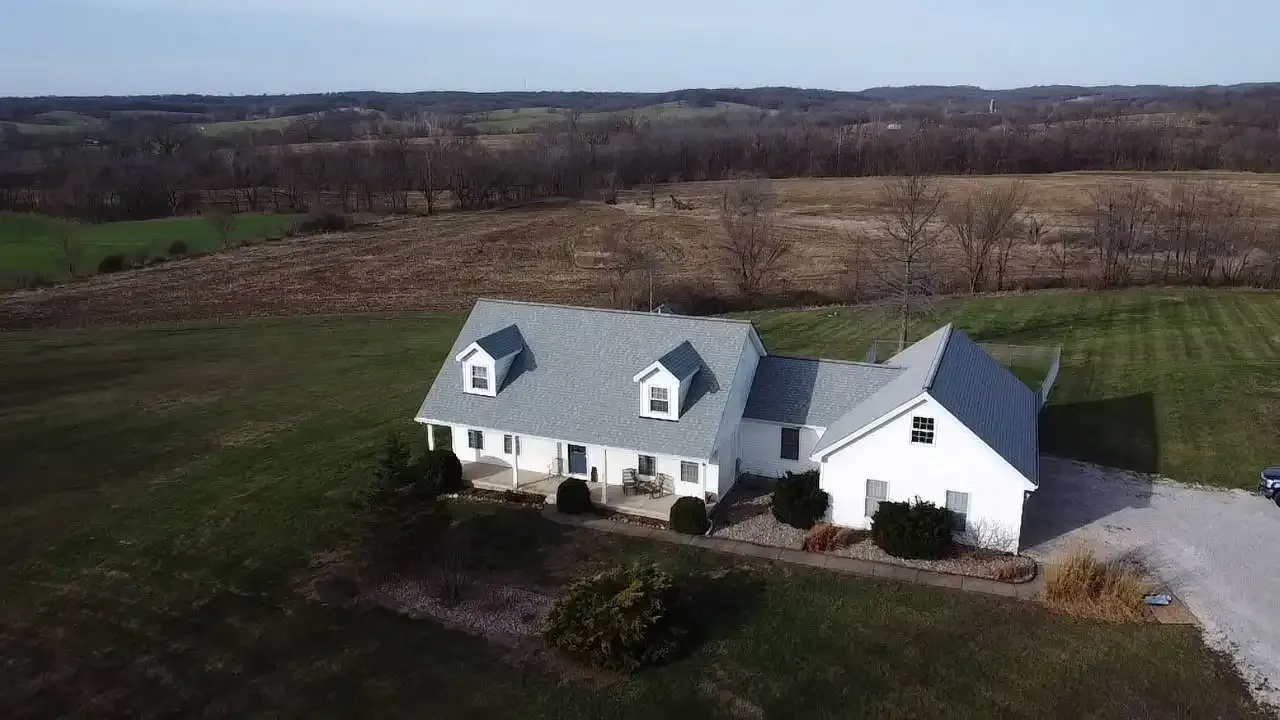
Most hail damage doesn't look like damage. Not from the driveway. Not from the street. Not even from a ladder at the eave if you don't know what you're looking for.
A hailstone hits an asphalt shingle and does one of two things. If it's big enough, it leaves a visible bruise — a dark, soft spot where the granules scattered and the mat underneath took a hit. If it's smaller — say, half an inch to three-quarters — it may crack the mat internally without moving a single granule. From the ground, the roof looks fine. From the attic, nothing's leaking yet. But the shingle has been compromised, and the next UV season or the next freeze-thaw cycle will find that crack.
This is exactly the kind of damage that gets missed on a two-minute driveway inspection. It's also exactly the kind of damage that insurance adjusters sometimes push back on — because there's no clear photo, no obvious impact point, no obvious pattern. That's where drone technology changes the math.
What a Drone Actually Sees That You Can't
A 4K drone camera flying 20 feet above your roof captures every slope, every valley, every ridge cap, every flashing joint — in a single pass. No boots sliding around on wet shingles. No missed corners because the ladder angle was awkward. The footage is steady, repeatable, and documented.
More importantly, it sees the pattern. Individual hail strikes can be ambiguous. But when you pull back and look at the entire roof surface at once, the impact pattern becomes obvious — circular bruises distributed across the slope in a consistent direction, matching the storm's track. That pattern is what separates legitimate hail damage from normal wear, and it's what an insurance adjuster needs to see before they approve a claim.
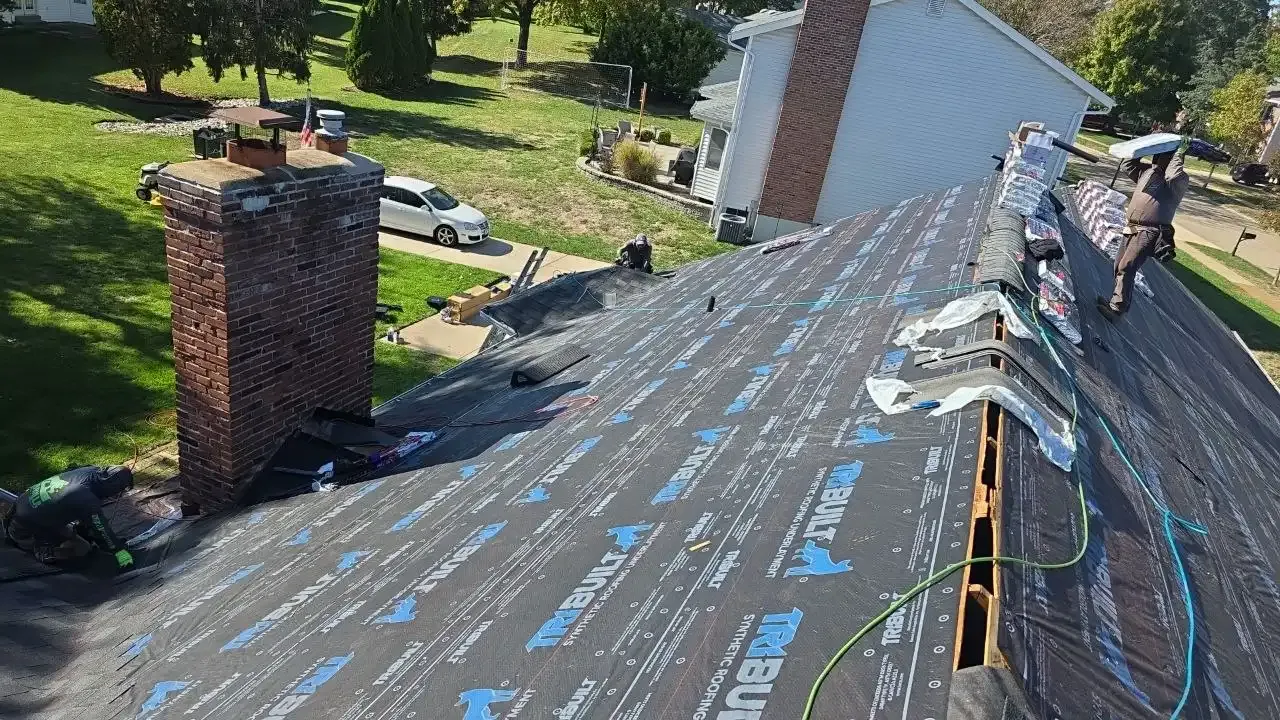
One bad storm can leave 200 impact points on a single roof. From the driveway, you might spot two or three. A drone finds all 200 — and photographs each one.
Modern inspection drones also carry thermal sensors. Thermal imaging detects temperature differentials in the roof deck — areas where moisture has gotten under the shingles and is held against the wood. These wet spots are invisible to any camera, standard or drone. But they show up immediately on a thermal scan as cooler pockets surrounded by warmer dry decking. By the time a wet spot becomes a ceiling stain, you've already lost decking.
The Specific Damage Drones Catch That Ground Inspections Miss
There's a short list of damage types that are routinely missed on standard inspections and routinely found on drone inspections. These aren't edge cases — they're common.
- Micro-fractures in shingle mats from sub-inch hail — no granule loss, but the fiberglass reinforcement is cracked
- Damaged ridge caps — the highest point of the roof takes the most direct hits but is the hardest to walk to safely
- Flashing lifts at valleys and chimney bases — impact vibration can break the seal without tearing anything
- Dented or cracked pipe boots — soft metal collars around plumbing penetrations get dinged easily and start leaking slowly
- Gutter and downspout damage — dimples across aluminum gutters confirm the storm produced hail and help establish the claim
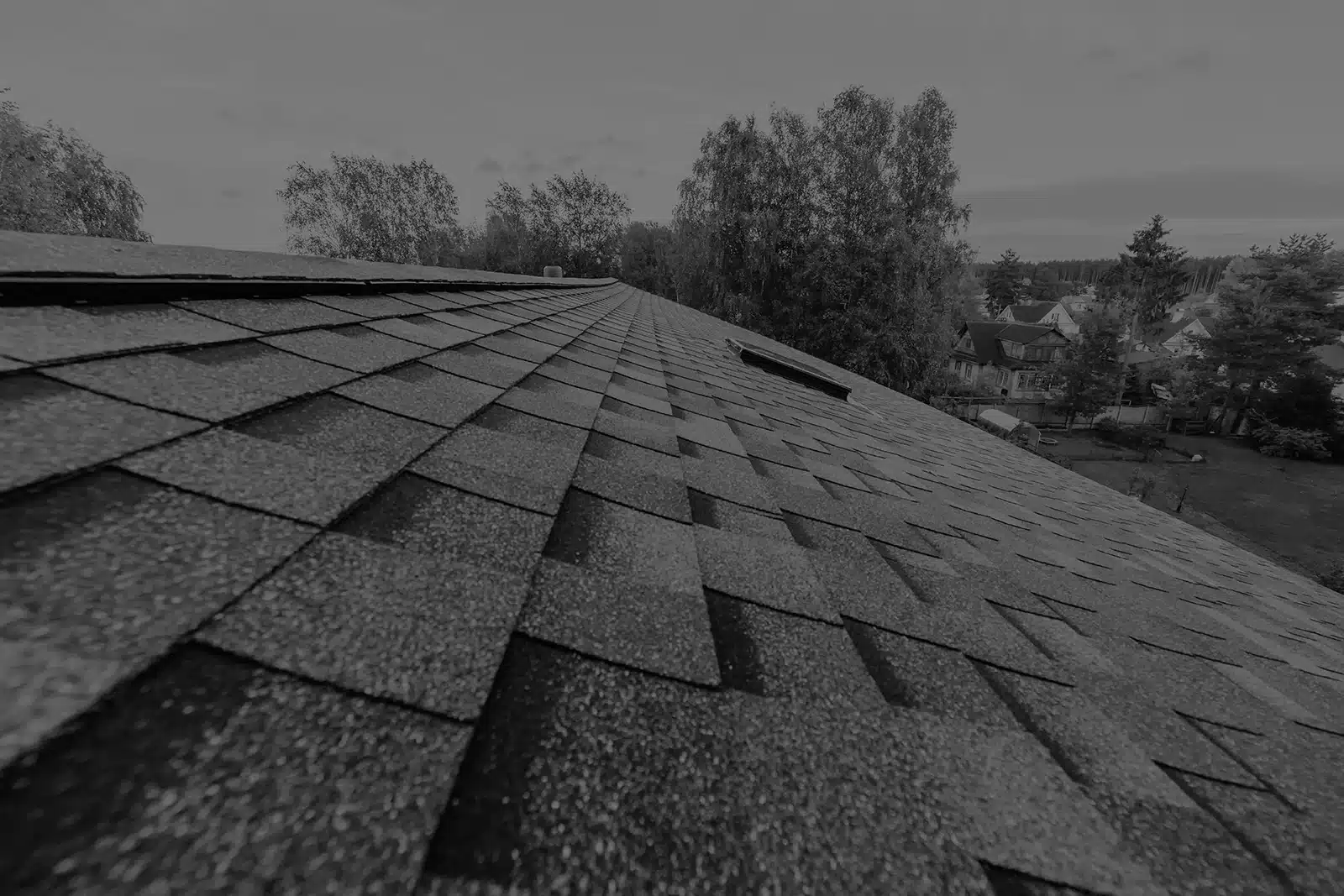
- Granule displacement patterns — concentrated granule loss in one direction points to impact, not just age
Gutter damage matters more than most homeowners realize. An adjuster who's skeptical about shingle bruising will have a harder time arguing with 40 linear feet of clearly dimpled aluminum gutter. It's objective, visible, and dateable. A drone photo of every gutter section becomes part of your claim file.
How This Changes the Insurance Claim Process
Filing a storm claim without documentation is like going to court without evidence. You might win. But you're relying on the other side to be generous, and insurance adjusters are not paid to be generous.
When we do a drone inspection before the adjuster's visit, we build a complete photo file: every impact point, every damaged surface, timestamped and GPS-tagged. We can overlay that documentation against the storm track data from NOAA — date, time, hail size, path. That combination is hard to dispute.
It also changes who's in control of the conversation. When you have your own inspection report going into an adjuster visit, you're not waiting to see what they find. You're walking them through what you've already documented. That's a fundamentally different negotiating position.
A claim supported by drone footage and storm track data is a claim that moves faster and settles closer to full replacement cost.
Gorilla's storm damage work is built around this process. We inspect first, document everything, and then sit with you through the adjuster visit if you want us there. Our crews handle insurance restoration across Missouri and Illinois — if you've had a storm recently, the right time to inspect is now, before a second storm hits and muddies the damage timeline. You can learn more about how we handle storm claims on our storm damage services page.
When Should You Request a Drone Inspection
You don't have to wait for a known storm. There are several situations where a drone inspection makes sense even without a specific weather event.
- Within two weeks of any storm with reported hail — even quarter-size hail causes real damage
- Before listing your home for sale — a clean inspection report is a selling point; an undocumented damaged roof is a negotiating liability
- At the 5-year and 10-year mark of a new roof — confirms warranty conditions are being met
- After any repair by a previous contractor — verify the work was done correctly before the warranty period runs
- If your neighbor filed a hail claim — roofs on the same block took the same storm
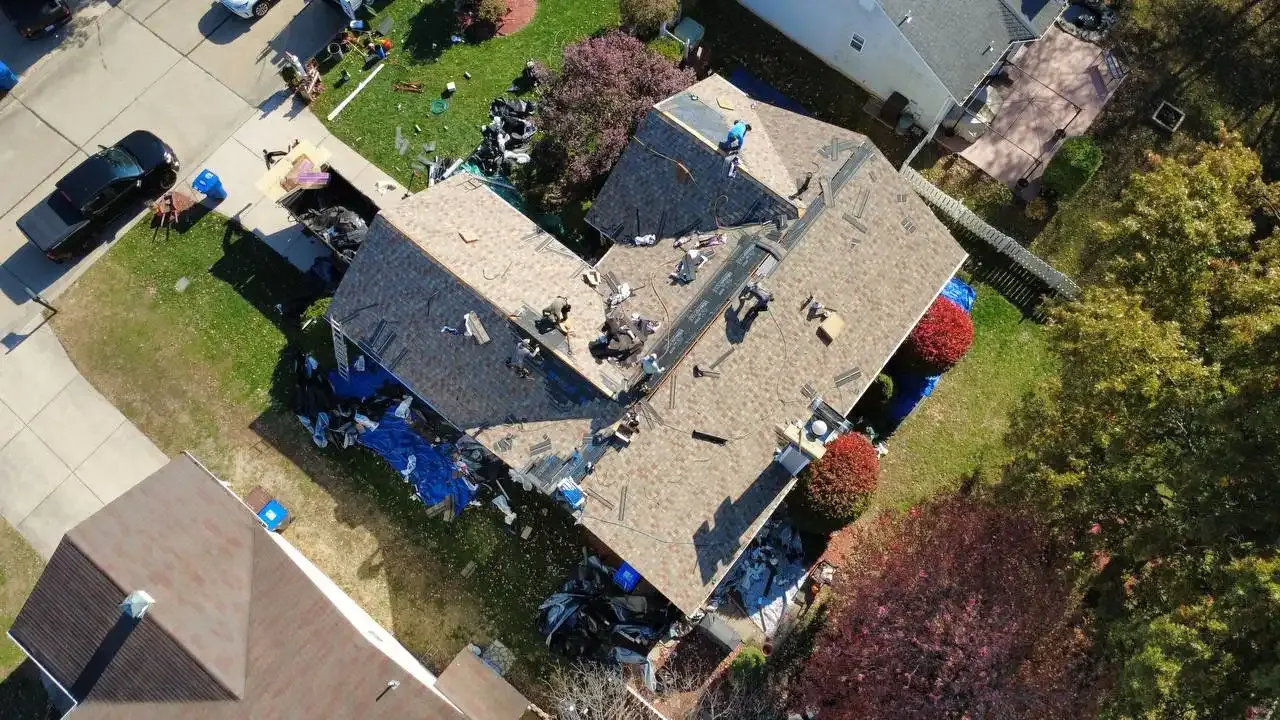
The "my neighbor filed a claim" scenario is one of the most overlooked. Hail doesn't skip houses. If the house two doors down sustained damage that got approved, there's a strong chance your roof did too — it just hasn't leaked yet. An inspection costs nothing, and finding damage early means you're filing the claim on your timeline, not after a ceiling collapses.
What Happens After We Inspect
If we don't find damage, we'll tell you that. We're not going to manufacture a claim that isn't there — that would be fraud, and it's not how we operate. You'll get a clean inspection report you can keep on file.
If we do find damage, we walk you through everything we found before we suggest next steps. You'll see the photos. You'll understand what you're looking at. Then we help you decide whether to file a claim, whether the damage is claim-worthy versus repair-worthy, and what the process looks like either way.
We've done hundreds of insurance restorations across the St. Louis metro and into Illinois. We know what adjusters look for, where claims get stuck, and how to build a file that holds up. That experience is what you're getting when you call us after a storm — not just a company with a drone, but a team that knows how to use the evidence.
Missouri and Illinois hail season runs hard from April through September, with May and June typically the most active months. If there's been a storm in your area in the last 60 days and you haven't had your roof inspected, the window is still open. Don't wait until your ceiling tells you.