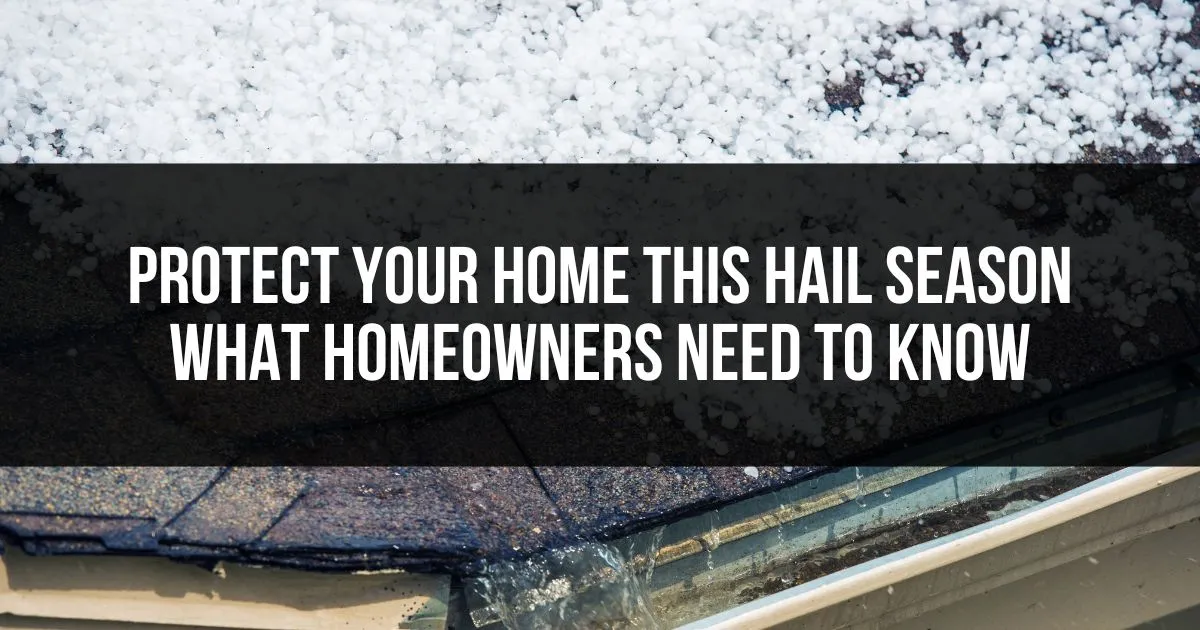
A big Missouri storm rolls through and the next morning you walk outside, look up at your roof, and think: something is definitely wrong up there. Maybe you see a few shingles in the yard. Maybe your neighbor's car has dents in it. Maybe both. Welcome to the most common call we get at Gorilla Roofing, and unfortunately, it is not always a simple one.
Here is the part most homeowners do not realize until they are already deep in a claim: wind damage and hail damage are not the same thing on your insurance policy. They can have different deductibles. They are sometimes listed as separate covered perils. And the way an adjuster documents one versus the other can change whether you get full replacement value or a check that barely covers your deductible. Understanding the difference before you call your insurance company is not just useful. It is genuinely worth money.
The good news is the damage itself tells a story. You just need to know how to read it. Let's walk through what each type of damage actually looks like, how insurance treats them differently, and what to do when your roof took a hit from both at the same time, which happens here in Missouri more often than not.
What Wind Damage Actually Looks Like
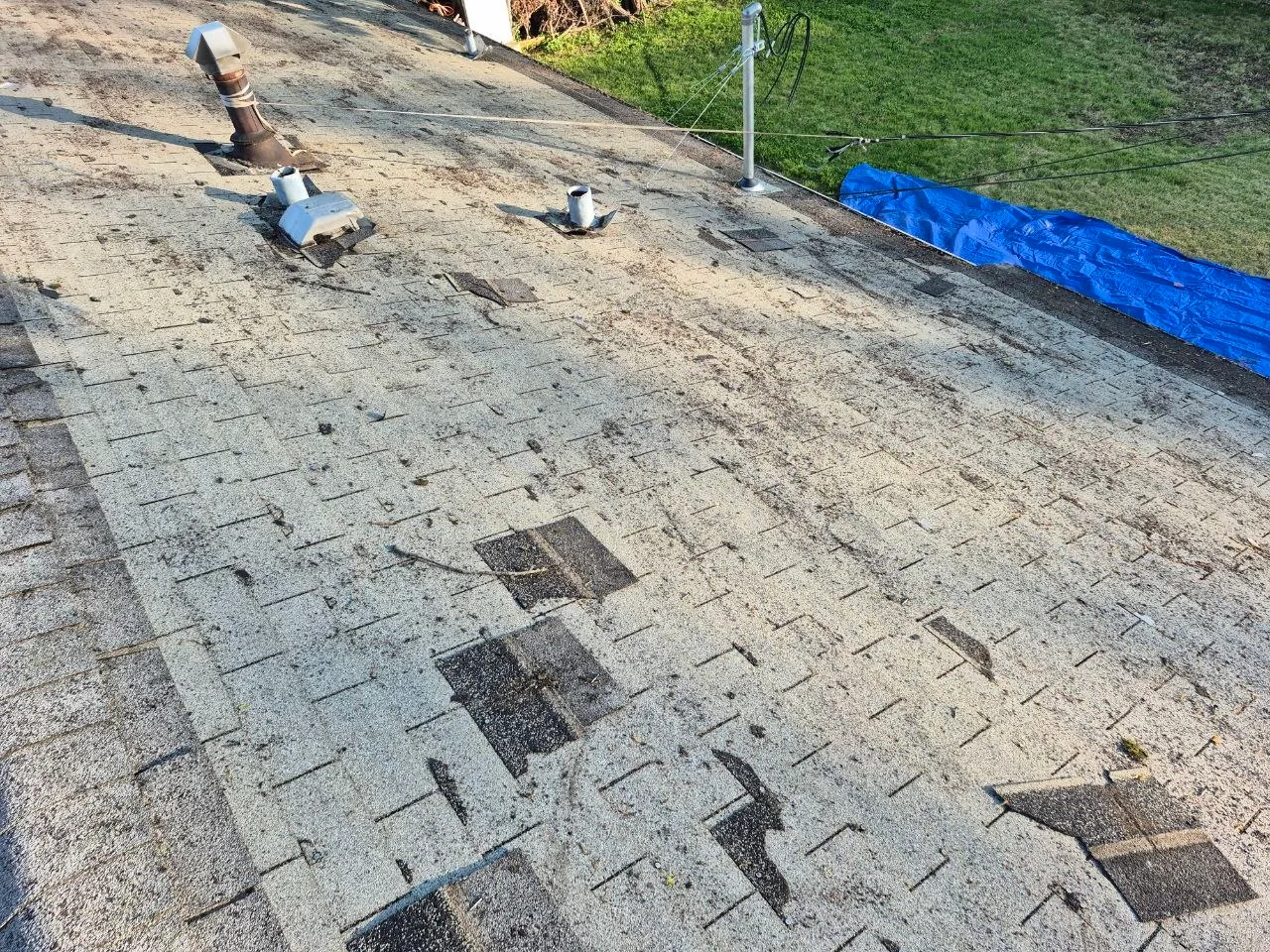
Wind damage is directional. That is the key word to keep in mind. When wind tears across your roof, it tends to attack from one direction and cause damage in a pattern that follows it. Shingles peel back from the leading edge, lift along the ridge, or blow off in strips. You will often see damage concentrated on one or two slopes of the roof, typically the side facing the prevailing wind.
Some of the most common wind damage signs include shingles that are missing entirely, shingles with lifted or creased tabs, granule loss along specific edges, and exposed underlayment in strips rather than scattered spots. Flashing around chimneys and pipe boots also gets hit hard by wind, and that is where slow leaks often start after a storm.
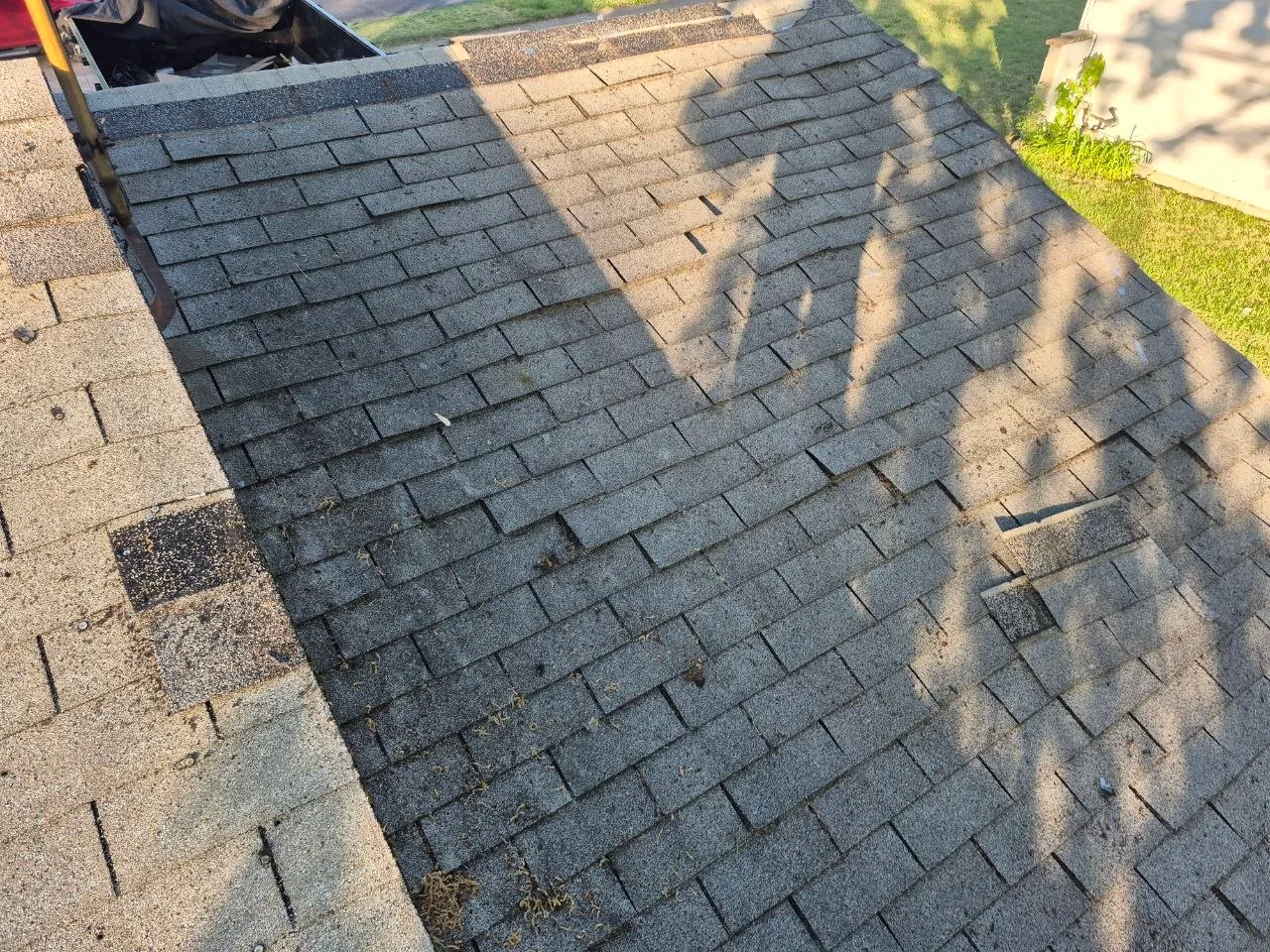
One thing that trips people up: wind can cause damage that is not immediately obvious from the ground. A shingle that looked fine from the street might have had its seal strip broken, meaning water gets underneath the next time it rains. That kind of damage does not scream at you. It whispers for about six months and then shows up as a ceiling stain.
If the damage follows a direction and shows up more on one side of the roof than the other, wind is almost certainly the primary cause.
What Hail Damage Actually Looks Like
Hail damage does not care about direction. It falls straight down, and it hits everything. If your roof took hail, you should see damage distributed across all slopes, not concentrated on one side. The characteristic sign is a circular impact mark on the shingle, often with a soft spot in the center where the mat beneath the granules has been bruised or cracked. Adjusters call these spatter marks, and they look a bit like someone went up there with a ballpeen hammer.
Hail also leaves evidence beyond the roof. Check your gutters for dents, your downspout for dings, your AC condenser fins, any painted wood trim, and your window screens. If those show impact marks consistent in size, you have a strong supporting case that hail caused the roof damage too. Adjusters look at this corroborating evidence, and so should you before your inspection.
Size matters here as well. Hail under about 1 inch in diameter may cause cosmetic damage but not always functional damage to the roof system. Hail at 1.5 inches and above starts breaking through the granule layer and damaging the asphalt mat itself, which is what shortens shingle life and what insurance companies are generally required to cover. Our storm damage repair team documents this distinction on every inspection we do.
Why Insurance Treats Them Differently
This is where things get interesting, and by interesting I mean complicated in a way that can cost you several thousand dollars if you are not paying attention.
In Missouri and Illinois, many homeowner policies now carry a separate wind and hail deductible. Your standard deductible might be $1,000, but your wind and hail deductible could be 1% or 2% of your home's insured value. On a home insured at $400,000, that is a $4,000 to $8,000 deductible before the insurance company writes you a single check. That is not a typo. Carriers started pushing these policies across the Midwest after several expensive storm seasons, and a lot of homeowners signed up without fully registering what they agreed to.
Beyond deductibles, there is the question of actual cash value versus replacement cost value. Some policies cover wind and hail claims at ACV, meaning they factor in depreciation based on your roof's age. If your roof is 18 years old, an ACV settlement might pay out a fraction of what a new roof actually costs. An RCV policy pays to replace it at today's prices. If you have never looked up which one you have, now is the time.
The single most useful thing you can do before filing a claim is pull out your policy and find your wind and hail deductible. It might be the same as your standard deductible. It might be dramatically higher. You need to know which one you are dealing with.
Named perils policies add another layer. These only cover damage from perils specifically listed in the policy. If your policy lists wind but not hail, or requires damage to meet a specific threshold, damages that fall outside those definitions may be denied even when the roof is clearly wrecked. Our insurance claims team works through this language with homeowners regularly, and the variations from policy to policy are genuinely surprising.
When Your Roof Has Both, Which Is More Common Than People Think
Here in Missouri and Illinois, severe thunderstorms routinely produce both high winds and hail in the same event. A storm that drops 1.75-inch hail is often the same storm that gusts to 70 miles per hour. Your roof does not get to choose which one hits it first, and neither do you.
When both types of damage are present, a few things become important. First, the inspection documentation needs to clearly separate what was caused by wind versus hail, because your adjuster will be doing the same thing, and if your documentation does not match theirs, you lose that argument. Second, if your policy has separate deductibles for each peril, a well-documented claim that correctly categorizes both types can sometimes result in only one deductible applying, depending on how the policy is written and how the damage is characterized.
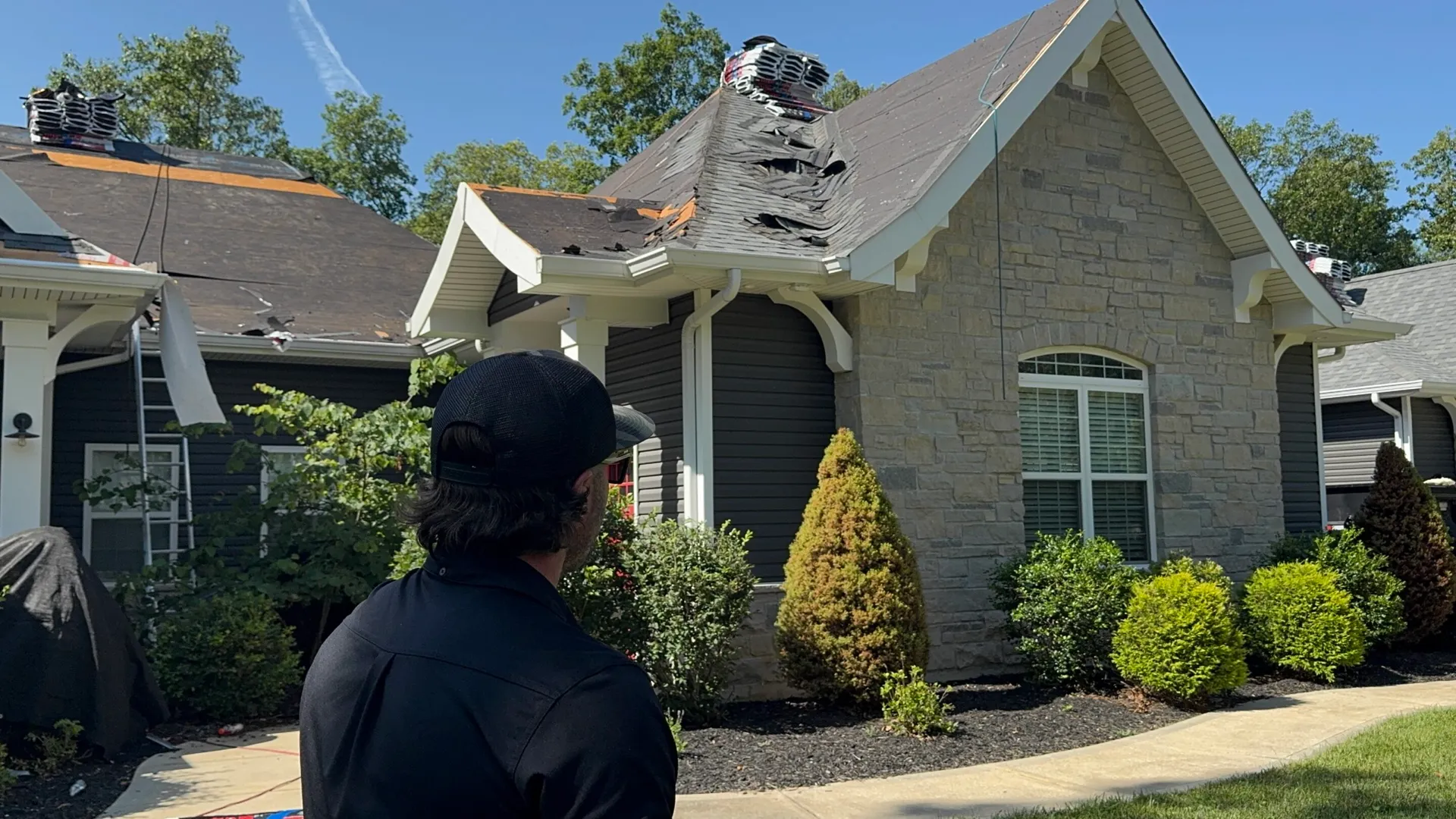
This is exactly why having a contractor who knows how to write an inspection report matters as much as having a good contractor who knows how to swing a hammer. The two are not always the same person, but at Gorilla Roofing they are.
What To Do Right After a Storm
Do not call your insurance company the moment you see something wrong. That sounds counterintuitive, but hear it out. Your first call should be to a roofer you trust who can get eyes on the damage and document it properly before anyone else does. Once you file a claim, the clock starts ticking and your adjuster will be out within days. You want your own documentation in hand before that visit.
Walk around the outside of your house and photograph everything you can reach safely. Gutters, downspouts, window screens, the AC unit, any painted wood trim, and the roof itself if you can see it from the ground or a second-floor window. Note the date of the storm, and if you can find weather service records or local news reports confirming hail size and wind speed, save those too. That kind of documentation is useful when an adjuster tries to minimize the damage.
If you have any active leaks coming inside, take steps to limit the water intrusion, whether that is tarping a section of the roof or placing buckets inside, but do not make permanent repairs before the adjuster has seen the damage. Most policies require that you preserve evidence of the original damage.
After your inspection with us, we can walk through the findings with you before you file, explain what we found, and be present during the adjuster's visit if you want an advocate on your side of the ladder. That is part of what we do for homeowners navigating insurance claims across the St. Louis metro.
The Bottom Line
Wind damage and hail damage look different, document differently, and get treated differently by your insurance carrier. The storm does not care about those distinctions when it is rearranging your shingles at 2 in the morning, but you need to care about them when the sun comes up and you start making calls.
Know your deductible. Know whether you have an RCV or ACV policy. Get a thorough inspection done by someone who knows what they are looking at before the adjuster arrives. And if the claim gets complicated, which it often does when both wind and hail are involved, do not navigate it alone.
We have helped homeowners through hundreds of storm claims across St. Louis, St. Charles County, and the surrounding area. We know what adjusters look for, how to present damage documentation, and how to push back when a claim gets underpaid. If your roof took a hit this season, start with a free inspection and go from there.