A hailstorm rolls through. The wind rips some shingles loose. You think your roof might be damaged, but you are not sure what to do next. That feeling is more common than you think.
Most homeowners have never filed a roof insurance claim before. The process is not complicated, but it does have real traps. Miss a step and you leave money on the table. Rush the wrong part and the insurer has grounds to reduce your payout or deny it outright.
This guide walks you through every stage of a roof insurance claim -- from the morning after a storm to the day your new roof is installed. We work with homeowners across the St. Louis metro on storm damage repair and insurance restoration every week. This is what we have learned.
Know What Your Policy Actually Covers
Before you call your insurance company, pull out your homeowners policy and read the roof section. Not all policies cover roofs the same way, and the differences matter.
There are two common coverage types. Replacement Cost Value (RCV) pays what it actually costs to replace your roof with a comparable new one. Actual Cash Value (ACV) pays replacement cost minus depreciation -- meaning an older roof may net you a fraction of the real cost. If your roof is 15 years or older, roof age changes how insurers treat you, from ACV-only endorsements to inspection letters and non-renewal.
- RCV policies: you receive an initial check, then a supplemental check after the work is completed
- ACV policies: the single payout may not cover the full replacement cost out of pocket
- Some policies have a separate, higher deductible for wind and hail claims -- check before you file
- Wear and tear is almost never covered -- damage must be from a specific storm event
- Flat or low-slope roofs may have different coverage provisions than pitched roofs
If you are unsure what type of policy you have, call your agent and ask directly. Write down the name of the person you speak with and the date. Keep a paper trail from day one.
Document the Damage Before Anything Else
Documentation is the foundation of a successful claim. Adjusters are looking for evidence that a specific storm event caused specific damage. The stronger your documentation, the less room there is for dispute.
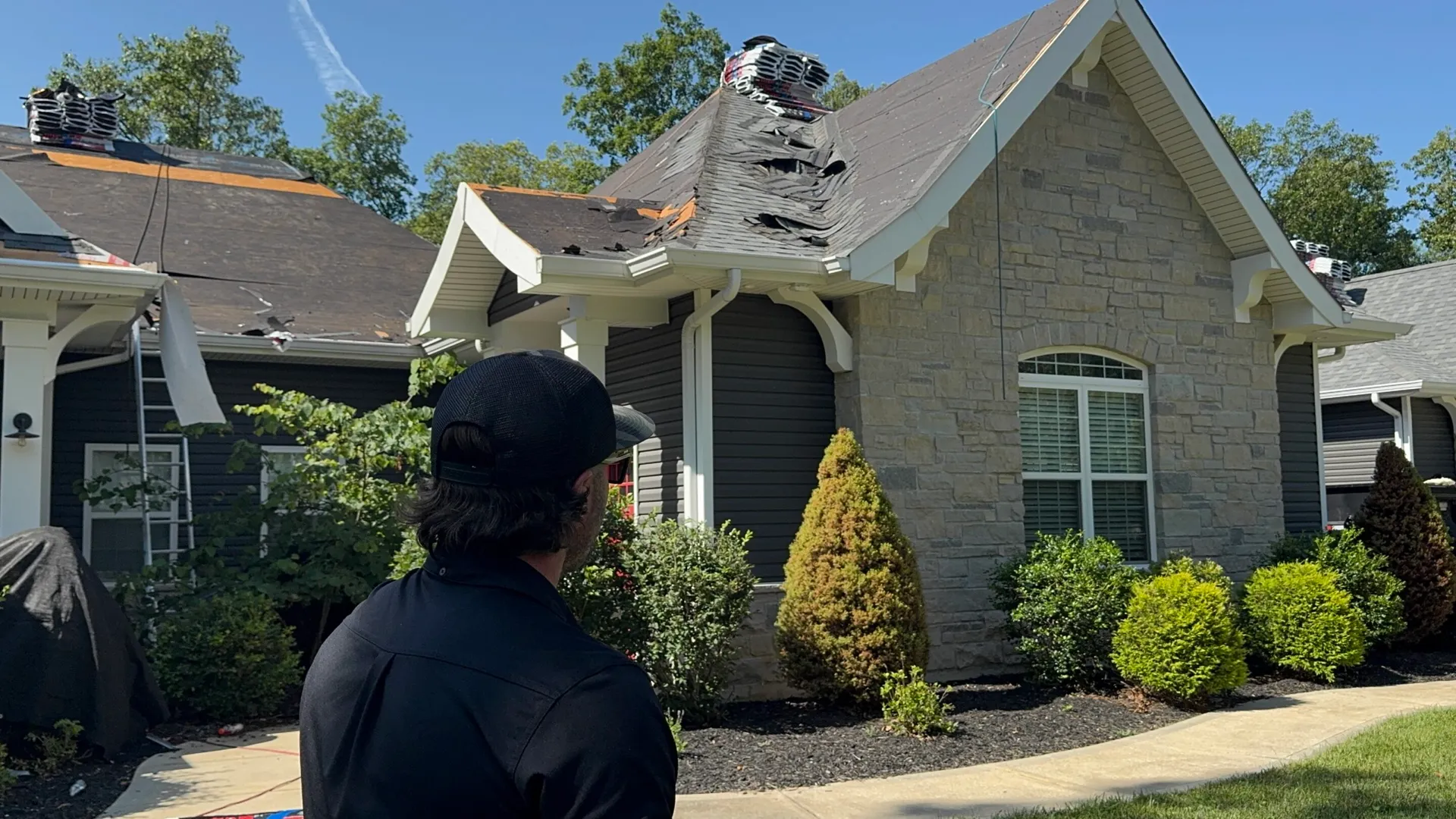
Start on the ground. Walk around your house and photograph everything you can see from a safe position -- missing shingles, dented gutters, damaged siding, debris. Do not climb on the roof yourself.
- Take photos and video from multiple angles -- include the full slope, not just the damaged section
- Photograph damaged gutters, downspouts, siding, skylights, and window screens -- all are evidence of a hail or wind event
- Note the date and time of the storm and any local weather reports confirming it
- Check the National Weather Service storm archive for hail size and wind speed data for your ZIP code
- Save any shingles or granules that have fallen to the ground -- physical evidence helps
A good adjuster will want to see storm evidence across the whole property -- not just the roof. Dented AC fins, pocked gutters, and bruised window screens tell the same story as damaged shingles.
File the Claim Promptly
Most policies require you to report damage within a reasonable time after the event. What counts as reasonable varies by carrier, but waiting months is risky. Some policies have hard deadlines of 30 to 60 days after a storm.
Call your insurance company, not just your agent. You want the claim number, not just a conversation. The agent relationship is useful, but the claims department runs the process.
When you call, have your policy number ready. Give them the date of the storm, a brief description of the damage, and let them know you will be having a contractor inspect the roof. Ask when the adjuster will be scheduled and whether you need to get a contractor estimate before or after the adjuster visit.

Get a Roofing Contractor Involved Early
A reputable roofing contractor is one of the most valuable people in a claims process. They know what adjusters look for, how to document damage correctly, and how to make sure nothing gets missed.
Our insurance claims team will get on your roof before the adjuster arrives, photograph every slope, and prepare a scope of damage. When the adjuster shows up, we can walk the roof with them and point to every item that should be included.
This matters more than most homeowners realize. Adjusters are often handling dozens of claims after a major storm. They are not trying to miss things -- they are working fast. A contractor on-site is a check that nothing is overlooked.
- Choose a contractor before the adjuster visit -- not after
- Avoid any contractor who asks you to sign an Assignment of Benefits before the claim is filed
- A good contractor will not pressure you -- they will inform you
- Get a written scope of damage from the contractor to compare against the adjuster's report
- If your contractor finds items the adjuster missed, a formal supplement can be filed
The Adjuster Visit: What to Expect
The insurance adjuster is not your enemy, but they do represent the insurance company's interests. Understanding how the visit works helps you protect yours.
The adjuster will inspect your roof, document what they find, and produce an estimate using estimating software -- most commonly Xactimate. This estimate determines your initial claim payout.

- Be present during the adjuster visit -- do not just hand over access and leave
- Have your contractor or their representative on-site to walk the roof with the adjuster
- Ask the adjuster to document every slope and every related structure -- detached garages, fences, siding
- Ask for a copy of the adjuster's report before they leave or as soon as it is available
- Do not sign anything that releases the insurance company from additional claims before the work is complete
If the adjuster's estimate comes back lower than your contractor's scope, that is not the end of the road. A supplement request is a normal part of the claims process.
Supplements, Disputes, and Public Adjusters
A supplement is a formal request to reopen the claim and add items that were missed or undervalued in the initial adjuster report. This is common and legitimate.
Your contractor can submit a supplement on your behalf with documentation -- photos, line-item estimates, and a written explanation of why certain items should be included. Many claims are supplemented successfully before a shovel ever hits the ground.
If the insurer denies your claim or the dispute is significant, you have additional options. A public adjuster works for you -- not the insurance company -- and takes a percentage of the final settlement. They are useful in complex or large claims where the gap between the adjuster's estimate and the real cost is substantial.
For most residential claims, a contractor-led supplement process is enough. Public adjusters are a larger commitment, and their fee comes out of your payout. Reserve that option for situations where the initial denial or underpayment is significant and the insurer is not responding to supplemental documentation.
After Approval: Getting the Work Done Right
Once the claim is approved and you have a check in hand, the project can move forward. A few things to know before the crew shows up.
- On RCV policies, your first check covers the ACV portion -- the depreciation holdback is released after the work is completed and documented
- Do not cash the depreciation holdback before the work is done -- the insurer needs proof of completion first
- The replacement should match the original in quality and materials -- insurance companies cannot require a lower-grade material
- Permits are often required for full replacements -- your contractor should pull them, not skip them
- Keep all invoices, receipts, and paperwork -- you will need them to collect the depreciation holdback
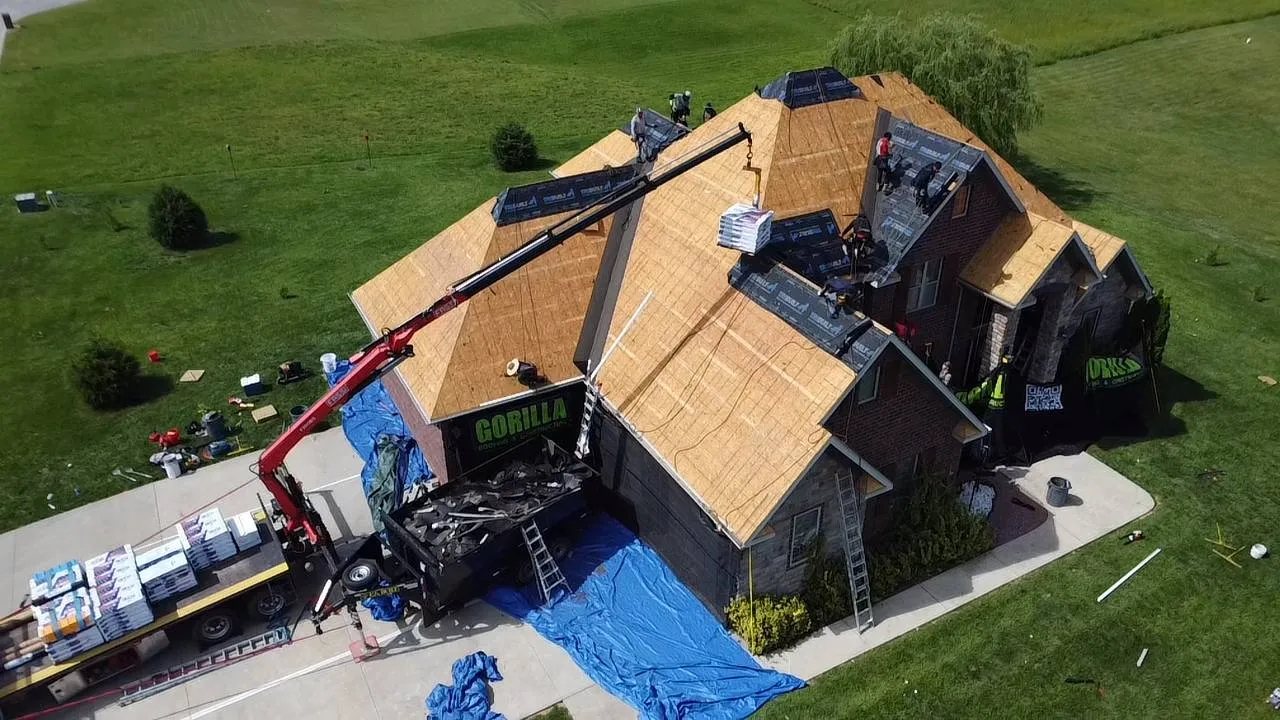
Once the job is complete, your contractor will provide a completion certificate or final invoice. Submit that to the insurance company to release the depreciation holdback. Most insurers process it within two to four weeks.
If you are working with us on an insurance claim, we handle the documentation for that final step. It is part of the job -- not an add-on. And if anything comes up during installation that changes the scope, we file the supplement before we start the extra work, not after.
Have questions about a current claim or want a free inspection? Our storm damage and insurance claims team works with homeowners across St. Louis and the metro every day. We will tell you honestly what we see -- and what it means for your claim.