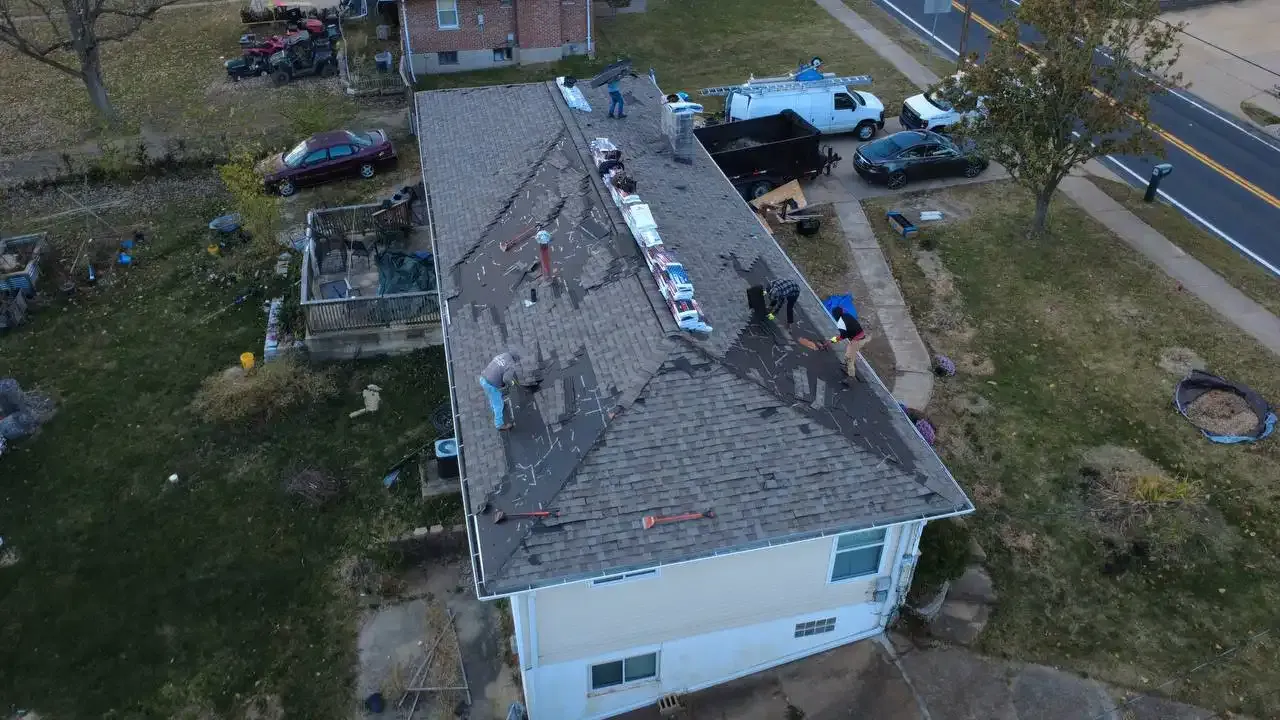
One of the most common questions homeowners ask during a roof inspection is simple: “Do I need a new roof, or can this be repaired?”
It’s a fair question — and an important one. Roof replacement is a significant investment, so nobody wants to jump to it unnecessarily. At the same time, repeatedly repairing a roof that’s nearing the end of its life can end up costing more in the long run.
The reality is that deciding between repair and replacement isn’t guesswork. Contractors look at a combination of factors that reveal whether a roof still has reliable life left or whether repairs would only delay the inevitable.
Understanding what those factors are can make the recommendation feel much less mysterious.
The Short Answer
Repair when the damage is small and the roof is young. Replace when the damage is widespread or the roof is old. Everything a contractor checks is really just a way of answering those two questions.
A repair usually makes sense when:
- The roof is in the first half of its expected life
- The damage is limited to one area — a few lifted shingles, one leak, a flashing failure
- The decking underneath is still solid
- The rest of the shingles still have their protective granules
Replacement becomes the smarter investment when:
- The roof is in the last third of its life and problems are starting to stack up
- Damage or wear shows up across multiple sections, not just one spot
- Shingles are curling, cracking, or shedding granules across the whole roof
- The decking is soft or water-stained, or the roof has been patched repeatedly
The rest of this guide walks through how a contractor actually checks each of those things — and if it does come down to a replacement, our step-by-step guide to the roof replacement process shows exactly what that day looks like.
Age Is the First Clue — But Not the Final Answer
The first thing contractors consider is the roof’s age.
Most asphalt shingle roofs are designed to last a few decades under ideal conditions. But “ideal” doesn’t always apply in Missouri and Illinois, where roofs deal with heat, cold, storms, and repeated freeze-thaw cycles.
If a roof is relatively new and experiencing a localized issue — such as storm damage or flashing failure — repair is often the logical option. The rest of the system likely still has plenty of life left.
If the roof is already approaching the later stages of its lifespan, however, repairs become harder to justify. At that point, fixing one area may simply reveal the next weak spot.
Age doesn’t automatically mean replacement, but it sets the stage for the rest of the evaluation.
The ranges contractors work from are in our guide to how long a roof lasts, material by material.
The Size of the Damaged Area Matters
Contractors also look closely at the scope of the damage.
A few lifted shingles after a windstorm? That’s often a straightforward repair. A flashing issue around a chimney or vent? Also repairable in many cases.
But when damage spreads across large sections of the roof, the math changes. Multiple failing areas suggest that the roof system itself is beginning to wear out.
At that stage, repairs can start to resemble temporary patches rather than long-term solutions.
The Condition of the Shingles Tells a Bigger Story
Shingles reveal a lot about a roof’s remaining life.
When shingles begin losing large amounts of protective granules, curling at the edges, or cracking across the surface, those are signs that the material is aging beyond simple repair.
Granules protect the asphalt layer beneath from UV exposure and moisture. Once they disappear, shingles deteriorate faster. Repairing a few shingles on a roof that has widespread granule loss rarely stops the larger aging process.
This is often the point where contractors start discussing replacement — not because repairs are impossible, but because they may not hold for long.
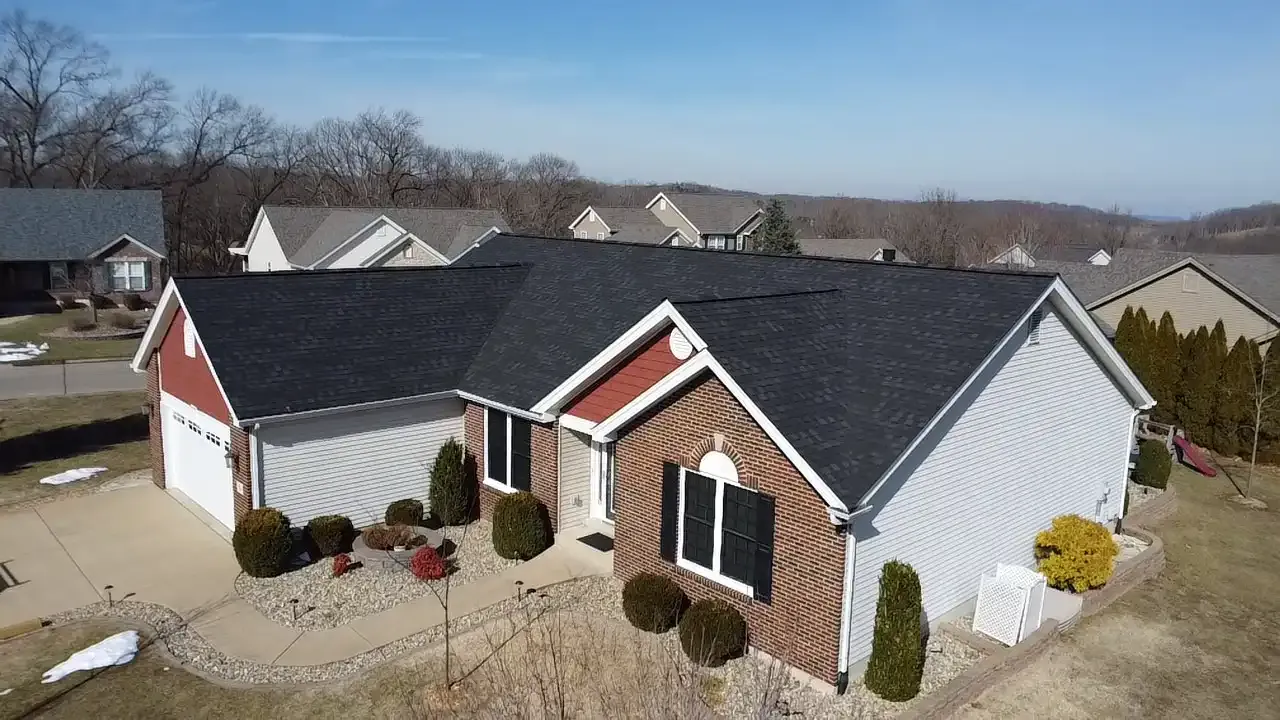
Leaks Don’t Always Mean the Roof Has Failed
One of the biggest misconceptions is that a leak automatically means the roof needs to be replaced.
In reality, many leaks are caused by localized issues. Flashing around vents, chimneys, or skylights can fail even when the surrounding shingles are still in good shape. Small gaps around roof penetrations can allow water in without indicating widespread failure.
In those cases, targeted repairs can solve the problem effectively.
The key is determining whether the leak is isolated or part of a broader pattern.
The Roof Decking and Structure Matter Too
Roof inspections don’t stop at the surface.
Contractors also evaluate the condition of the roof decking — the wooden structure beneath the shingles. If water has been entering the roof system for a long time, decking may become soft or deteriorated.
When structural layers begin to weaken, simple repairs often aren’t enough. Replacement allows contractors to address the underlying issues rather than covering them up.
It’s a bit like replacing flooring after a water leak instead of just drying the carpet.
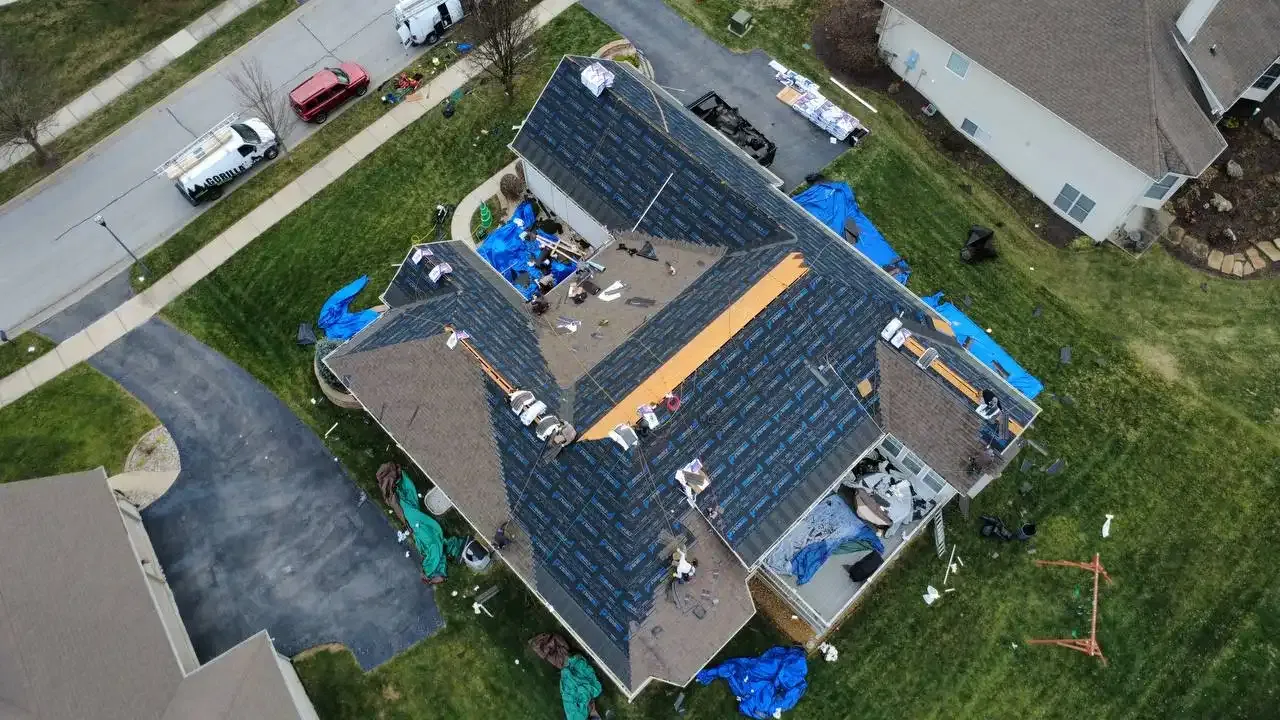
Storm Damage Changes the Equation
Storms complicate repair vs replacement decisions.
Wind and hail can damage shingles in ways that aren’t immediately obvious from the ground. A roof may look mostly intact but still have widespread bruising, granule loss, or seal strip damage.
In these situations, contractors often document the full scope of storm damage before making a recommendation.
According to the U.S. Department of Energy, moisture that enters building assemblies through small openings can gradually degrade materials and increase the risk of mold growth if not addressed promptly.
That’s why even minor-looking storm damage deserves a closer look before deciding on repairs.
Previous Repairs Can Influence the Decision
Another factor that contractors consider is repair history.
Roofs that have been repaired repeatedly over the years sometimes reach a point where additional repairs stop making sense. Patching one area after another can create inconsistent surfaces and multiple potential failure points.
At some stage, starting fresh becomes the more reliable and cost-effective option.
This doesn’t mean previous repairs were wrong — it just means the roof has reached a new phase of its life.
Budget and Timing Play a Role Too
While the physical condition of the roof matters most, practical considerations also factor into the conversation.
Sometimes homeowners plan to sell their home in the near future and choose targeted repairs to extend the roof’s life a few more years. Other times, homeowners prefer replacement sooner to avoid dealing with recurring repairs.
A good contractor should discuss both options honestly so homeowners can make informed decisions.
Why Inspections Are the Starting Point
The most important step in the repair-versus-replacement decision is a thorough inspection.
Surface appearances can be misleading. What looks minor from the driveway might reveal broader aging up close. On the other hand, what appears serious might turn out to be a localized flashing issue.
That’s why inspections come first.
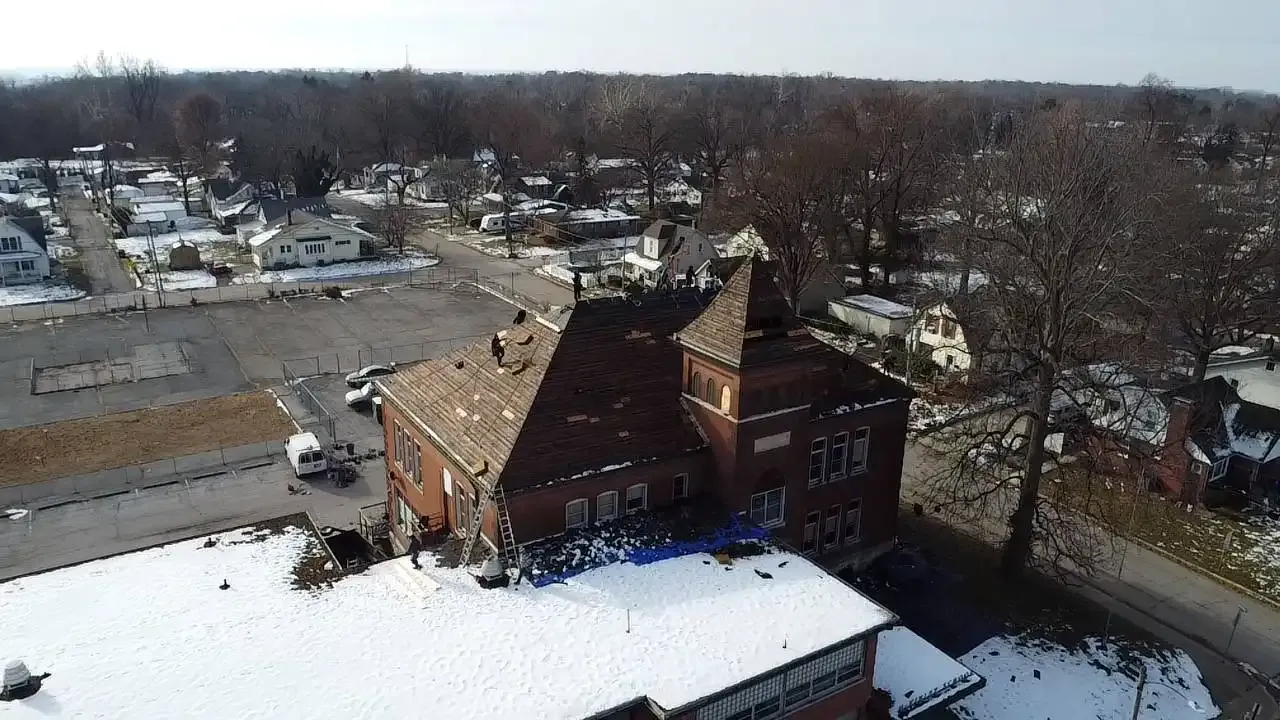
When Replacement Becomes the Smarter Investment
Replacement recommendations usually happen when several conditions appear together: aging shingles, widespread wear, repeated repairs, or structural moisture concerns.
At that point, replacement stops being a sales suggestion and starts being a practical solution.
Replacing a roof resets the entire system — shingles, flashing, underlayment, and ventilation — which often provides more long-term value than piecemeal repairs.
Final Thoughts: Repair When You Can, Replace When You Should
Most contractors prefer repairs when they make sense. They’re quicker, less expensive, and easier for everyone involved.
But roofs eventually reach a point where repairs stop solving the problem.
Understanding how contractors evaluate age, damage patterns, storm impact, and structural conditions can make those recommendations feel less like guesswork and more like informed guidance.
If you’re unsure whether your roof needs a repair or a replacement, a free roof inspection can provide clarity before small issues grow into larger ones.
Sometimes the best decision is the one that prevents the next problem.
Roof Repair vs Replacement: Common Questions
Is it better to repair or replace a roof?
It depends on the roof's age and how widespread the damage is. If the roof is in the first half of its life and the damage is limited to one area, a repair is usually the better value. If the roof is nearing the end of its lifespan or damage shows up in multiple places, replacement typically costs less over time than repeated repairs.
How many times can a roof be repaired before it needs replacement?
There's no fixed number, but each repair on an aging roof tends to reveal the next weak spot. When you find yourself calling for the second or third repair in a few years, that pattern itself is the signal — the roof system is wearing out, and replacement usually becomes the more reliable option.
Can I replace just half of my roof?
It's rarely a good idea. Partial replacement leaves seams between old and new sections, mismatched shingle aging, and potential warranty problems. If more than one full slope is failing, most contractors will recommend replacing the entire roof so the whole system ages together.
Does homeowners insurance cover roof repair or replacement?
Insurance generally covers sudden damage from events like hail or wind — which can mean a repair or a full replacement depending on the scope the adjuster documents. Wear and aging aren't covered. A contractor's inspection report with photos helps establish whether storm damage is widespread enough to justify a replacement claim.
How much more does replacement cost than repair?
A typical repair runs a few hundred to a couple thousand dollars, while a full replacement is a five-figure project for most homes. That gap is why the decision matters: paying for repairs a roof has outgrown wastes money, but replacing a roof that had years of life left does too.
For real numbers on what a full replacement runs in the St. Louis area, see our roof replacement cost guide.