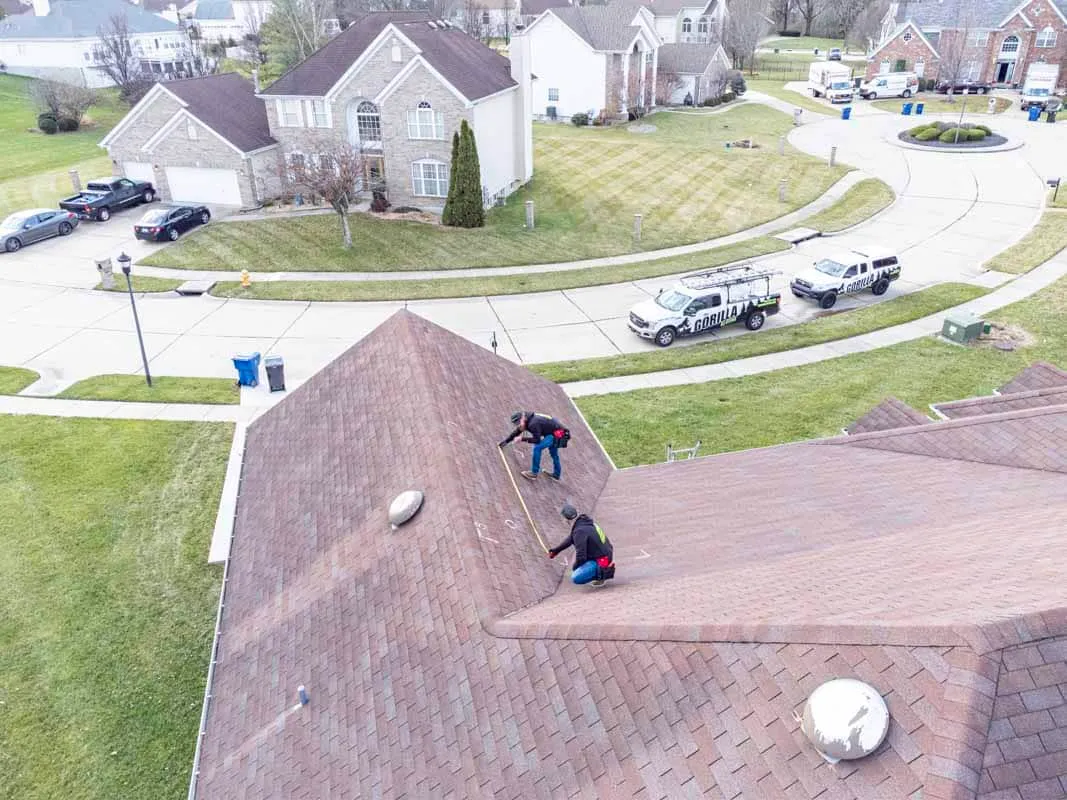
Most storms that roll through Missouri and Illinois don't pick a lane. A severe thunderstorm throws hail at the front of your house and peels shingles off the back — all in the same fifteen minutes. By the time it's over, you've got two different kinds of damage sitting on the same roof.
Here's the problem: your insurance company treats them differently. Different deductibles. Different coverage triggers. Sometimes different settlement methods. If you file one claim without understanding how your policy splits these two perils, you could leave money on the table — or get surprised by an out-of-pocket cost you didn't see coming.
This isn't about gaming the system. It's about knowing what you have before you pick up the phone to call your adjuster. Our insurance-claims team works through this with homeowners every week. Here's what they need to know.
How To Tell Wind Damage From Hail Damage
They look different up close. Wind damage is mechanical — it lifts, bends, and tears. Hail damage is impact — it dents, bruises, and strips. Once you know what to look for, you can usually identify which is which from the ground or from photos.
Wind damage signs on a shingle roof:
- Missing shingles in patches or full sections — the tabs lifted and the wind finished the job
- Shingles that are still there but cracked along a straight line — the wind bent them past their flex point
- Lifted shingles with broken seal strips underneath — they've been exposed to water intrusion even if they look intact from the street
- Displaced ridge cap or flashing that has pulled away from the edge or chimney
Hail damage signs on a shingle roof:
- Circular dents or dark spots — called bruises — scattered randomly across the shingle surface
- Granule loss concentrated in the center of impact marks, exposing the darker mat underneath
- Soft spots you can feel with your thumb when you press on the shingle — the mat is fractured below the granule layer
- Matching dents on gutters, downspouts, AC condenser fins, or metal ridge vents — hail hits every exposed metal surface equally
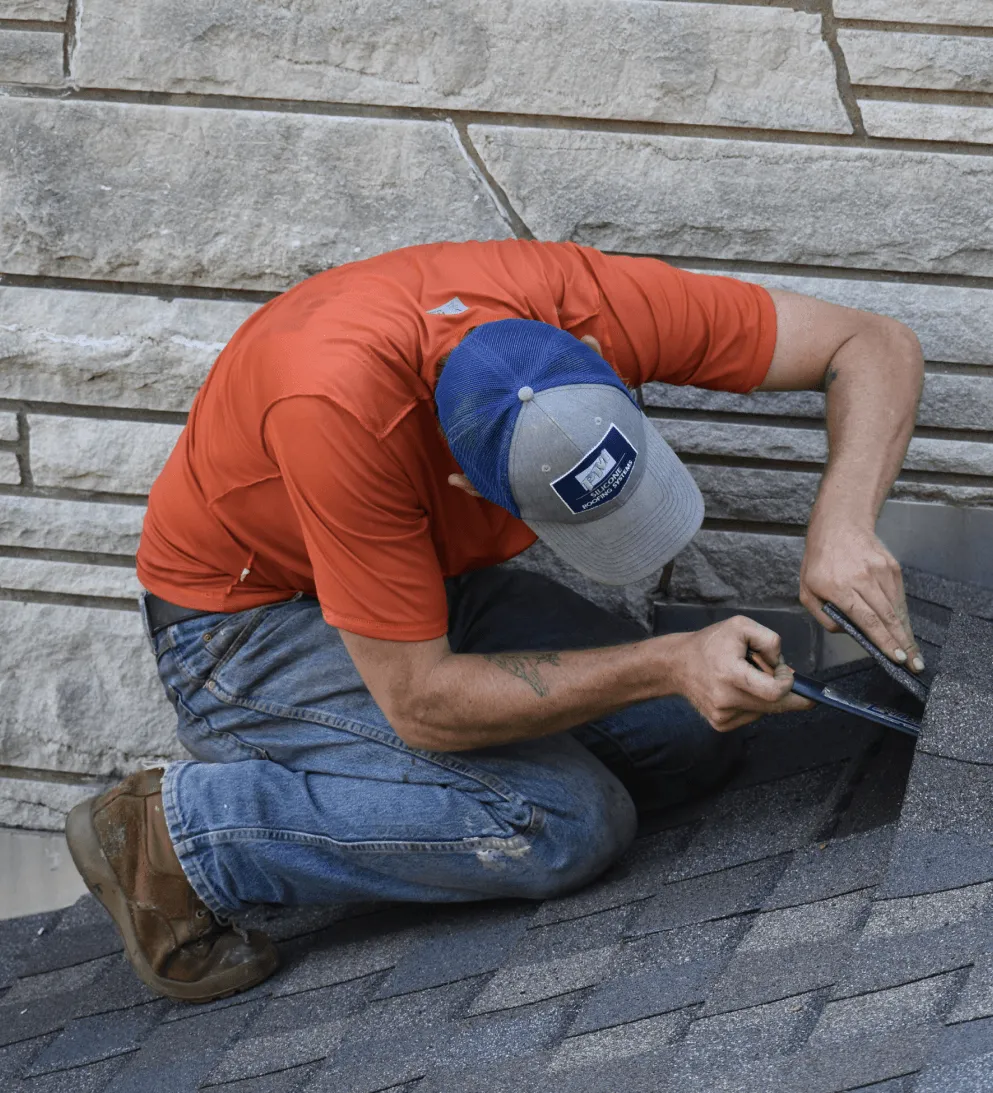
If your gutters have round dents but your shingles look fine from the street, that's a hail story — not a wind story. The adjuster will look at those gutters.
Many roofs show both. Wind strips shingles on the leeward side. Hail bruises shingles on every exposed face. A competent inspector photographs both separately because the claim path for each is different.
Why Your Policy Has Two Different Deductibles
Starting around 2010, insurers in hail-prone states — Missouri and Illinois included — began separating hail and wind from the standard all-perils deductible. Today, most homeowner policies in the St. Louis metro have at least two deductible structures on the same declarations page.
The standard deductible applies to most covered losses — fire, theft, water damage. It's usually a flat dollar amount: $1,000, $2,500, or similar.
The wind and hail deductible is different. It's almost always expressed as a percentage of your home's insured value — typically 1% to 2%, sometimes as high as 5% in certain zip codes or with certain carriers. On a home insured for $400,000, a 2% wind/hail deductible means $8,000 comes out of your pocket before insurance pays a cent.
Pull your declarations page right now. Look for a line that says 'wind and hail deductible' or 'named storm deductible.' That number changes everything about whether your claim makes financial sense.
Some policies split wind and hail into separate deductibles. Others lump them together. A small number of policies — particularly older ones — still apply a flat deductible to both. You need to know which category yours falls into before you file anything.
Named Perils vs Open Perils: The Coverage Question
Most standard homeowners policies are open-perils on the dwelling — meaning damage is covered unless the policy specifically excludes it. But some policies, especially HO-2 forms or certain budget carriers, are named-perils — meaning only the damage types listed in the policy are covered.
This matters because hail and wind are almost always named perils even on open-perils policies. Carriers write them that way so they can apply separate deductibles, add exclusions for cosmetic damage, or limit coverage to functional damage only.
- Cosmetic damage exclusions: Some policies won't pay for hail dents to metal trim, gutters, or flashing if the damage doesn't affect the roof's function — even when every piece of metal on the roof is dimpled
- Age and condition exclusions: If your roof is over 20 years old, some carriers apply depreciation that makes the net payout very small
- Matching exclusions: Some policies limit how much they'll pay to match undamaged sections of the roof to the replaced sections — this matters when you have a partial loss
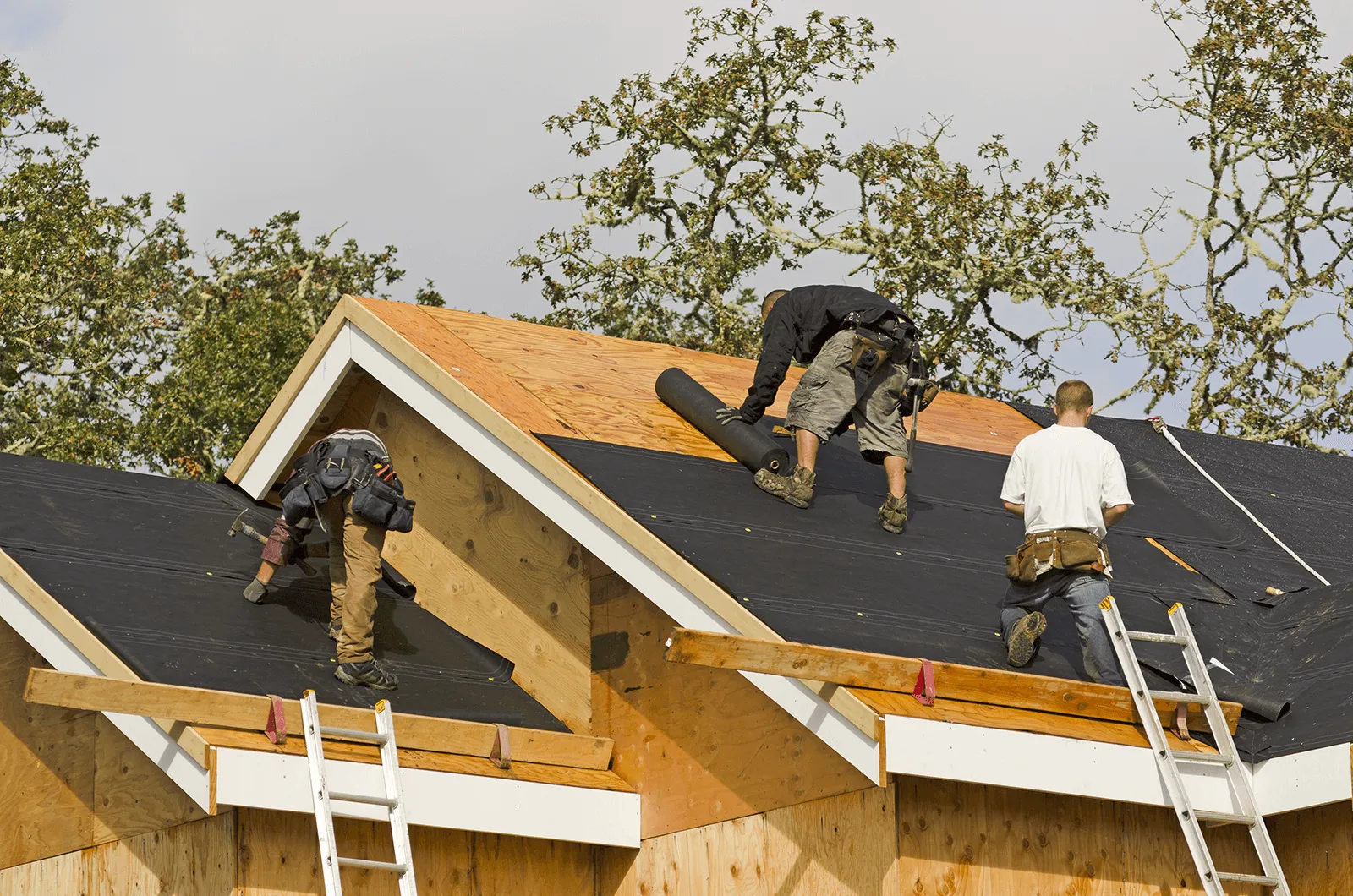
Read the exclusions section of your policy — not just the coverage page. If you see language about cosmetic damage or functional damage, that language applies specifically to hail and wind claims. It won't show up for a fire claim.
ACV vs RCV: The Settlement Method That Changes Your Check
This is where a lot of homeowners get blindsided. Even when hail or wind damage is clearly covered, how the insurance company settles the claim determines how much money you actually receive.
RCV — Replacement Cost Value — is the standard most people assume they have. It pays to replace what was damaged with new materials at today's prices, minus your deductible. You get enough to put a new roof on.
ACV — Actual Cash Value — pays the depreciated value of what was damaged. A 15-year-old roof might be depreciated 60% from its replacement cost. If a new roof costs $18,000 and the adjuster assigns 60% depreciation, your ACV check is $7,200 — minus your deductible. That's often not enough to pay for the replacement.
ACV policies are common. They're also legal. Some carriers have moved to ACV settlement for roofs over a certain age — even on policies that used to pay RCV. Check your policy endorsements, not just the main coverage page.
If you have an RCV policy, insurers typically release the claim in two payments. The first is ACV — depreciation held back. The second, called the recoverable depreciation, gets released after you complete the work and submit the final invoice. That two-step process is normal and legal. Don't mistake the first check for the full settlement.
When wind and hail damage happen together, some carriers settle each peril differently — RCV for wind, ACV for hail, for example. It depends on how the policy is written. This is one reason it matters to document each type of damage separately when you file.
How The Claim Path Changes Based On What You Have
Knowing the damage type, your deductible, and your settlement method tells you how to approach the claim — and whether filing makes sense at all.
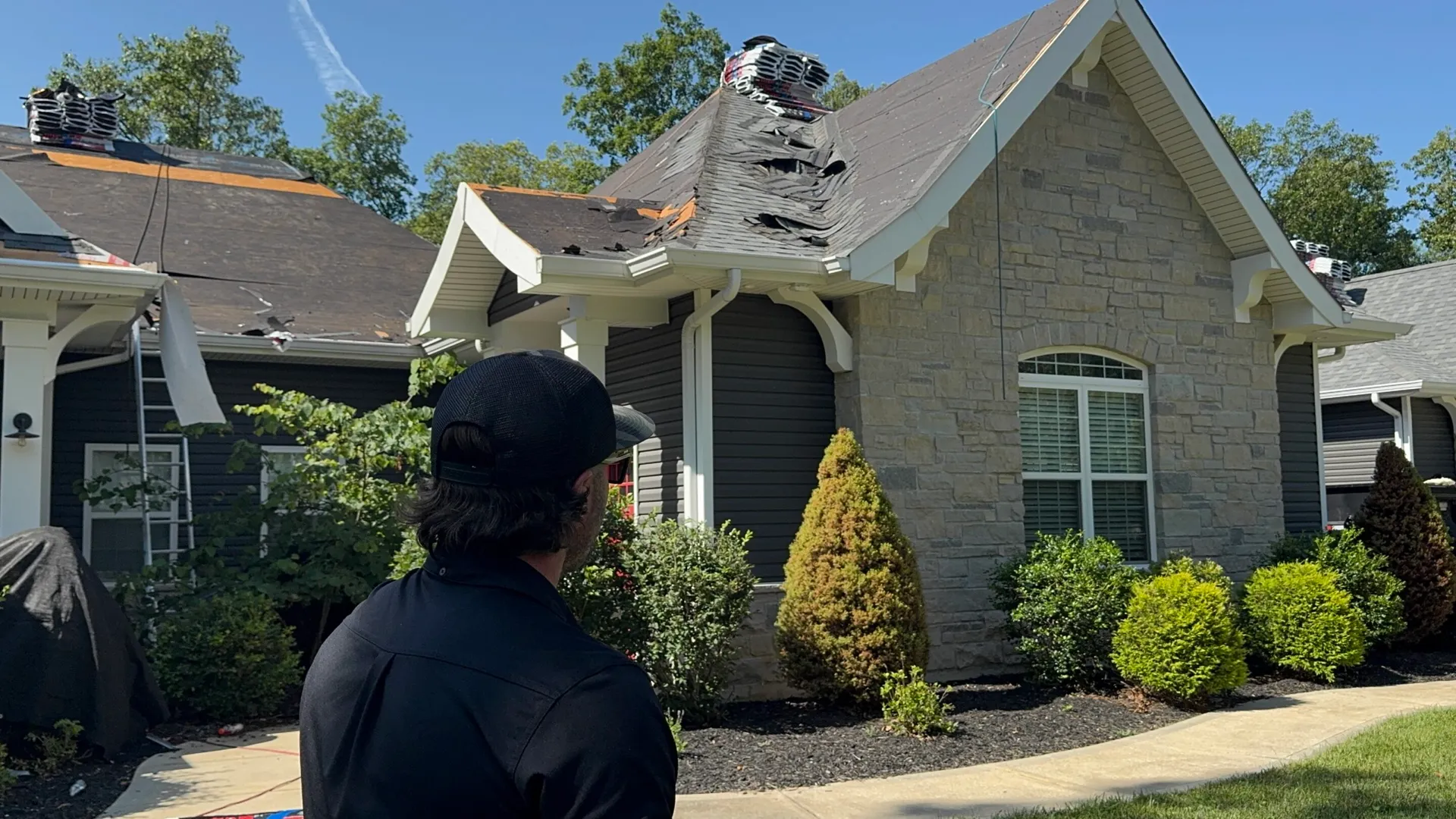
Scenario 1 — Hail only, RCV policy, flat deductible: This is the most straightforward claim. Document every impact mark, get photos of the gutters and AC unit, and file. The adjuster will scope the damage. If the scope is short, you can dispute it with a contractor's estimate.
Scenario 2 — Hail only, ACV policy, percentage deductible: Run the math before you file. If your roof is old and heavily depreciated, the net payout might not cover replacement — and filing a claim can raise your premiums. Sometimes repair makes more sense than a claim.
Scenario 3 — Wind and hail together, split deductibles: File one claim but document both perils separately. Carriers sometimes try to categorize all the damage as one peril to apply the higher deductible. A clear, itemized inspection report with photos sorted by damage type protects you.
Scenario 4 — Wind only, no hail: Wind damage on a newer roof with a flat deductible is usually worth filing. Wind damage on an older roof with a percentage deductible — do the math first.
- Get an independent inspection before the adjuster arrives — not after
- Ask your contractor to sort photos and notes by damage type: wind in one section, hail in another
- Request a copy of the adjuster's scope of loss in writing before you sign anything
- If the adjuster's scope and the contractor's estimate disagree by more than 10%, that gap is negotiable
What To Do In The Next 48 Hours
Missouri and Illinois both have statutes of limitations on storm damage claims — typically one year from the date of loss, though some policies set shorter internal deadlines. Don't sit on it.
Step one: Pull your declarations page and find your wind/hail deductible and your settlement method (RCV or ACV). If you can't find it, call your agent and ask directly. Write down what they say.
Step two: Get a contractor on the roof before the adjuster. You want an independent, documented inspection that captures every shingle bruise, every lifted tab, and every dented metal surface. That report is your baseline. Our storm damage repair team does these inspections at no charge.
Step three: File your claim and request to be present — or have your contractor present — when the adjuster walks the roof. You are allowed to do that. An adjuster who scopes the roof alone and hands you a number is giving you their starting position, not necessarily the final word.
Step four: If the numbers don't add up, ask about the appraisal process. Most policies include a provision where each party hires an appraiser and a neutral umpire settles the difference. It's slower, but it exists for exactly this situation.
If you want help working through any of this — reading the policy language, getting on the roof, or sitting in on an adjuster visit — that's exactly what we do. We've worked insurance claims across the St. Louis metro for years. We know what adjusters look for, and we know how to make sure nothing gets missed.