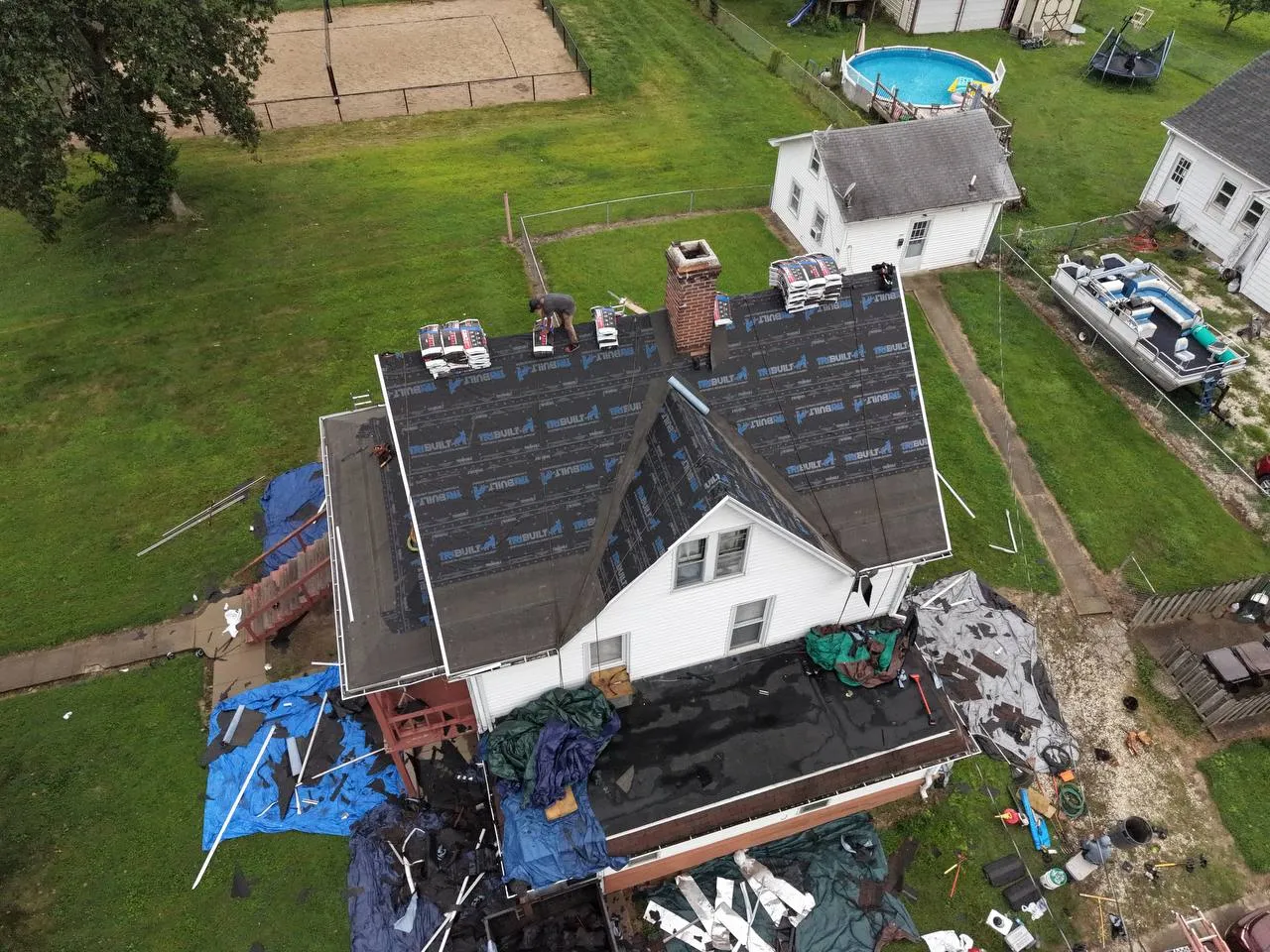
Most people think a roof is shingles. That's the part you see, so that's the part you picture. But the shingles are just the raincoat. Under them sits a second line of defense that most homeowners never lay eyes on and never think about until water shows up in a bedroom ceiling.
That second line is underlayment and, in the spots that need it most, ice-and-water shield. Around here, in the St. Louis metro where winter runs a freeze-thaw cycle over and over, these layers are the difference between a roof that shrugs off a hard January and one that leaks the moment an ice dam forms. Here's what they are and why they belong on your house.
What Underlayment Actually Does
Underlayment is the material that gets rolled out over your bare roof deck before the shingles go down. It covers the whole roof. Shingles shed most of the water, but shingles aren't waterproof on their own. Wind drives rain up under them. Snow melts and refreezes and works its way sideways. Underlayment is the backstop that catches what gets past the top layer.
There are two main kinds you'll run into. Old-school felt paper, which is the black tar-soaked stuff roofers have used for a century, and synthetic underlayment, which is a woven plastic material that's lighter, tougher, and doesn't tear or wrinkle the way felt does.
- Felt paper: cheaper, heavier, soaks up water if it sits exposed, tears in wind
- Synthetic: stronger, lighter, resists UV longer, lays flatter, grips better underfoot
- Both do the same core job, but synthetic holds up better over the long haul
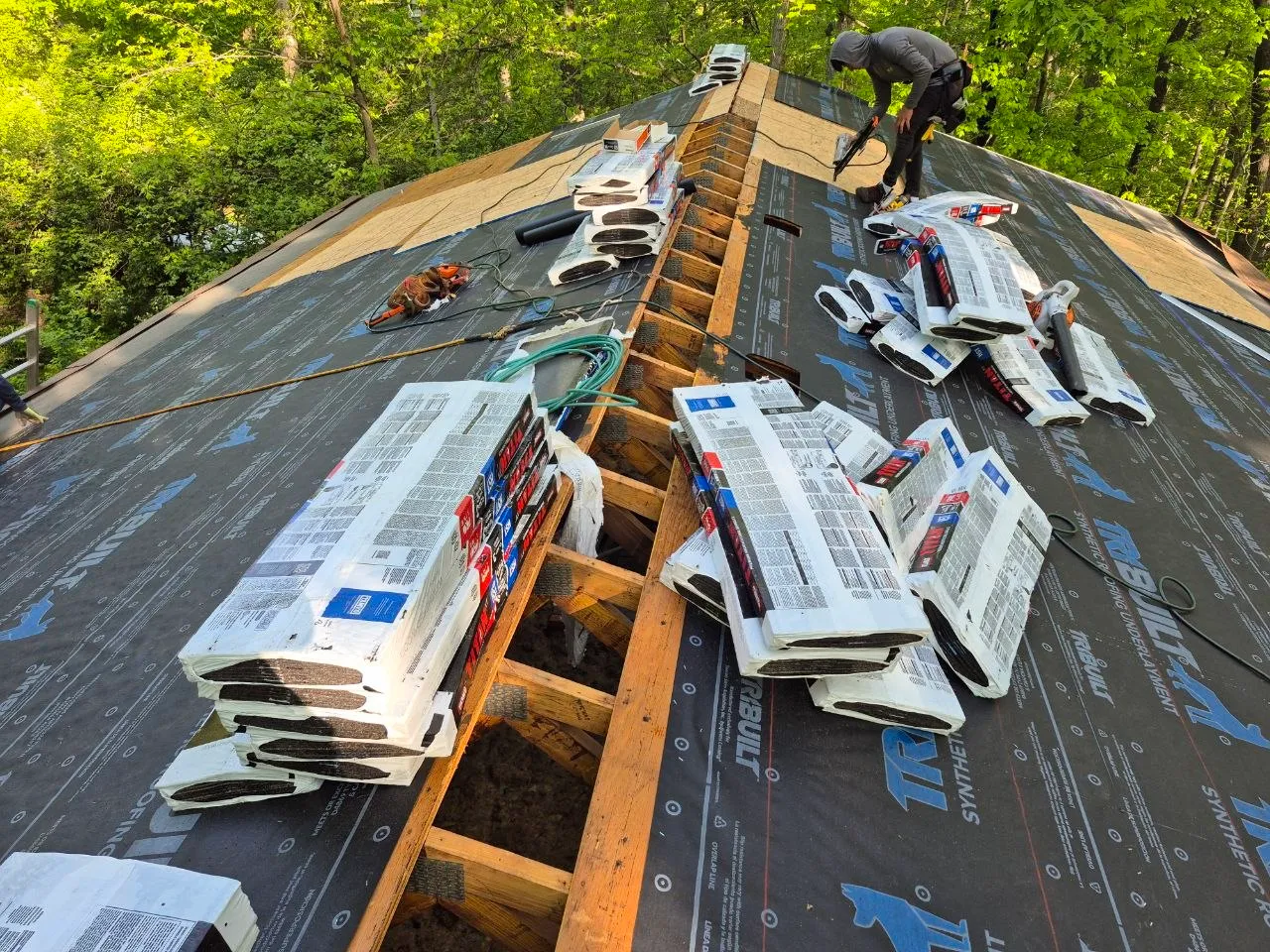
We run synthetic on our jobs. It costs a little more per roll, but it lays cleaner, handles our summer heat during install, and gives you a better roof deck to build on. If a contractor is quoting you felt to shave a few bucks, ask why.
What Ice-And-Water Shield Is And Why It Matters Here
Ice-and-water shield is a different animal. It's a self-adhering membrane, sticky on the back like a giant strip of roofing tape, and it seals directly to the deck. When a roofing nail punches through it, the material grips around the nail and keeps water from sneaking in. Regular underlayment doesn't do that. It just lays there. Ice-and-water shield actually bonds.
If my roof already has underlayment, why do I need this too? Because underlayment stops water that runs downhill. Ice dams push water uphill, back under the shingles. Only a bonded membrane stops that.
This is the piece that matters most in the St. Louis winter. When snow sits on your roof and the attic leaks heat, the snow melts at the top, runs down to the cold eave, and refreezes into a ridge of ice. Water pools behind that ridge and gets forced back up under the shingles. That's an ice dam, and it's the number one way winter water gets into a home around here. If you want the full breakdown on how those form, our team covers ice dam prevention in detail elsewhere.
Where Ice-And-Water Shield Goes On The Roof
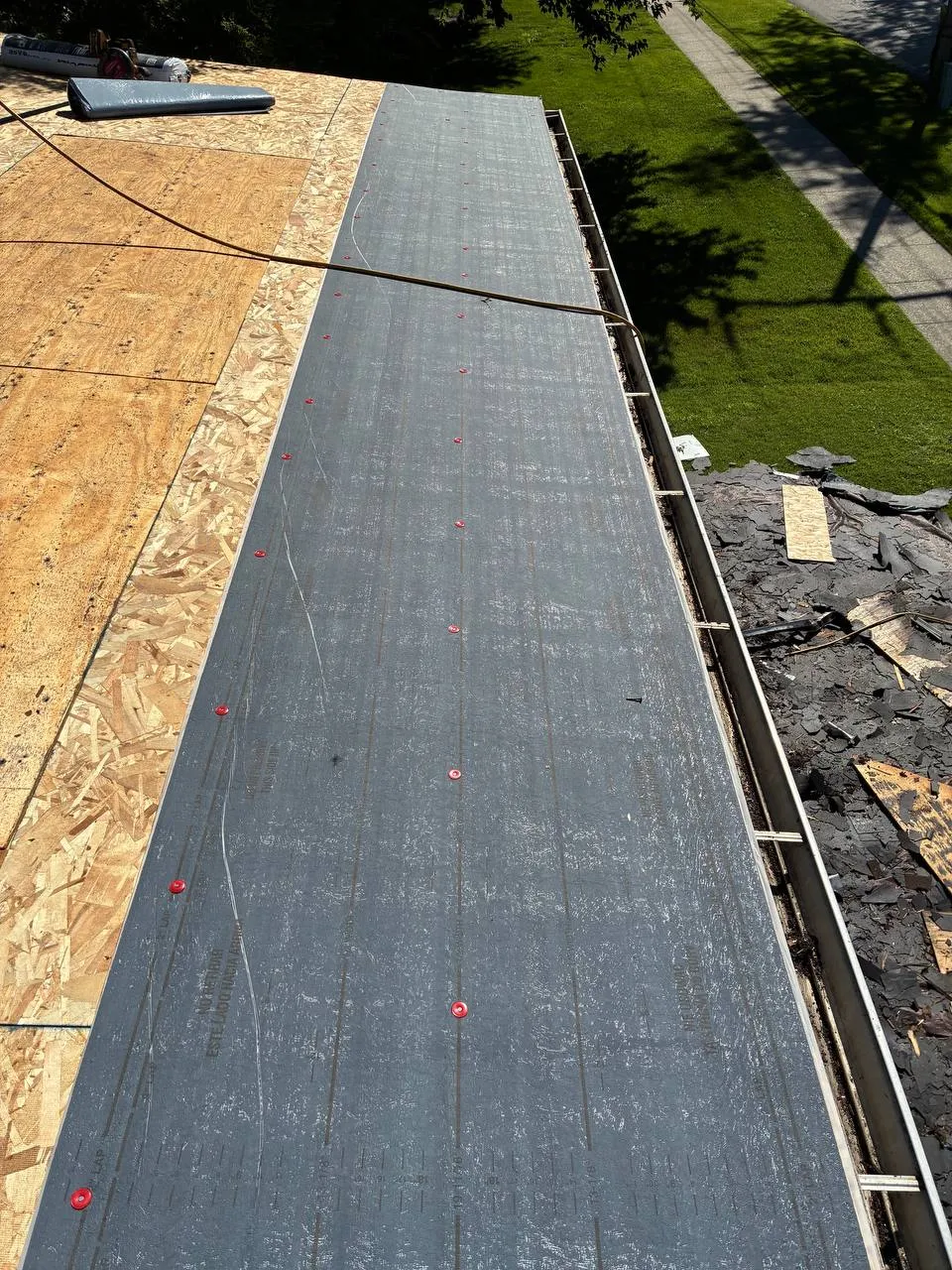
You don't sheet the whole roof in ice-and-water shield. It's more expensive than underlayment and the roof needs to breathe, so it goes in the trouble spots. These are the places water is most likely to get forced in.
- Along the eaves, the bottom edge of the roof where ice dams form
- In the valleys, where two roof slopes meet and funnel water
- Around chimneys, skylights, and vent pipes, where flashing does the sealing
- Along rakes and low-slope sections where water moves slow and sits
The eave coverage is the big one for our climate. Most codes around the St. Louis and Illinois metro require ice-and-water shield to run from the edge of the roof up past the point where the exterior wall meets the roof. That way, when an ice dam backs water up, the membrane is already there waiting for it. You can read the code language yourself in the International Residential Code if you want to see exactly what's required.
How These Layers Fit Into A Real Roof System
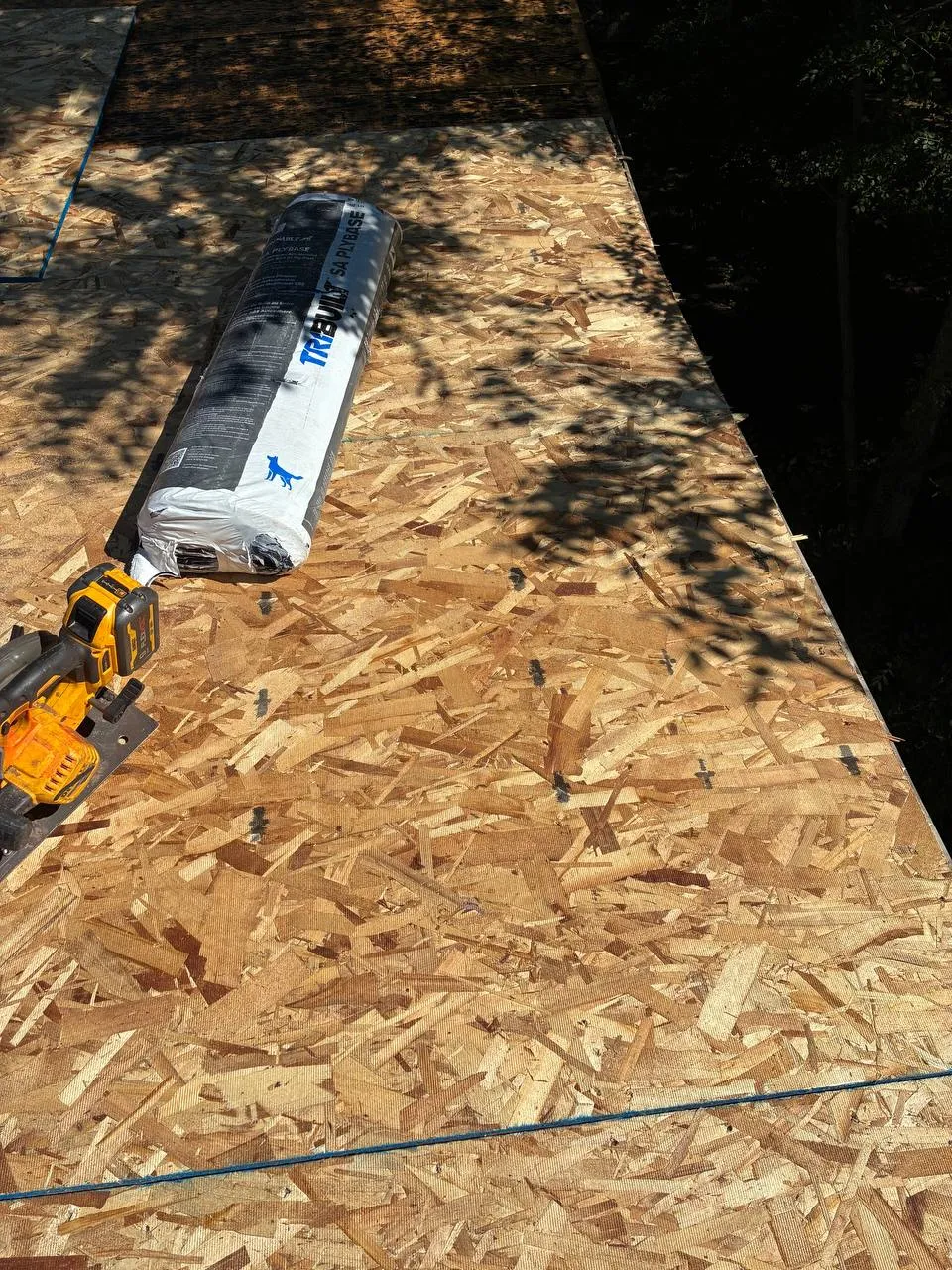
A roof isn't a product. It's a system, and the layers only work if they all show up and go in the right order. From the deck up, a proper job runs bare wood, then ice-and-water shield in the trouble spots, then synthetic underlayment across the field, then drip edge and flashing at the transitions, then shingles on top. Skip a layer and you've built a weak point.
Here's where a lot of cheap roofs cut corners. They put down shingles over old felt, skip the ice-and-water shield entirely, and call it a roof replacement. It looks the same from the driveway. It holds up fine in July. Then the first hard winter comes and the eaves start leaking, and now you're paying for interior repairs on top of a roof that should have been done right the first time.
- Bare deck inspected and any rotted decking replaced
- Ice-and-water shield sealed to eaves, valleys, and penetrations
- Synthetic underlayment rolled across the full field
- Drip edge and flashing installed at every edge and transition
- Shingles laid over a fully protected deck
When we quote a roof replacement, the underlayment and ice-and-water shield are baked in. They're not an upsell and they're not optional. That's what makes the 10 Year Gorilla Guarantee mean something. We can stand behind the workmanship because the system underneath the shingles is built to hold.
What To Ask Before You Sign
You can't see any of this once the shingles are on. So the time to ask is before the crew shows up, when you're comparing quotes. A good contractor will answer these without blinking.
- Are you using felt or synthetic underlayment across the field?
- Where exactly are you installing ice-and-water shield?
- Does the eave coverage meet local code for the St. Louis metro?
- Is the underlayment and shield included in the price, or added later?
If a bid comes in noticeably cheaper than the others, the underlayment and ice-and-water shield are usually where the money got cut.
The layers you never see are the ones that decide whether your roof survives a St. Louis winter. Shingles get the credit, but underlayment and ice-and-water shield do the quiet work. If you're planning a new roof and want it built as a full system, get a free estimate and we'll walk you through exactly what goes on your deck before the first shingle is nailed down.