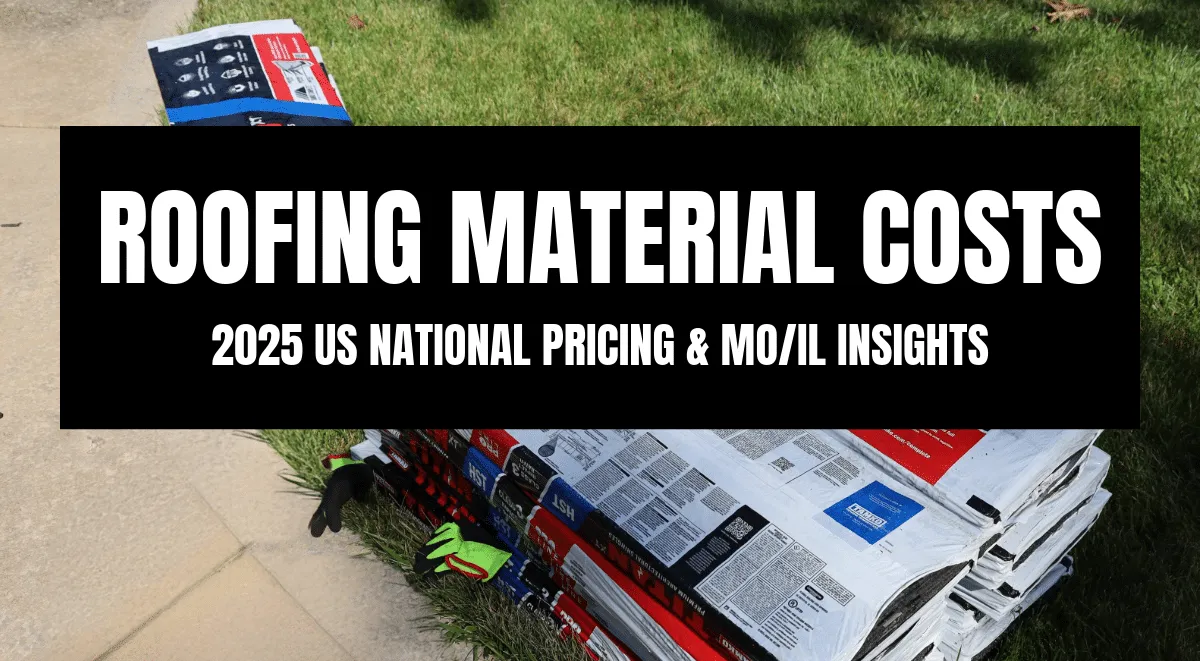
Roofing material costs about $90 to $175 per square for asphalt shingles, which works out to $0.90 to $1.75 per square foot. Metal panels run $150 to $700 per square, tile $300 to $1,000, and slate $600 to $1,600 or more. Those are shingle-only numbers. Add underlayment, ice-and-water shield, drip edge, ridge caps, vents, flashing, and nails, and a full material package for a typical 2,000 sq ft home lands between $4,000 and $7,500 in 2026.
Materials are usually 35–50% of what you pay for a new roof. Labor, tear-off, disposal, and permits are the rest. This guide covers what each material costs per square, what a complete material list adds up to, how prices run in the St. Louis area on both sides of the river, what changed in 2026, and how to tell whether the materials line on your estimate is fair. For the full installed price, see our roof replacement cost guide. For the labor side, see roofing labor costs per square.
Roofing Material Cost Per Square: The Quick Answer
These are 2026 planning ranges for the primary roofing material only, at contractor pricing through a roofing supplier. Retail prices at a home center run 10–25% higher. One square is 100 square feet of roof.
| Roofing Material | Materials Per Square | Per Sq Ft | Typical Lifespan |
|---|---|---|---|
| 3-tab asphalt shingles | $90–$125 | $0.90–$1.25 | 15–20 years |
| Architectural asphalt shingles (CertainTeed Landmark) | $95–$140 | $0.95–$1.40 | 25–30 years |
| Heavyweight architectural (Landmark Pro) | $130–$175 | $1.30–$1.75 | 30+ years |
| Class 4 impact-resistant (Landmark ClimateFlex) | $150–$200 | $1.50–$2.00 | 30+ years |
| Designer asphalt (Presidential Shake, Grand Manor) | $300–$500+ | $3.00–$5.00+ | 40+ years |
| Metal panels (steel or aluminum) | $150–$700 | $1.50–$7.00 | 40–70 years |
| Concrete or clay tile | $300–$1,000 | $3.00–$10.00 | 50–100 years |
| Natural slate | $600–$1,600+ | $6.00–$16.00+ | 75–150 years |
| Wood shakes | $350–$700 | $3.50–$7.00 | 20–35 years |
| Flat roof membrane (EPDM, TPO, PVC) | $70–$300 | $0.70–$3.00 | 15–30 years |
Nearly every home in the St. Louis area gets architectural asphalt shingles, and that is the line to plan around. The rest of this guide breaks each category down, then adds up everything else that goes on the roof with them.
How Roofing Materials Are Priced
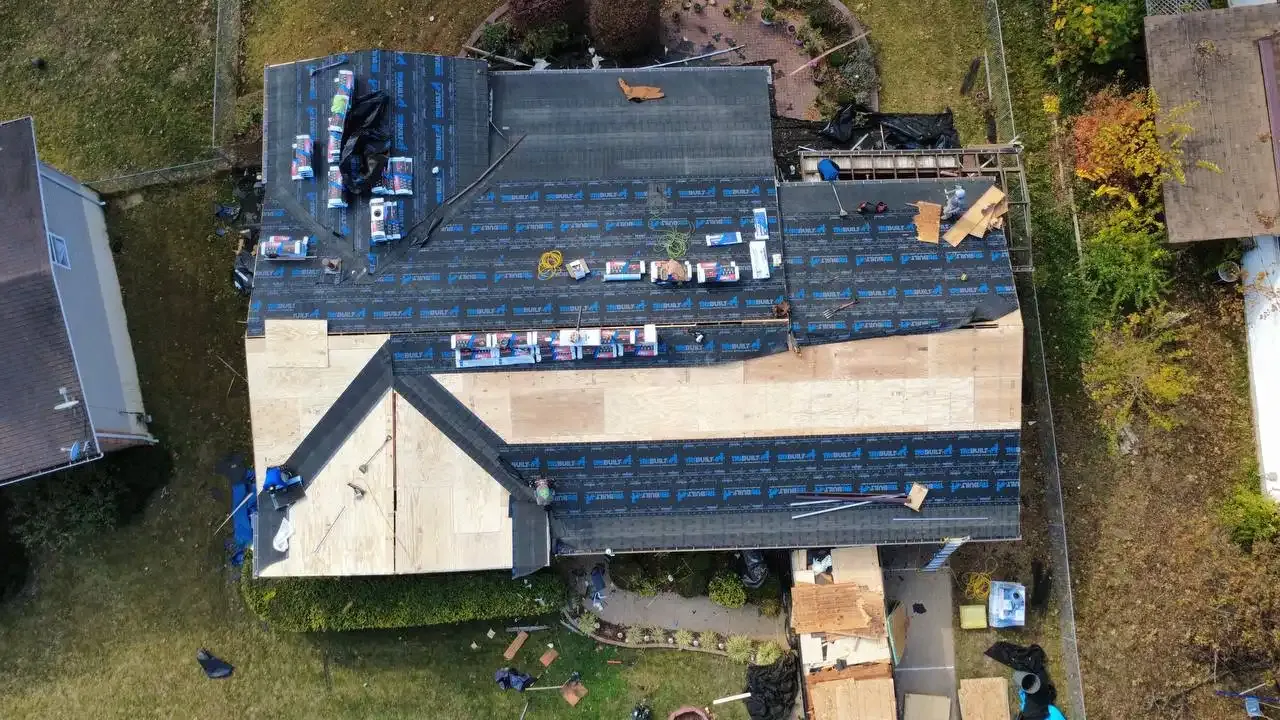
- By the square: One square covers 100 square feet of roof surface. Suppliers, contractors, and estimates all think in squares. A typical 2,000 sq ft home has 22–26 squares of roof once pitch and overhangs are counted.
- By the bundle: Shingles are sold in bundles, and three bundles cover one square for most architectural lines. A $40 bundle is $120 per square.
- Plus waste: Every roof needs 10–15% extra for cuts, valleys, hips, and starter courses. A cut-up roof with lots of dormers can need 20%. A 25-square roof usually means ordering 28 squares of shingles.
- Contractor vs. retail: A roofing contractor buys through a supplier at volume pricing and has the bundles delivered to the roof. The same shingle at a home center costs more and sits on a pallet in your driveway.
When you compare estimates, look at the brand, the product line, and the number of squares including waste. Two quotes that both say "architectural shingles" can be $1,500 apart on materials alone because one is a standard line and the other is a heavyweight or Class 4 product.
Asphalt Shingle Prices by Grade
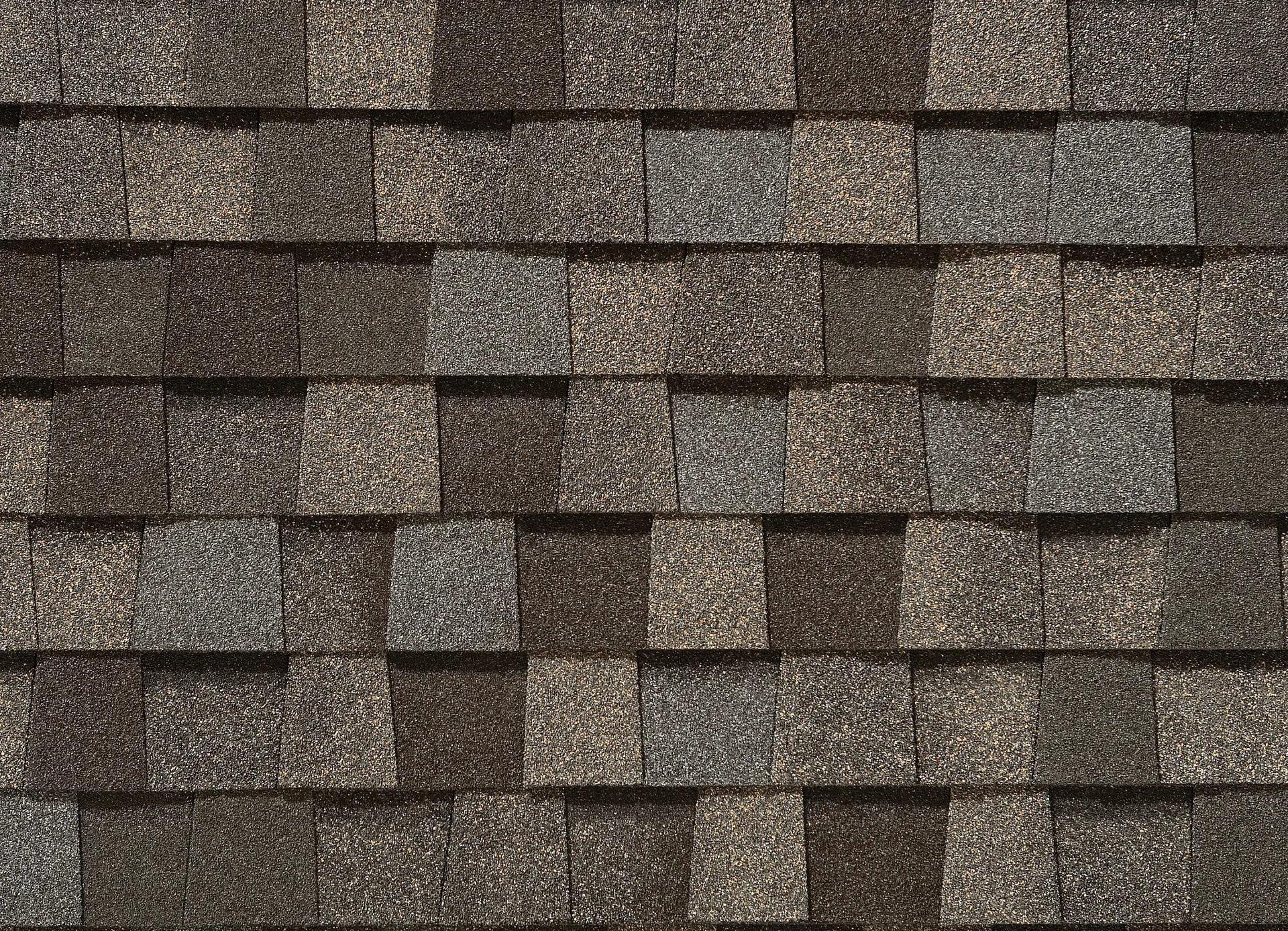
Asphalt covers well over 80% of the roofs we install, almost all of it CertainTeed. Here is how the grades price out in 2026, after two rounds of manufacturer increases this year. Per-bundle prices assume three bundles per square.
| Shingle Grade | Per Bundle | Per Square | What You Get |
|---|---|---|---|
| 3-tab | $30–$42 | $90–$125 | Flat, single-layer look. Lowest cost, shortest life, lowest wind rating. Rarely the right choice on a full replacement. |
| Landmark (standard architectural) | $32–$47 | $95–$140 | Two-layer dimensional shingle, 110 mph wind warranty, lifetime limited warranty. The St. Louis default. |
| Landmark Pro (heavyweight architectural) | $43–$58 | $130–$175 | About 40 lbs more per square than Landmark, deeper Max Def colors, longer algae-resistance warranty. See Landmark vs. Landmark Pro. |
| Landmark ClimateFlex (Class 4 impact-resistant) | $50–$67 | $150–$200 | Rubberized asphalt that resists hail. Usually earns an insurance discount in hail country. See what a Class 4 roof costs. |
| Presidential Shake, Grand Manor, Carriage House | $100–$170 | $300–$500+ | Designer shingles that mimic shake or slate. Heavier, thicker, and priced like it. See CertainTeed's best shingles. |
Color can move the price too. Standard colors are stocked locally. Special-order Max Def colors cost a little more per bundle and add a week or two to the schedule. Our guide to the most popular CertainTeed colors covers which ones are usually in stock.
Metal Roofing Material Costs
Metal is the second most common request we get, and it has the widest price spread. The panel profile matters more than the metal itself. These are material-only ranges per square in 2026, and they include the 50% steel and aluminum tariffs that pushed metal up 8–15% over the past year.
| Metal Roofing Type | Materials Per Square | Per Sq Ft | Notes |
|---|---|---|---|
| Corrugated or ribbed steel (exposed fastener) | $150–$350 | $1.50–$3.50 | Agricultural look. Cheapest metal, screws are visible and need re-checking over time. |
| Standing seam steel or aluminum | $300–$600 | $3.00–$6.00 | Concealed fasteners, clean lines. Most residential metal roofs in the St. Louis area. |
| Metal shingles | $350–$700 | $3.50–$7.00 | Stamped steel or aluminum that looks like shingles, shake, or slate. |
| Stone-coated steel (DECRA and similar) | $400–$700 | $4.00–$7.00 | Steel panels with a granule coating. Very hail-resistant, heavier than plain panels. |
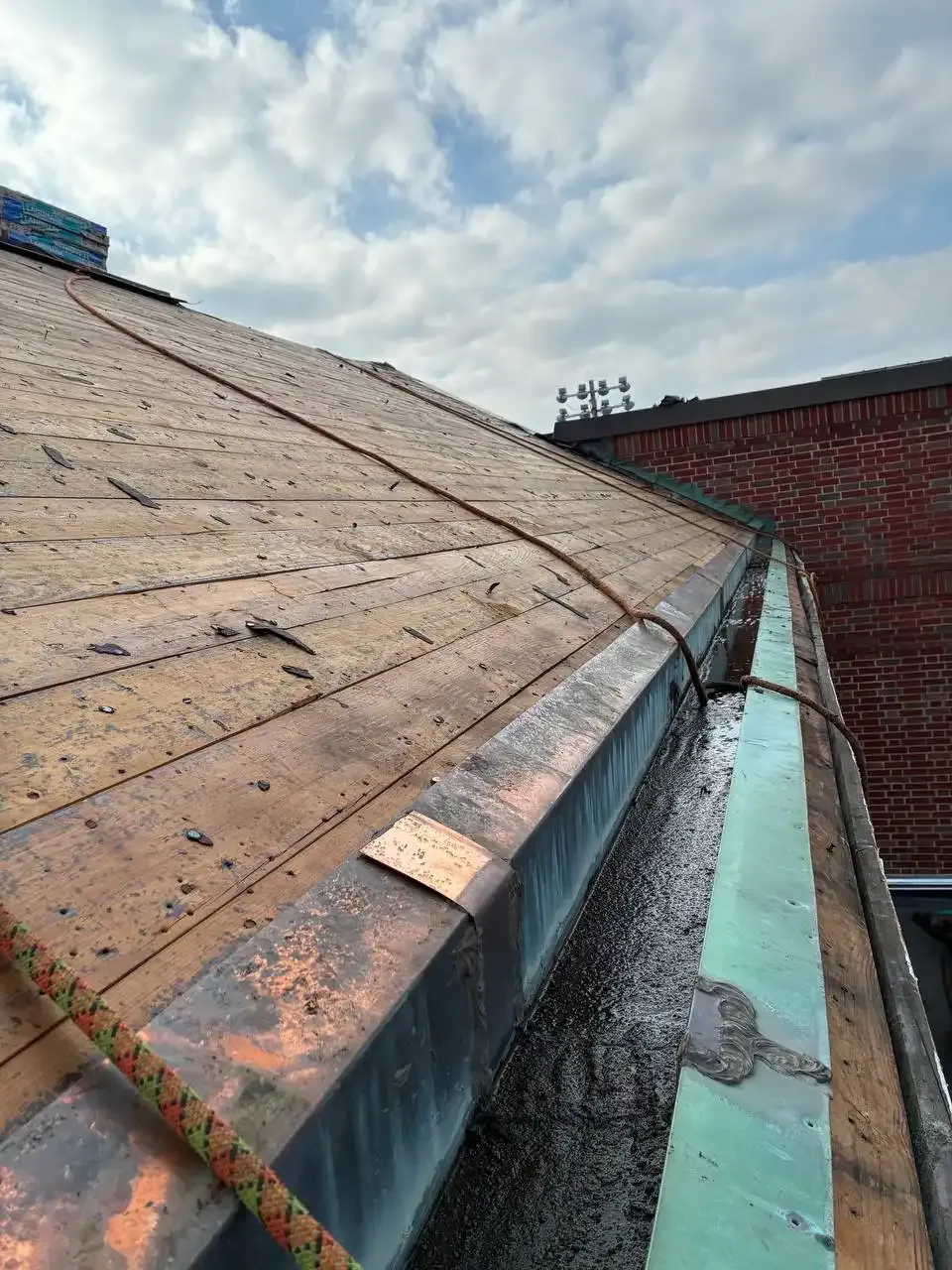
| Copper or zinc | $1,000–$2,000+ | $10.00–$20.00+ | Copper hit record prices in 2026. Usually reserved for accents, bays, and porch roofs. |
Metal also needs a different underlayment (a high-temperature synthetic), more trim and closure pieces, and a metal-trained crew, so the installed price gap is bigger than the material gap. Our metal roofing vs. shingles comparison walks through the whole picture, and our metal roofing overview covers the options.
Tile, Slate, Wood, and Flat Roof Materials
| Material | Materials Per Square | Notes |
|---|---|---|
| Concrete tile | $300–$500 | Heavy. Most St. Louis homes need a structural review before switching from asphalt to tile. |
| Clay tile | $500–$1,000 | Longer-lasting than concrete, more fragile during installation, more expensive per piece. |
| Natural slate | $600–$1,600+ | The longest-lived roof there is, and the most expensive to buy and to install. Few local crews do it. |
| Synthetic slate or shake | $400–$700 | Polymer or rubber tiles that mimic the look at a fraction of the weight. |
| Cedar shakes | $350–$700 | Beautiful, but wants maintenance and carries a fire-rating question in some subdivisions. |
| EPDM rubber membrane | $70–$150 | The workhorse for low-slope additions and porch roofs. |
| TPO or PVC membrane | $100–$300 | Reflective, heat-welded seams. See our guide to the best flat roof system. |
Underlayment, Flashing, and Everything Else on the Roof
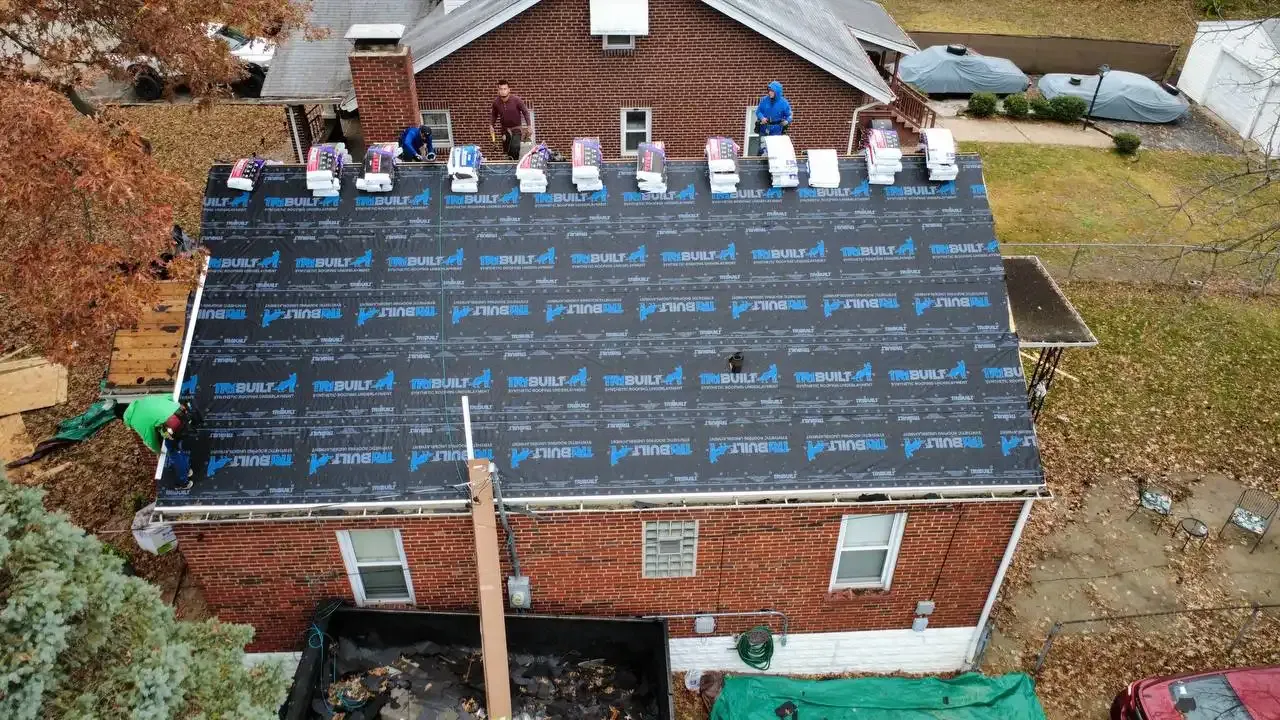
The shingles get the attention, but a third or more of the material bill goes to the parts under and around them. Skipping or downgrading these is how a cheap roof gets cheap. Here is what each costs in materials for 2026.
| Component | Material Cost | Where It Goes |
|---|---|---|
| Synthetic underlayment | $20–$40 per square | Across the whole roof deck under the shingles. Replaced the old #15 felt ($15–$25) on nearly every job. |
| Ice-and-water shield | $35–$70 per square | Eaves, valleys, and around chimneys and skylights. Code requires it at the eaves in our climate. Usually 3–5 squares' worth on an average roof. |
| Starter strip shingles | $0.50–$1.00 per linear foot | First course along every eave and rake so the edge seals. |
| Hip and ridge cap shingles | $2.00–$4.00 per linear foot | Every peak and hip. Matched to the shingle line and color. |
| Drip edge | $1.50–$4.00 per linear foot | Metal edge along eaves and rakes. Steel tariffs added 15–25% to this line in 2026. |
| Ridge vent | $3.00–$6.00 per linear foot | Exhaust ventilation at the peak. Pairs with soffit intake. See how ventilation affects energy bills. |
| Step, counter, and pipe flashing | $200–$600 per roof | Every wall, chimney, and pipe penetration. New flashing every time; reused flashing is a red flag. See what flashing does. |
| Roofing nails and sealant | $60–$120 per roof | Coil nails run about 1.5 lbs per square. Cheap to include, expensive to skimp on. |
| Roof decking (only if damaged) | $25–$55 per 4x8 sheet | Replaced by the sheet where rot is found during tear-off. A good estimate quotes a per-sheet price up front. See decking replacement cost. |
What a Full Material List Costs: 2,000 Sq Ft Home Example
Here is the complete material package for a typical 2,000 sq ft home in the St. Louis area: 22–26 squares of roof at a moderate pitch, one layer coming off, architectural shingles going on. Shingle quantities include waste.
| Material | Quantity | 2026 Cost |
|---|---|---|
| Landmark architectural shingles | 24–29 squares (with waste) | $2,300–$4,100 |
| Synthetic underlayment | 22–26 squares | $450–$1,050 |
| Ice-and-water shield | 3–5 squares | $100–$350 |
| Starter strip | 160–200 linear feet | $80–$200 |
| Hip and ridge caps | 60–100 linear feet | $120–$400 |
| Drip edge | 160–200 linear feet | $240–$800 |
| Ridge vent | 30–50 linear feet | $90–$300 |
| Flashing, pipe boots, sealant | Per roof | $250–$600 |
| Nails | Per roof | $60–$120 |
| Total materials | $3,700–$7,900 |
Call it $4,000 to $7,500 for most homes. Stepping up to Landmark Pro adds roughly $800–$1,000 to the total. ClimateFlex Class 4 adds $1,300–$1,700, which an insurance discount often pays back within a few years in hail country. The same home installed runs $8,000 to $17,000, so materials are about 35–50% of the bill. The rest is labor, tear-off, disposal, permits, and the contractor's overhead.
Roofing Material Prices in Missouri and Illinois
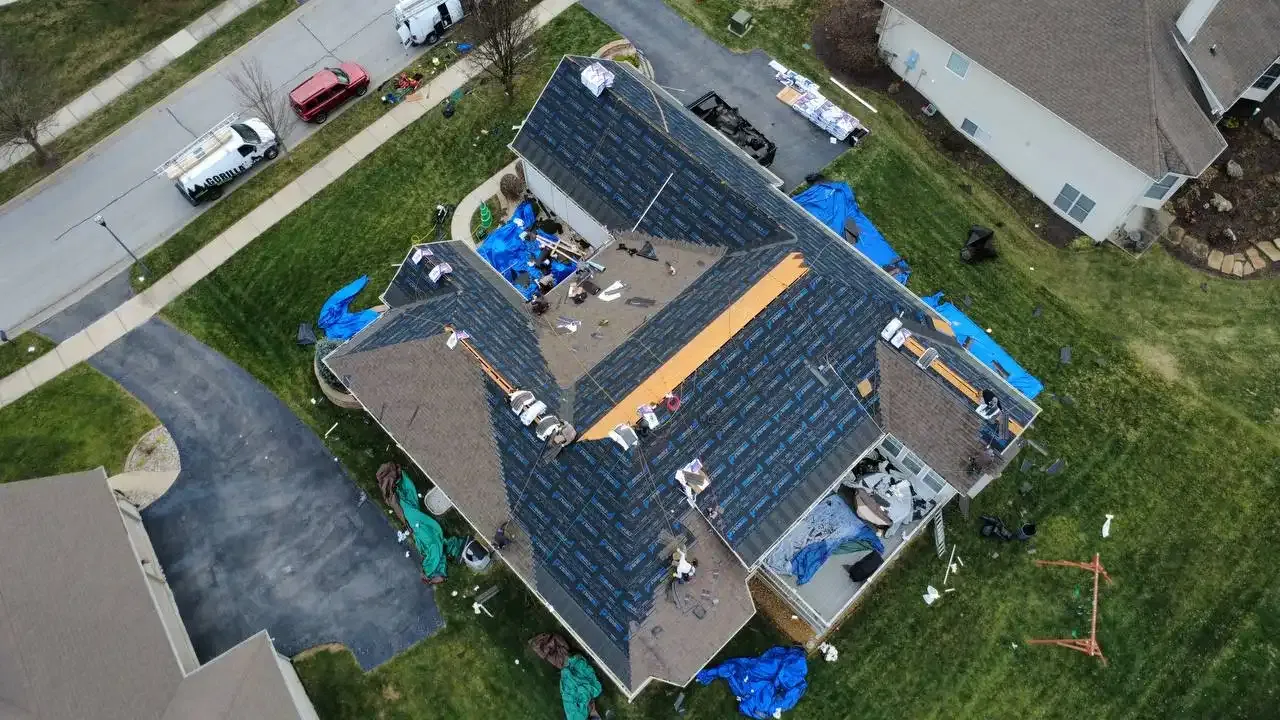
Here is something most cost guides get wrong: a bundle of Landmark shingles costs the same in Chesterfield as it does in Belleville. The same three or four regional suppliers serve both sides of the river, and manufacturer pricing does not change at the state line. What actually moves the material bill in our area is smaller and more local.
- Sales tax: Missouri's combined state and local rate runs roughly 7–10% depending on the municipality; Illinois runs about 7–9% in the Metro East. On a $6,000 material package, that is a $400–$600 line either way. Ask whether tax is in the quote.
- Delivery: Suppliers deliver free or nearly free inside the metro. Homes out past Warrenton, Troy, or down toward Festus can see a $75–$200 delivery charge, more for boom-truck rooftop loading.
- Hail season: After a big storm in St. Charles County or Madison County, local yards sell through their stock and prices firm up for a few weeks. If your roof is not leaking, waiting out the rush can save real money.
- Older homes: Belleville, Alton, and the older parts of St. Louis have more decking to replace and more flashing to rebuild. Budget a few extra sheets and an extra flashing kit.
For the installed number, a new asphalt roof on a typical 2,000 sq ft home costs about $8,000 to $17,000 anywhere in the St. Louis metro, Missouri or Illinois. Our roof replacement cost guide breaks that down by home size, and roofing labor costs covers what local crews charge.
2026 Roofing Material Price Trends
Material prices moved more in 2026 than in any year since the pandemic, and the direction was up. Here is what happened and what it means if you are pricing a roof this year.
- Two manufacturer increases: Six of the seven major shingle manufacturers raised prices twice this year, roughly 4–8% in the spring and another 6–9% on June 1. CertainTeed, GAF, and Owens Corning all landed in that range.
- Metal tariffs: The 50% tariff on imported steel and aluminum raised the price of metal panels, drip edge, flashing, and fasteners by 15–25%. It shows up on asphalt roofs too, because every roof uses metal at the edges and penetrations.
- Copper: Copper hit record prices in 2026. Copper flashing, valleys, and accent roofs cost noticeably more than a year ago.
- Chemical inputs: Anti-dumping duties on adhesive and sealant ingredients from overseas nudged up the cost of ice-and-water shield, sealants, and the asphalt itself.
- Net effect: A full material package costs 15–25% more than it did in 2024. The shingle line alone is up about 10–15%.
What to do about it: get your estimate in writing with a price-hold date, and ask the contractor to lock material pricing when you sign. Most estimates are good for 30 days for exactly this reason. If a spring increase is announced, signing in the winter can be worth several hundred dollars. And if you are on the fence between a standard and a Class 4 shingle, price the insurance discount now, because the gap between the two has stayed steady while everything else rose.
How to Read the Materials Line on a Roofing Estimate
A good estimate lists materials so you can check them. Ask for these items separately, and compare them line by line across quotes.
- Shingle brand, product line, and color, with the number of squares and the waste percentage. "Architectural shingles" with no brand is not an estimate.
- Underlayment type. Synthetic should be the default. If it says felt, ask why.
- Ice-and-water shield coverage. At minimum the eaves and valleys. Around every chimney and skylight is better.
- Starter strip, hip and ridge caps, and drip edge as their own lines, not folded into "shingles."
- Ventilation: ridge vent, box vents, or both, and whether intake is being added or checked.
- Flashing: new or reused. The answer should be new.
- Decking allowance: a per-sheet price for any plywood that has to be replaced, so there are no surprises on tear-off day.
Red flags: a materials line that is one lump number, a waste factor over 15% on a simple gable roof, no underlayment listed at all, and any wording about reusing the existing flashing or drip edge. Our guides on roofing contractor fees and what to research when choosing a roofer cover the rest of the estimate.
Should You Buy the Materials Yourself?
It usually costs more, not less. A contractor's supplier pricing is typically 10–25% under retail, delivery to the roof is included, and if a bundle is short or a color is wrong, the supplier fixes it the same day. Homeowner-supplied materials also complicate the warranty: CertainTeed's enhanced warranties require a matched system installed by a credentialed contractor, and most roofers will not warranty labor on materials they did not source. Our guide to the CertainTeed ShingleMaster warranty explains what that coverage is worth.
How to Spend Less on Materials Without Getting a Worse Roof
- Choose standard Landmark unless you have a reason not to. It carries the same lifetime limited warranty as the heavier lines and looks nearly identical from the street.
- Pick an in-stock color. Special-order colors cost more per bundle and can delay the job.
- Price the Class 4 discount before you rule it out. Many St. Louis area insurers cut premiums enough to cover the ClimateFlex premium in three to five years.
- Do not over-spec ice-and-water shield. Eaves, valleys, and penetrations are what matter. Covering the entire deck adds $600–$1,200 and helps little on a steep roof.
- Sign before the next increase. Manufacturers announce increases weeks in advance, and a signed contract usually locks the price.
- Fix everything while the roof is open. Flashing, vents, and decking cost less in materials now than in labor later.
- Compare itemized material lists, not totals. The cheapest quote is often cheap because something is missing.
If the total is more than you want to pay at once, financing spreads it out. See our cash vs. financing comparison and real monthly payment examples.
Frequently Asked Questions
How much is roofing material per square?
In 2026, asphalt shingles cost about $90 to $175 per square for the shingles alone: $90–$125 for 3-tab, $95–$140 for standard architectural like CertainTeed Landmark, $130–$175 for Landmark Pro, and $150–$200 for Class 4 impact-resistant. Metal panels run $150 to $700 per square, tile $300 to $1,000, and slate $600 to $1,600 or more. Underlayment, flashing, and accessories add another $60–$120 per square on top.
How much do asphalt shingles cost per bundle?
About $30 to $42 per bundle for 3-tab, $32 to $47 for standard architectural shingles, $43 to $58 for heavyweight lines like Landmark Pro, and $50 to $67 for Class 4 shingles. Three bundles cover one square. Designer shingles like Presidential Shake run $100 to $170 per bundle.
How much are roofing materials for a 2,000 square foot house?
Plan on $4,000 to $7,500 for the complete material package with architectural shingles: shingles, underlayment, ice-and-water shield, starter, ridge caps, drip edge, ridge vent, flashing, and nails. That covers 22 to 26 squares of roof. Installed, the same roof runs $8,000 to $17,000.
How much does metal roofing material cost per square?
Corrugated steel panels cost $150 to $350 per square in materials, standing seam steel or aluminum $300 to $600, metal shingles $350 to $700, and stone-coated steel $400 to $700. Copper is $1,000 to $2,000 or more. Add high-temperature underlayment and extra trim, and expect a metal-trained crew, so the installed price is two to three times that of asphalt.
How much is a new roof in Missouri or Illinois?
A new asphalt shingle roof in the St. Louis metro costs about $8,000 to $17,000 installed for a typical 2,000 sq ft home, on either side of the river. Materials are $4,000 to $7,500 of that. Material prices are the same in Missouri and Illinois; sales tax, delivery distance, and hail-season demand are what shift the number locally.
What is the most expensive roofing material?
Natural slate and copper. Slate runs $600 to $1,600 or more per square in materials and needs a specialty crew. Copper is $1,000 to $2,000 or more per square and hit record prices in 2026. On the other end, 3-tab asphalt is the cheapest at about $90 to $125 per square, though it has the shortest life.
Are roofing material prices going up in 2026?
Yes. Major shingle manufacturers raised prices twice in 2026, about 4–8% in the spring and 6–9% on June 1. Steel and aluminum tariffs pushed metal panels, drip edge, and flashing up 15–25%. A full material package now costs 15–25% more than it did in 2024. Ask your contractor to lock material pricing when you sign.
Can I save money by buying the roofing materials myself?
Usually not. Contractors buy at supplier pricing that is 10–25% below retail, get delivery to the roof included, and can fix a short order the same day. Homeowner-supplied materials also void most enhanced manufacturer warranties and most contractors will not warranty their labor on them.
How much do CertainTeed Landmark shingles cost per square?
About $95 to $140 per square for standard Landmark in 2026, or $32 to $47 per bundle. Landmark Pro runs $130 to $175 per square, and Landmark ClimateFlex, the Class 4 impact-resistant version, runs $150 to $200. Installed with underlayment, accessories, and labor, a Landmark roof costs about $400 to $700 per square in the St. Louis area.
Get a Free, Itemized Estimate
The material numbers above are planning ranges. The real number comes from measuring your roof and pricing the exact shingle, color, and accessories you want on it. Gorilla Roofing estimates list every material separately, with the brand, the line, the squares, and the waste factor, so you can compare ours against anyone else's line for line. Not sure whether you need a full replacement yet? Start with how contractors decide between repair and replacement.
Call (636) 295-1212 or request a free estimate and we'll walk you through the materials, the labor, and the total, with no guesswork and no surprises.