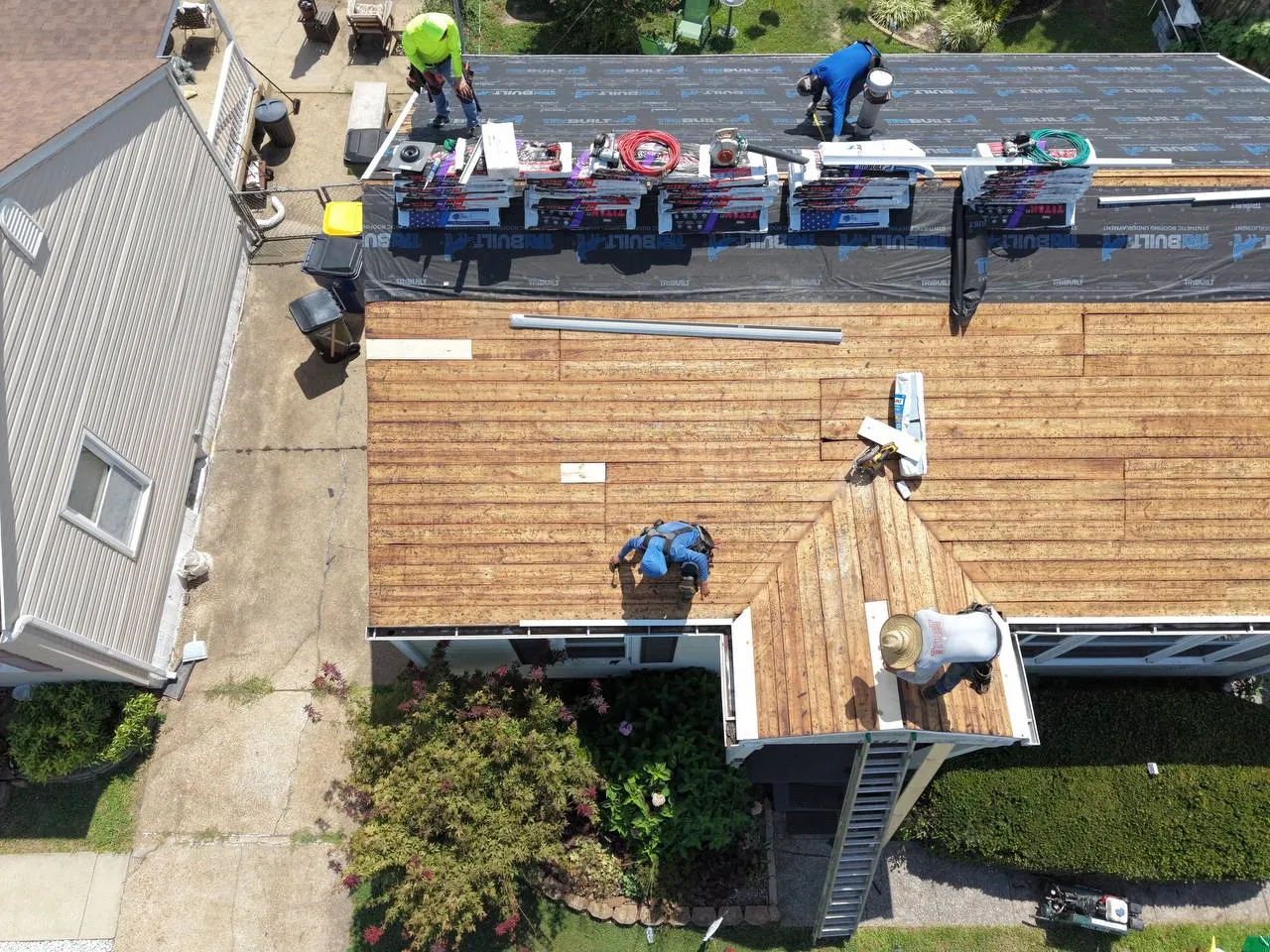
Here's a phrase no homeowner wants to hear on day one of a roof replacement: "Yeah, so about the decking." It usually comes with a slight wince and a photo on somebody's phone.
Decking is the wood layer under your shingles. You never see it. You never think about it. And then the old shingles come off and there it is, looking a little worse than everybody hoped. It's the single most common mid-job surprise on a roof replacement, and it's the one that catches people off guard because it wasn't visible from the driveway.
So let's take the surprise out of it. Here's what roof decking is, when it needs replacing, what it costs, and why an honest roofer can't always promise you a final number until the tear-off is done.
What Roof Decking Actually Is
Your roof is a layered sandwich. On top you've got shingles. Under that, underlayment. And under all of it, the decking, also called sheathing. It's the flat wood surface that everything else nails into. On most homes it's either plywood or OSB (oriented strand board, the stuff that looks like a million wood chips got pressed together at a party).
Older homes sometimes have plank decking instead, which is individual boards laid side by side. That's fine when it's solid, but planks leave gaps and they tend to be the ones hiding decades of quiet water damage.
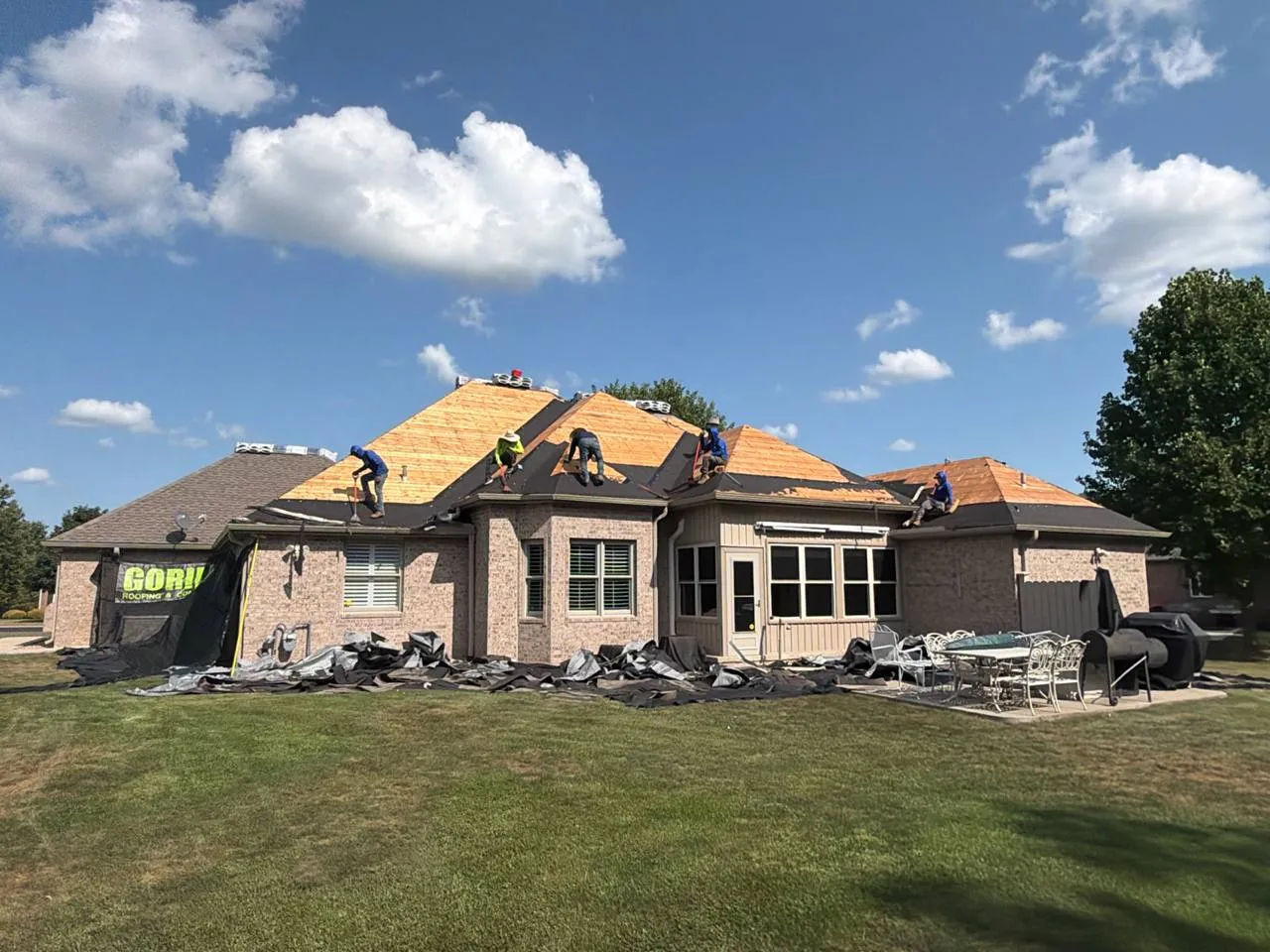
The decking does the unglamorous but critical work: it holds the fasteners, it gives the roof its structural surface, and it keeps everything above it from sagging into your attic. If the wood is soft, rotted, or crumbling, nailing new shingles to it is like hanging a picture frame on wet cardboard. It won't hold, and it won't last.
When Decking Actually Needs Replacing
Good news first: most decking is fine. On a typical replacement, we're often swapping out a handful of bad boards, not the whole roof. The decking only comes off where it's failed, and the rest stays put.
Here's when a section has to go:
- It's soft or spongy underfoot, which means moisture got in and the wood lost its strength
- It's visibly rotted, black-stained, or growing something that belongs in a forest
- It's delaminating, where plywood layers peel apart or OSB swells and flakes
- There's an actual hole, usually around a chimney, vent, or old leak that nobody caught
- It's warped or buckled badly enough that new shingles wouldn't lay flat
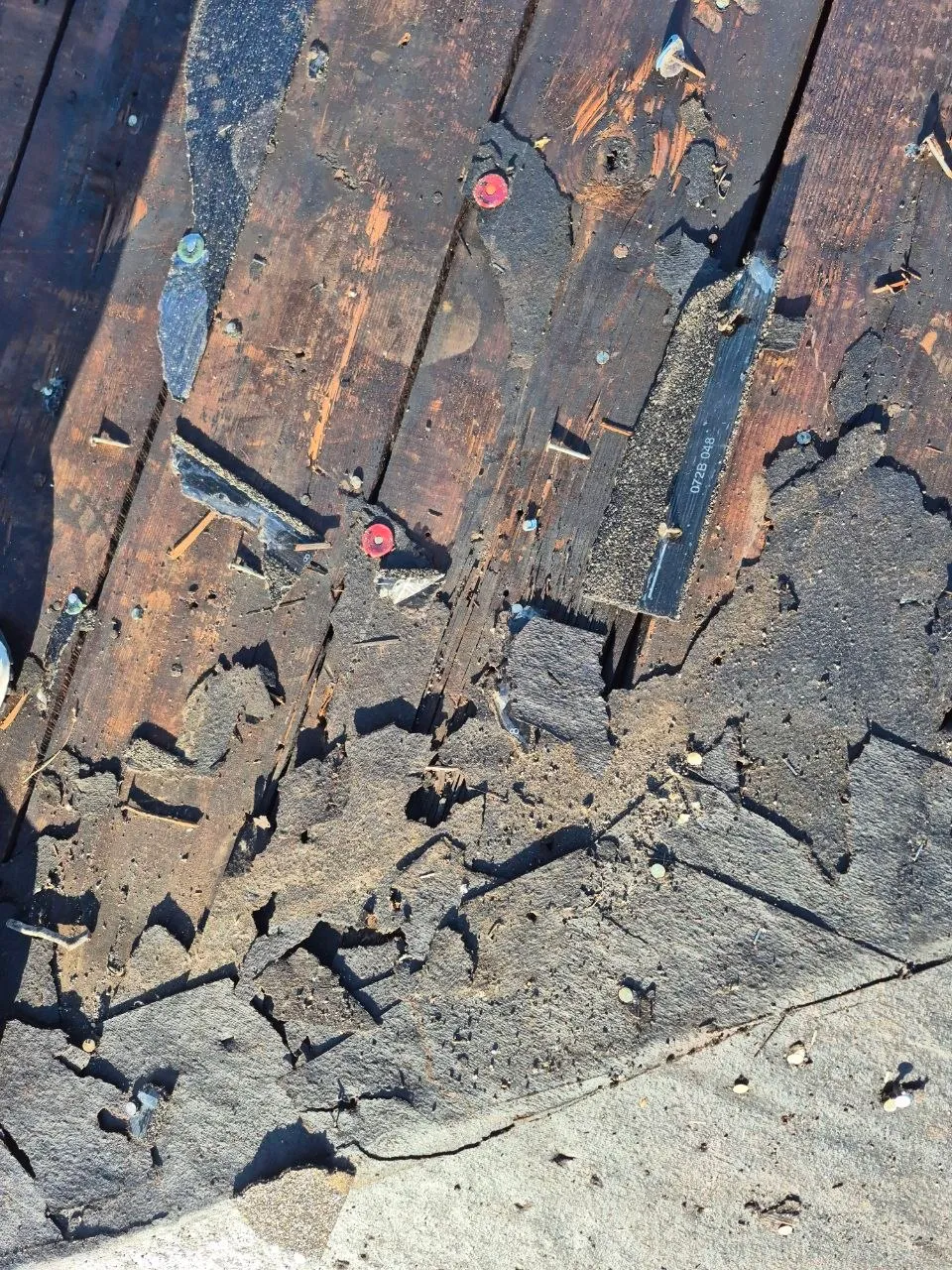
The usual culprit is water. A small leak around flashing or a vent can drip onto the same spot for years, and the shingles above it look totally normal the whole time. That's why decking damage is a surprise: the evidence is sealed under the roof until the roof comes off. Storm damage from our storm damage repair work can expose it too, when wind lifts shingles and lets water into places it was never supposed to go.
If a roofer promises zero decking replacement before they've even removed a shingle, they're either psychic or hoping you won't ask questions later.
What Decking Replacement Costs
Decking is usually priced per sheet or per board, on top of your base roof price. A standard sheet of plywood or OSB covers about 32 square feet (that's a 4-foot by 8-foot panel). Pricing varies with lumber costs and how hard the section is to reach, but most homeowners see something in the range of a modest per-sheet charge that includes the material and the labor to cut out the bad wood and nail in the new.
A few things that move the number:
- How many sheets are bad. One or two is a rounding error. Fifteen is a real line item.
- Plywood versus OSB. Plywood usually costs a bit more but handles moisture better over time.
- Access and pitch. A steep or high roof takes longer to work on safely.
- Plank decking conversion. If old boards need to be replaced with full sheathing, that's more material and more labor.
The honest truth is that decking is the one part of the estimate nobody can nail down perfectly ahead of time. A good contractor will give you a clear per-sheet rate up front so that when the tear-off reveals the damage, there's no guessing and no drama. You already know the math. For the rest of the project, our financing options can help spread the whole thing out if a few surprise sheets stretch the budget.
Why It Can't Be Priced Until the Roof Is Off
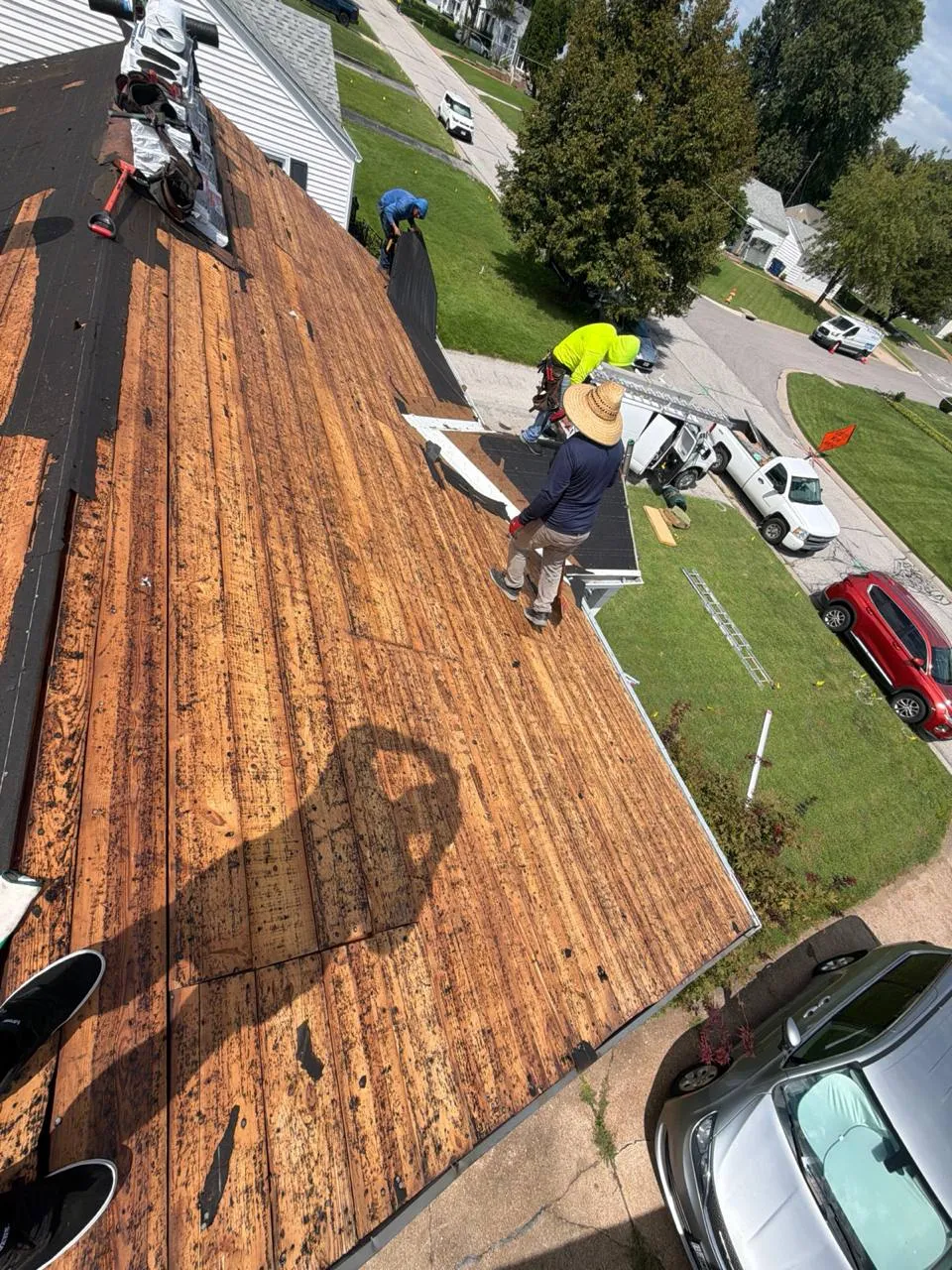
This is the part that frustrates people, and honestly, that's fair. You want a final number before the job starts. We get it. But decking damage lives underneath the shingles, and no inspection method sees through solid roofing with total certainty.
A thorough inspection can flag the warning signs. Soft spots you can feel from above. Stains in the attic. Sagging along a plane. Those tell us decking replacement is likely and roughly where. What they can't tell us is the exact sheet count, because a stain the size of a dinner plate on the ceiling sometimes hides a decking problem the size of a coffee table.
So the professional move isn't to pretend. It's to set the rate in advance, document what we find with photos as we go, and only charge for what actually gets replaced. If we quote for eight sheets and only four are bad, you pay for four. That's how it should work.
How To Avoid Getting Surprised
You can't fully prevent decking damage, but you can make sure it never blindsides you on the invoice. A few things to do before you sign anything:
- Ask for the per-sheet decking rate in writing, before the job starts
- Ask that any replaced decking be photographed so you can see what you paid for
- Ask what happens if they find more or less than expected (the answer should be: you're charged for actual, not estimated)
- Keep up with roof maintenance so small leaks get caught before they quietly eat your sheathing
The homeowners who feel burned by decking charges are almost never the ones who got surprised by the wood. They're the ones who got surprised by the bill because nobody explained the rate up front. Handle that conversation before the tear-off and the whole thing becomes a non-event.
Every roof we replace starts with an honest look and a straight estimate, decking included. When we find bad sheathing, you'll see the photos and you'll already know the number. No wince, no phone photo ambush. If you're planning a replacement and want it explained like a neighbor rather than a salesman, our roof replacement team is happy to walk you through it.