The average roof replacement costs $8,000 to $17,000 in 2026 for a typical 2,000 sq ft home with architectural asphalt shingles and a full tear-off. Most St. Louis area homeowners land between $9,500 and $14,000. That works out to $4.00 to $8.50 per square foot of home, or $400 to $700 per roofing square (100 sq ft of roof). A small ranch or townhouse starts around $4,000. A large, steep, or complex roof, or a switch to metal, tile, or slate, runs $20,000 to $40,000 and up.
Whether you call it a roof replacement, a re-roof, or a reshingle, it is the same job: tear off the old roof, fix what is under it, and install a new system. This guide covers the average cost by home size and by material, what you pay per square foot and per square, what tear-off adds, what each part of the roof costs, how labor and design change the number, the fees that surprise people, and how to tell a fair estimate from a low one. For the material prices alone, see roofing material costs per square. For the labor side, see roofing labor costs.
Average Roof Replacement Cost in 2026
Nationally, the average asphalt shingle roof replacement runs about $12,000 in 2026, with most jobs between $9,000 and $16,000. The St. Louis metro sits close to the national middle: lower than the coasts, a little higher than rural Missouri and southern Illinois. Here is what the range looks like in practice.
| Tier | Installed Cost | What It Looks Like |
|---|---|---|
| Low end | $4,000–$7,500 | Small or simple roof (10–16 squares), one layer to remove, standard architectural or 3-tab shingles, no decking surprises. |
| Typical | $9,500–$14,000 | 2,000 sq ft home, 22–26 squares, moderate pitch, CertainTeed Landmark shingles, full tear-off, a few sheets of decking, new flashing and vents. |
| High end | $17,000–$30,000+ | Large or steep roof, dormers and valleys, two layers coming off, Class 4 or designer shingles, or a switch to metal. |
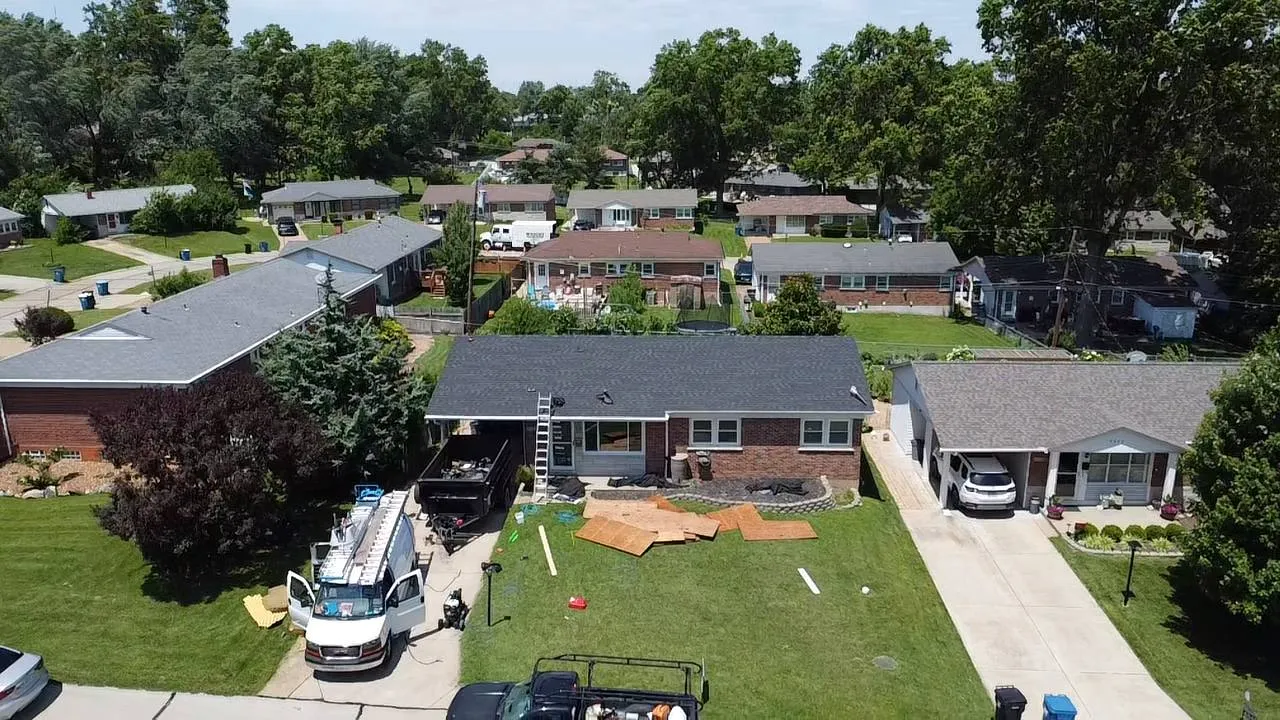
Prices rose 15–25% between 2024 and 2026. Shingle manufacturers raised prices twice in 2026 alone, and steel and aluminum tariffs pushed up flashing, drip edge, and metal panels. A quote from two years ago is not a useful comparison anymore.
Roof Replacement Cost by Home Size
Roof size drives the number more than anything else. The roof is bigger than the house: pitch and overhangs add 10–40% to the footprint. Squares below assume a moderate pitch. Costs are for architectural asphalt shingles with a full tear-off, installed, in the St. Louis area in 2026.
| Home Size (footprint) | Roof Squares (approx.) | Installed Cost Range | Typical (most homes) |
|---|---|---|---|
| 1,000 sq ft | 12–14 | $4,000–$8,500 | $5,500–$7,000 |
| 1,200 sq ft | 14–16 | $4,800–$10,200 | $6,500–$8,500 |
| 1,500 sq ft | 17–20 | $6,000–$12,500 | $8,000–$10,500 |
| 1,800 sq ft | 20–23 | $7,200–$15,300 | $9,500–$12,500 |
| 2,000 sq ft | 22–26 | $8,000–$17,000 | $9,500–$14,000 |
| 2,500 sq ft | 28–32 | $10,000–$21,000 | $12,000–$17,500 |
| 3,000 sq ft | 33–38 | $12,000–$26,000+ | $14,500–$21,000 |
| 3,500 sq ft | 39–44 | $14,000–$30,000+ | $17,000–$25,000 |
The low end of each range is a simple gable roof with one layer coming off. The high end is a cut-up roof with dormers, valleys, a couple of skylights, and two layers to remove. A townhouse or small ranch with an 800–1,000 sq ft roof usually lands between $3,500 and $7,000. These are planning ranges; the real number comes from measuring the roof and checking the decking, ventilation, and flashing.
Roof Replacement Cost Per Square Foot and Per Square
Two ways to say the same thing. Per square foot of home, a new asphalt roof runs $4.00 to $8.50. Per roofing square (100 sq ft of actual roof surface), it runs $350 to $550 for 3-tab shingles, $400 to $700 for architectural, $475 to $800 for Class 4 impact-resistant, and $800 to $1,500 for metal. Contractors think in squares, so converting your quote to a per-square number is the quickest way to compare it.
Inside that per-square price for an architectural roof: shingles are $95–$140, underlayment and accessories $60–$120, tear-off and disposal $100–$150, and labor $150–$350 (more on a steep roof). Permits, decking allowance, and the contractor's overhead make up the rest. Our roofing material cost guide breaks out every material line, and our labor cost guide covers what crews charge by material and by pitch.
Roof Replacement Cost in Missouri and Illinois
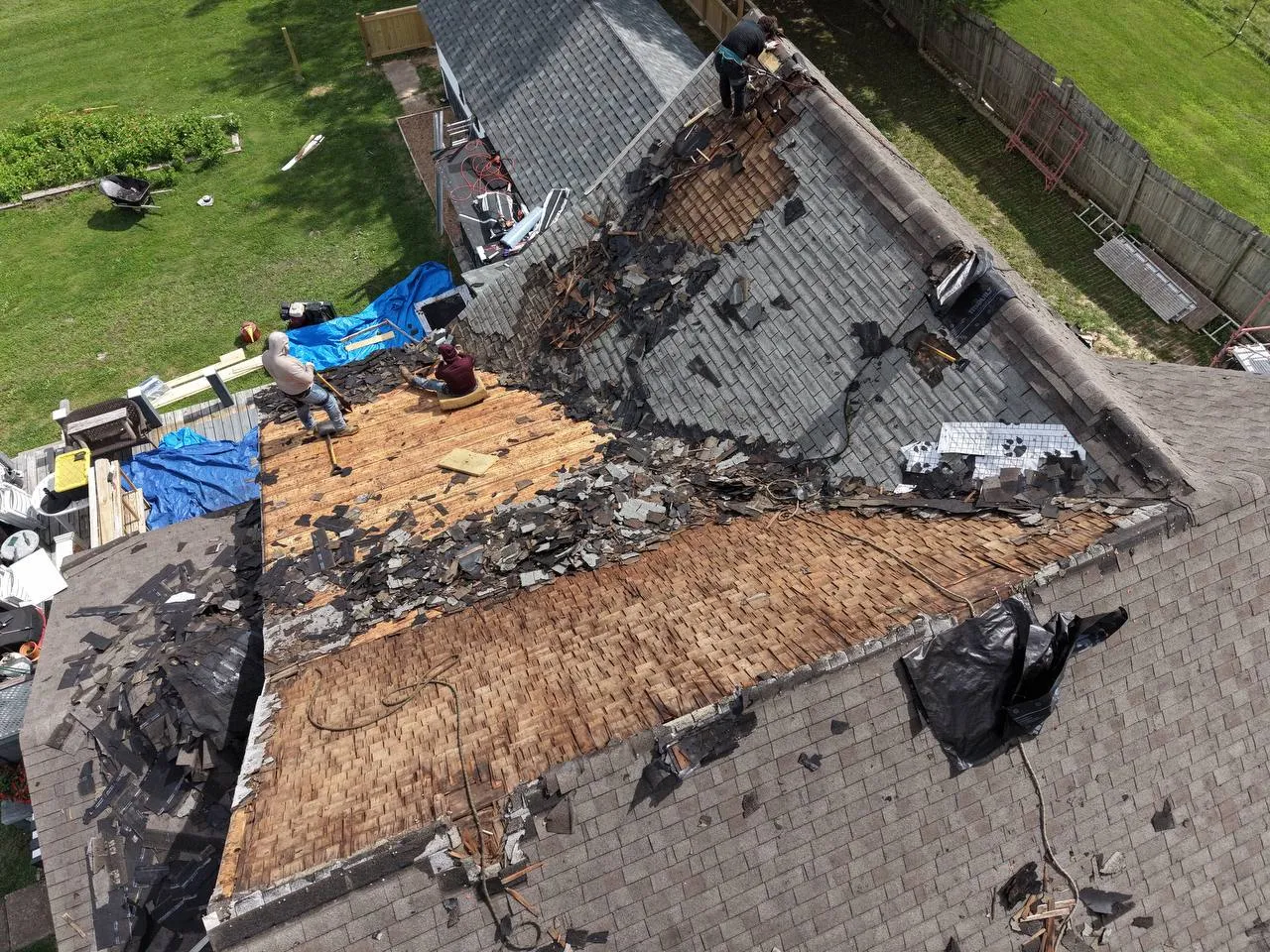
A new asphalt roof on a typical 2,000 sq ft home costs about $8,000 to $17,000 anywhere in the St. Louis metro, and most people pay $9,500 to $14,000. That holds on both sides of the river. Materials cost the same in Chesterfield as in Belleville because the same regional suppliers serve both, and manufacturer pricing does not change at the state line. What moves the number locally is smaller.
- Permit and inspection rules: Clayton, Ladue, Town and Country, and many HOA neighborhoods add paperwork and sometimes a day on the job. Most Metro East towns keep it simpler. Permits run $150–$500.
- Sales tax on materials: roughly 7–10% in Missouri and 7–9% in the Metro East depending on the municipality. Ask whether it is in the quote.
- Hail season: after a big storm in St. Charles County or Madison County, every crew is booked and prices firm up for a few weeks. If your roof is not leaking, waiting out the rush saves money.
- Older homes: Belleville, Alton, and the older parts of St. Louis have more decking to replace and more flashing to rebuild. Budget for a few extra sheets.
The only way to know your actual number is an on-site inspection that measures roof size and pitch and checks ventilation, flashing, decking, and any storm damage. Roof inspections are free with Gorilla Roofing.
Roof Replacement Cost by Material
After size, the material is the biggest cost driver. Asphalt shingles cover well over 80% of the roofs we install, almost all of them CertainTeed Landmark. Metal, tile, and slate cost two to five times more up front and last two to five times longer. The table shows what the materials alone cost per square, what a typical installed price per square looks like in 2026, and what that means for a 2,000 sq ft home.
| Roofing Material | Materials Only (per square) | Installed (per square) | 2,000 Sq Ft Home Installed | Typical Lifespan |
|---|---|---|---|---|
| 3-tab asphalt shingles | $90–$125 | $350–$550 | $7,500–$14,000 | 15–20 years |
| Architectural asphalt (CertainTeed Landmark) | $95–$140 | $400–$700 | $8,000–$17,000 | 25–30 years |
| Heavyweight architectural (Landmark Pro) | $130–$175 | $450–$750 | $10,000–$19,500 | 30+ years |
| Class 4 impact-resistant (Landmark ClimateFlex) | $150–$200 | $475–$800 | $10,500–$21,000 | 30+ years |
| Standing seam metal | $300–$600 | $900–$1,500 | $20,000–$39,000 | 40–70 years |
| Metal shingles or stone-coated steel | $350–$700 | $800–$1,400 | $17,500–$36,500 | 40–70 years |
| Concrete or clay tile | $300–$1,000 | $900–$2,500 | $20,000–$65,000 | 50–100 years |
| Natural slate | $600–$1,600+ | $1,500–$3,000+ | $33,000–$78,000+ | 75–150 years |
| Flat roof membrane (EPDM, TPO, PVC) | $70–$300 | $400–$1,000 | Porch and addition roofs, priced per job | 15–30 years |
Architectural shingles are the sweet spot for most St. Louis homes: a modest step up from 3-tab for a big step up in durability, wind rating, and looks. If you are weighing the step up to Landmark Pro or Class 4, see Landmark vs. Landmark Pro and what a Class 4 roof costs. Not sure between asphalt and metal? Our metal roofing vs. shingles guide lays out the trade-offs, and how long a shingle roof lasts covers the lifespan side.
What Each Part of Your Roof Costs
The shingles get the attention, but a roof is a system. Every layer under and around the covering has its own price, and skipping any of them is how a cheap roof turns into an expensive leak. Here is what each component adds, per square, installed.
| Component | Installed Cost (per square) | What It Does |
|---|---|---|
| Synthetic underlayment | $50–$100 | The water-shedding layer under the shingles, across the whole deck. |
| Ice-and-water shield | $80–$150 | Self-sealing membrane at the eaves, valleys, and penetrations. Code requires it at the eaves in our climate. |
| Tear-off and disposal | $100–$150 | Removing the old roof: crew labor plus dumpster and hauling. Per layer removed. |
| Roof decking (only if damaged) | $200–$400 | Plywood at $70–$100 per sheet installed. Only replaced where rot or water damage turns up during tear-off. |
| Flashing, drip edge, starter, ridge caps, and vents | $40–$80 combined | The small parts that seal every edge, seam, peak, and penetration. Cheap to include, costly to skip. |
| Structural reinforcement (tile or slate only) | $50–$150 | Extra framing so the roof can carry heavy materials. |
| Gutters (optional) | $4–$9 per linear foot | Often replaced with the roof so water drains away from the new edge. |
In materials alone, drip edge runs $1.50–$4 per linear foot, hip and ridge caps $2–$4 per foot, ridge vent $3–$6 per foot, and a full set of step, counter, and pipe flashing $200–$600 per roof. None of these will make or break your budget, but flashing in particular decides how the roof performs, so see why replacing roof flashing matters. Decking is the wild card. Nobody can see it until the old shingles come off, so a good estimate includes a per-sheet allowance rather than a surprise; read more on what roof decking replacement costs and on underlayment and ice-and-water shield.
How Roof Design Affects the Price
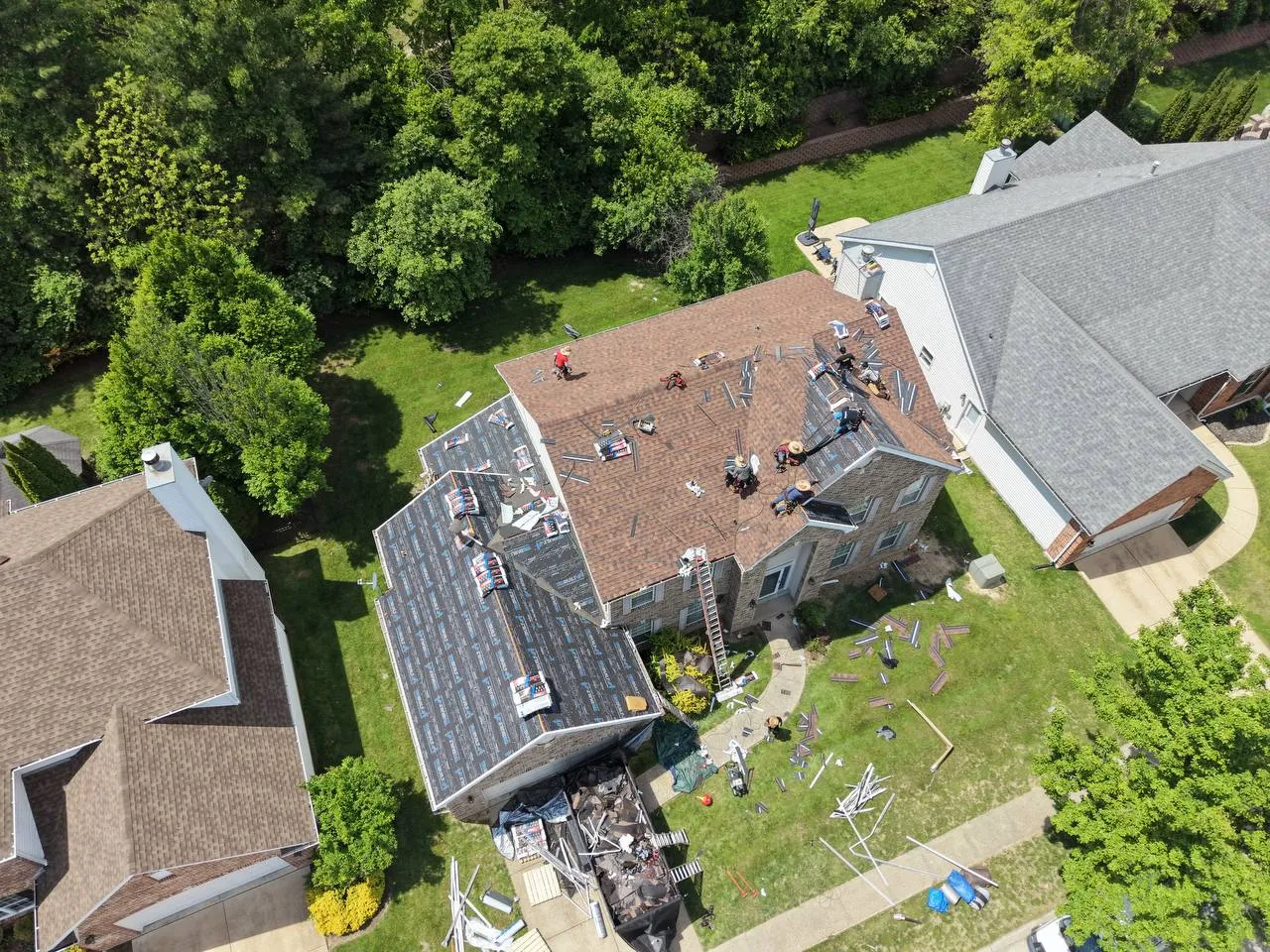
Two houses with the same square footage can get very different quotes, and roof design is usually why.
- Simple gable roofs are the cheapest to replace: fewer cuts, fewer components, minimal flashing.
- Complex roofs with dormers, valleys, multiple levels, skylights, and chimneys need extra material, extra cuts, and extra labor, and often run 25–50% more than a simple roof of the same size.
- Steep pitches (above about 7/12) need fall protection and slow the crew down, which shows up as 25–50% more labor.
- Two layers of old shingles roughly double the tear-off line.
When you compare quotes, make sure each contractor counted the same dormers, valleys, and penetrations. A lower number that missed a valley is not a lower price.
Labor and Installation Costs
Labor is 40–60% of the total cost of a roof replacement. For asphalt shingles, it runs about $150 to $350 per square on a walkable roof and $350 to $500 per square on a steep or complex one. Metal, tile, and slate cost more to install because the work is slower and needs specialized crews. A standard asphalt roof takes one to three days; metal or tile takes three to seven.
Labor rates in the St. Louis metro run near the national middle. They rise after major hail events, when every crew in the region is booked, and they tighten in late fall as the season shortens. For labor rates by the square and by the hour, what a fair labor line looks like, and how to estimate your own, see our roofing labor costs guide.
Average Cost to Tear Off and Replace a Roof
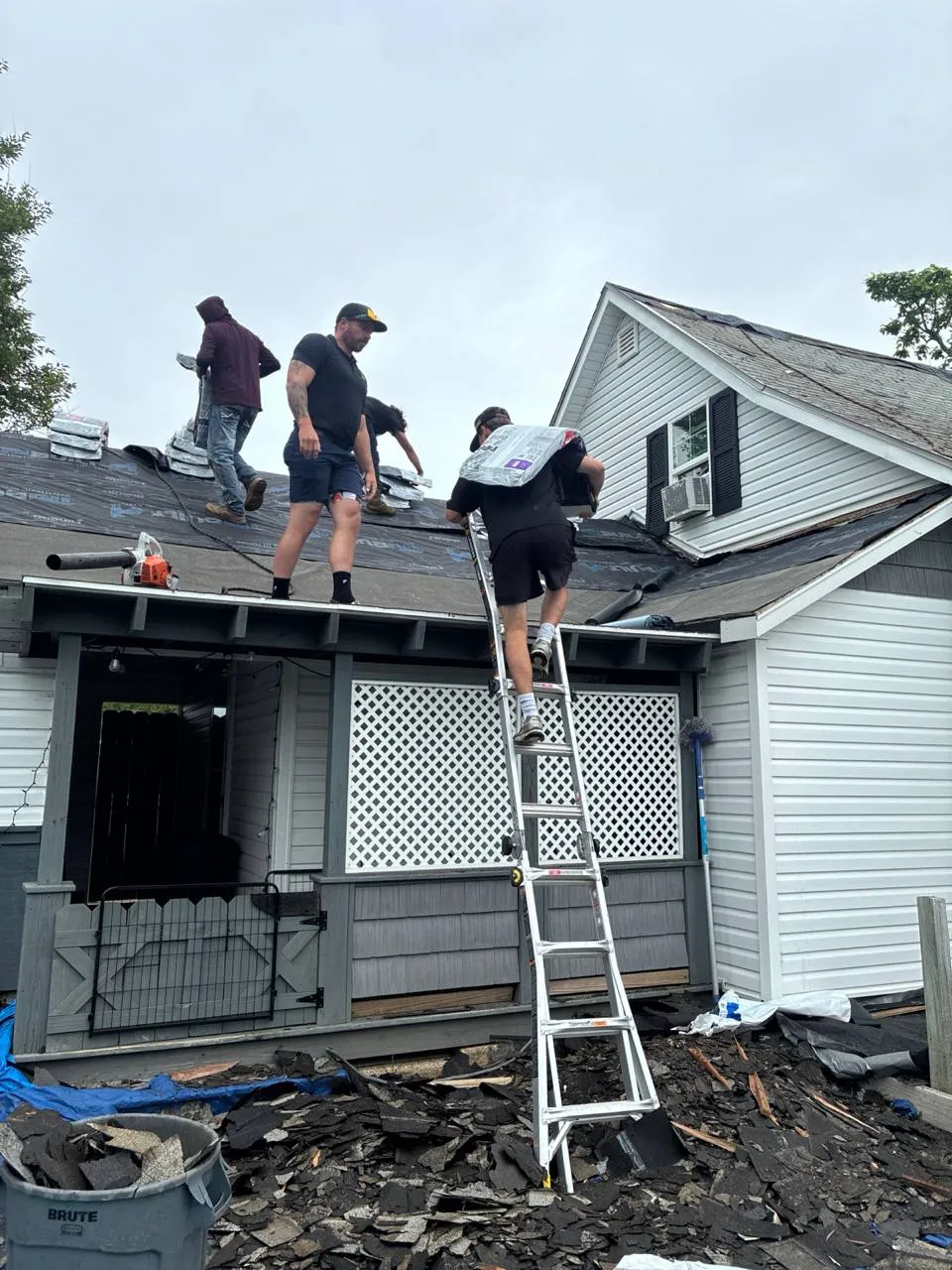
Every price in this guide includes a full tear-off, because that is how a roof should be replaced. Tear-off and disposal cost $100 to $150 per square per layer, or $1,200 to $3,900 on a 12- to 26-square roof. Two old layers roughly double it. So the average cost to tear off and replace a roof on a 2,000 sq ft home is the same $8,000 to $17,000 quoted above.
The alternative is a roof-over: laying new shingles on top of the old ones. It saves $1,000 to $3,000 up front. It also traps heat, hides rotten decking, adds weight the roof was not built for, shortens the new shingles' life, usually voids the manufacturer warranty, and costs more when the roof eventually needs a double tear-off. Most municipalities in our area allow only two layers, so if you already have two, tear-off is required. Our roof-over vs. tear-off comparison goes through it in detail. The short version: do the tear-off.
Location, Climate, and Hail
Where you live changes what a roof costs and what it should be built to handle. Urban areas carry higher labor rates; rural areas carry higher delivery costs. The St. Louis region is hail country, and that shapes two decisions. First, Class 4 impact-resistant shingles cost about $50–$60 more per square than standard Landmark, and many local insurers cut premiums enough to pay that back within a few years; see what Class 4 shingles cost. Second, if a storm already damaged your roof, the replacement may be an insurance claim rather than an out-of-pocket cost; see hail damage roof repair costs and whether insurance covers an older roof.
Energy Efficiency and Long-Term Value
The cheapest roof on the day of install is not always the cheapest roof to own. Metal roofs reflect heat and can lower summer cooling costs, and their 40–70 year lifespan means you may never replace one again. Architectural asphalt shingles sit in the middle: a modest step up in price over 3-tab for a big step up in durability and appearance.
When you compare materials, divide the installed cost by the expected lifespan. A $900-per-square standing seam metal roof that lasts 50 years costs about $18 per square per year. A $500-per-square architectural shingle roof that lasts 25 years costs about $20. Close to even over the long run, with a very different check up front.
What Is Included in a Roof Replacement Estimate?
Many homeowners compare estimates without realizing that roofing proposals often include different scopes of work. A lower estimate may not include the same protection or warranty. A complete replacement estimate should list:
- Shingles or primary roofing material, with the brand, product line, color, and number of squares including waste
- Underlayment type
- Ice-and-water shield, and where it goes
- Drip edge, starter strip, and ridge caps
- New flashing at every wall, chimney, and penetration
- Ventilation components
- Tear-off and disposal, with the number of layers
- A per-sheet allowance for decking
- Permit fees
- Cleanup and debris removal, including a magnetic nail sweep
- Workmanship warranty and manufacturer warranty registration
For a walkthrough of each line item, see what a full roof replacement includes. For what the contractor's own fees should look like, see roofing contractor fees.
Hidden Roof Replacement Costs
Some roof replacement expenses are not obvious until the project begins. Knowing them ahead of time keeps the final invoice close to the estimate.
- Decking: $70–$100 per sheet installed. Two to six sheets on an older roof is normal; a roof that leaked for years can need far more.
- Permit fees: $150–$500 depending on the municipality.
- Chimney and skylight flashing rebuilds: $300–$1,500 when the old flashing was mortared in or the counter-flashing has to be cut into brick.
- Ventilation fixes: adding soffit intake or replacing box vents with a ridge vent, $300–$900.
- Second tear-off layer: another $100–$150 per square.
- Disposal on a big or two-layer roof: a second dumpster, $400–$700.
- Gutters: often replaced with the roof, $4–$9 per linear foot.
Always ask for a detailed estimate that lists materials, labor, disposal, permits, and allowances separately, so you know exactly what is included and what would be an extra.
Repair or Replace?
If the roof is under 15 years old and the problem is one spot, a repair is usually the answer: the average roof repair runs $400 to $2,000 in the St. Louis area. If the roof is past 20 years, has several problem areas, or has already been repaired more than once, replacement is the better dollar. Our guides on roof repair costs, how contractors decide between repair and replacement, and the cost of waiting too long walk through the decision.
How to Build Your Own Rough Estimate
You do not need a contractor to get in the right ballpark. Work through these steps and you will know whether the quotes you get are reasonable.
- Measure the roof, not the house. Multiply the footprint by 1.1 for a low pitch, 1.3 for a moderate pitch, and 1.4 or more for a steep one. Divide by 100 to get squares.
- Count the complexity: dormers, valleys, skylights, chimneys, levels.
- Pick a material and use the materials-per-square figure from the table above, or the full list in our material cost guide. Add 10–15% waste.
- Add underlayment and ice-and-water shield for every square.
- Add tear-off and disposal for every square, per layer.
- Add an allowance for decking. A few sheets on an older roof is normal.
- Add flashing, drip edge, starter, ridge caps, and vents.
- Add labor at $150–$350 per square, more for steep or complex roofs.
- Add permits and a contingency for surprises.
- Compare that number to your quotes, line by line. The goal is transparency, not the lowest total.
How to Save Money on Roof Replacement
- Compare itemized quotes, not totals. Get at least three, and compare the scope line by line.
- Choose standard architectural shingles unless you have a specific reason not to. They are the best value on the market.
- Price the Class 4 insurance discount before you rule the upgrade out.
- Schedule outside hail season and the fall rush, when crews have open weeks and prices are softer.
- Sign before the next manufacturer increase. Most estimates are good for 30 days, and a signed contract usually locks the material price.
- Fix decking, flashing, and ventilation while the roof is open. Coming back later costs far more.
- Check for insurance coverage. If hail or wind damaged the roof, your policy may cover most of the replacement.
The goal is not the lowest price. It is the best roof for the money, installed right, with a warranty behind it. If the total is more than you want to pay at once, financing spreads it out; see our cash vs. financing comparison and real monthly payment examples for what that looks like.
Frequently Asked Questions
What is the average cost to replace a roof in 2026?
About $12,000 nationally, with most asphalt shingle replacements between $9,000 and $16,000. In the St. Louis area, a typical 2,000 sq ft home runs $8,000 to $17,000 installed with a full tear-off, and most homeowners pay $9,500 to $14,000. Small homes start around $4,000; large, steep, or metal roofs run $20,000 and up.
How much does it cost to replace a roof on a 2,000 sq ft house?
$8,000 to $17,000 with architectural asphalt shingles, and $9,500 to $14,000 for most homes. A 2,000 sq ft house has about 22 to 26 squares of roof. Landmark Pro adds roughly $1,000; Class 4 impact-resistant shingles add $1,300 to $1,700; standing seam metal runs $20,000 to $39,000.
How much does a new roof cost per square foot?
About $4.00 to $8.50 per square foot of home for an asphalt shingle roof, installed. Measured by roof area, that is $3.50 to $7.00 per square foot, or $350 to $700 per roofing square. Metal runs $8 to $15 per square foot of roof, tile $9 to $25, and slate $15 to $30 or more.
How much does it cost to tear off and replace a roof?
The same $8,000 to $17,000 for a typical 2,000 sq ft home, because every real replacement includes the tear-off. The tear-off itself is $100 to $150 per square per layer, about $1,200 to $3,900 on an average roof. Two old layers roughly double that line.
How much does a roof replacement cost in Missouri?
In the St. Louis metro, $8,000 to $17,000 for a typical 2,000 sq ft home with architectural shingles, and $9,500 to $14,000 for most jobs. Missouri and Illinois prices are the same for the same roof; materials come from the same suppliers on both sides of the river. Municipal permit rules, sales tax, hail-season demand, and the age of the house are what move the number locally.
Why are roof replacement quotes so different?
Because they are often quoting different roofs. One contractor includes new flashing, ice-and-water shield at every penetration, a ridge vent, and a decking allowance; another reuses the flashing, skips the ridge vent, and leaves decking as a change order. Compare the scope line by line before you compare the totals.
What is the most expensive part of a roof replacement?
Labor, at 40 to 60 percent of the total. The shingles themselves are usually 25 to 35 percent. Tear-off and disposal, underlayment and accessories, permits, and decking make up the rest. On a steep or complex roof, labor's share grows; on a simple roof with premium shingles, materials' share grows.
How much do roofing materials cost per square?
Materials alone run $90 to $175 per square for asphalt shingles, $150 to $700 for metal, $300 to $1,000 for tile, and $600 to $1,600 or more for slate. Underlayment, flashing, and accessories add another $60 to $120 per square. A full material package for a 2,000 sq ft home is $4,000 to $7,500. See our roofing material cost guide for the line-by-line breakdown.
Will I need new roof decking?
Only where the old decking is rotted or water-damaged, which no one can see until tear-off. Expect $70 to $100 per plywood sheet installed, or $200 to $400 per square if a whole area needs replacing. A good estimate includes a per-sheet allowance so it is not a surprise.
How much more does a complex roof cost?
Roofs with dormers, valleys, multiple levels, skylights, or chimneys usually run 25 to 50 percent more than a simple gable roof of the same size, because of extra materials, cuts, flashing, and labor. A steep pitch adds another 25 to 50 percent to the labor line.
Can I replace my roof before it starts leaking?
Yes, and it is usually cheaper to. Replacing a roof on your schedule, before water gets into the decking, insulation, and drywall, avoids the interior repairs that turn a $12,000 roof into a $20,000 project. See the cost of waiting too long.
How often should I replace my roof?
It depends on the material. Architectural asphalt shingles last 25 to 30 years in the St. Louis climate, 3-tab 15 to 20, metal 40 to 70, and tile or slate 50 years or more. Hail, poor ventilation, and skipped maintenance shorten all of them. See how long a roof lasts by material.
Does homeowners insurance cover roof replacement?
If the damage was caused by hail, wind, fire, or another covered event, your policy may cover full or partial replacement, minus your deductible. Wear and age are not covered, and older roofs may be paid at depreciated value. See whether insurance will cover an older roof and our insurance claims help.
Can I finance my roof replacement?
Yes. Gorilla Roofing offers financing options that turn the total into a monthly payment. See real monthly payment examples for what a $10,000 or $15,000 roof looks like per month.
Get a Free, Itemized Estimate
The numbers above are planning ranges. The real number comes from measuring your roof and pricing the exact shingle, accessories, and repairs it needs. Gorilla Roofing estimates are itemized, so you can see tear-off, materials, labor, flashing, and allowances as separate lines and compare them against anyone else's. If you are still deciding, our guides on what to research when choosing a roofing contractor and the roof replacement timeline cover what happens next.
Call (636) 295-1212 or request a free estimate and we'll walk you through the numbers, no guesswork and no surprises.