After a big hail storm rolls through St. Louis, the first question every homeowner asks is the same: what's this going to cost me? It's a fair question with a frustrating answer, because the sticker price of the repair and the amount you actually pay are two different numbers.
Here's the straight version. A hail repair might be billed at $8,000 or $18,000. But if you carry insurance and the damage is covered, what leaves your wallet is usually just your deductible. This article breaks down both numbers so you know what to expect before you ever talk to an adjuster. If your roof took a hit, our storm damage repair team walks this road with homeowners every week.
Repair Or Replace After Hail?
Hail doesn't behave like wind or a fallen branch. Wind rips shingles off in a spot. Hail bruises the whole roof at once. That difference matters a lot for cost.
A small hail event might leave a handful of dented shingles on one slope. That's a repair. A real storm with 1-inch or bigger stones peppers every slope, cracks the shingle mats, and knocks granules loose across the entire surface. Once that happens on multiple slopes, you're almost always looking at a full replacement, not a patch.
- Repair territory: isolated dents on one slope, roof under 12 years old, no granule loss elsewhere
- Replacement territory: bruising on three or more slopes, widespread granule loss, or a roof already past 15 years
- The gray zone: two slopes hit hard on a 10 to 15 year old roof, where the math gets close
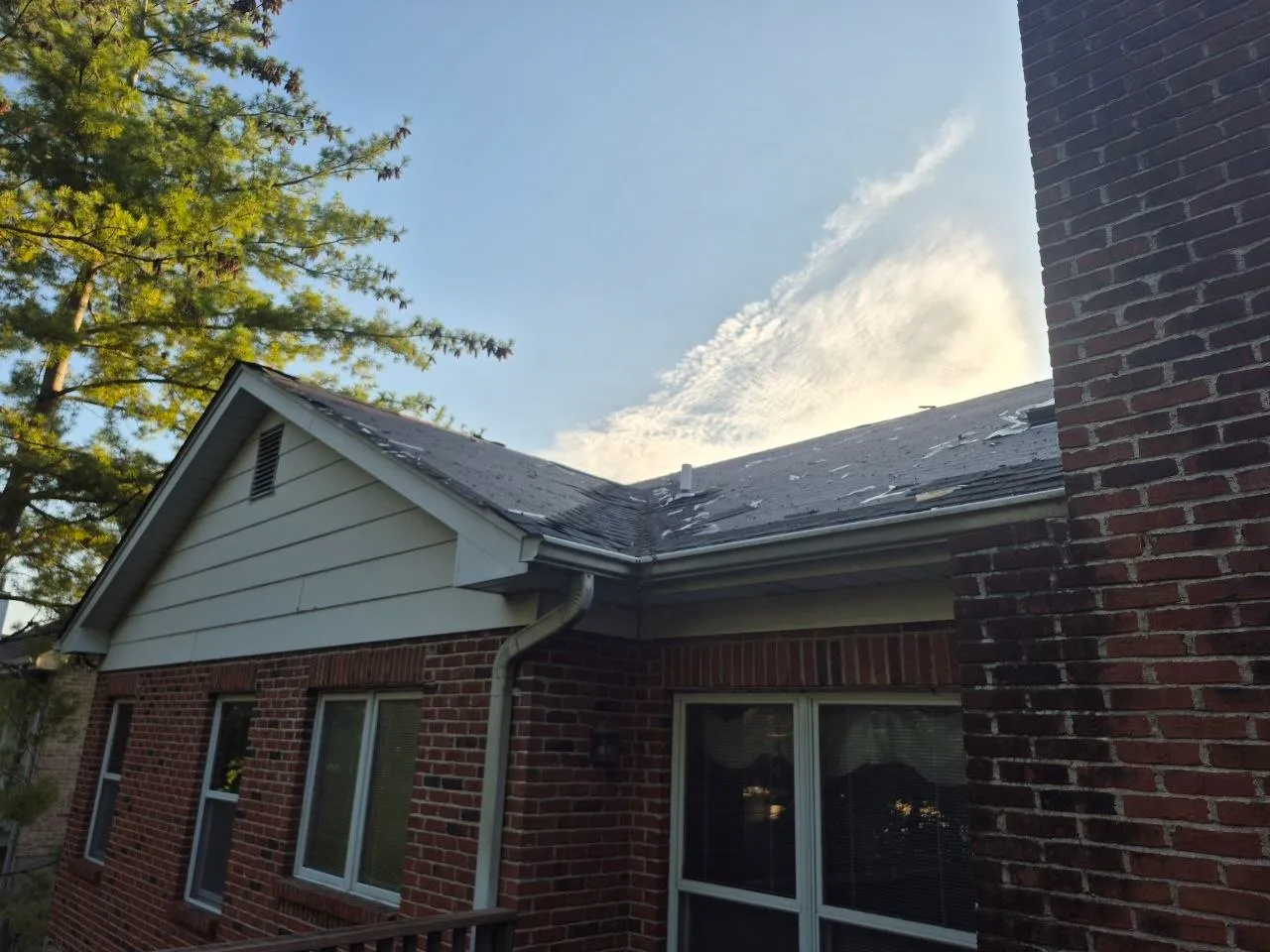
If you're not sure which camp your roof falls in, our guide on what roof hail damage looks like shows you the exact bruises and pockmarks to look for before anyone climbs up there.
St. Louis Hail Repair Cost Ranges
These are real ranges for the St. Louis metro and parts of Illinois, based on asphalt shingle roofs of average size and pitch. Metal, tile, and steep or complex roofs run higher. These are billed costs, not what you pay after insurance.
| Scope of work | What it covers | St. Louis-area cost |
|---|---|---|
| Minor repair | A few shingles on one slope | $450 - $1,200 |
| Moderate repair | One full slope, flashing, a vent or two | $1,500 - $4,000 |
| Full replacement, asphalt shingle | Average home, standard architectural shingles | $9,000 - $16,000 |
| Full replacement, Class 4 | Impact-resistant shingles; often earns an insurance discount | $13,000 - $22,000 |
| Large or complex roof | Multiple valleys, steep pitch, extra square footage | $18,000 - $30,000+ |
The number that matters isn't the estimate. It's the estimate minus your deductible when the claim is approved.
For a deeper breakdown of what drives the full-replacement numbers, material by material, see our roof replacement costs guide.
The Deductible Math (What You Actually Pay)
This is where most homeowners get confused, so let's make it simple. When hail damage is covered, your insurance company pays the cost of the repair minus your deductible. You pay the deductible. That's it.
Say your roof replacement is approved at $14,000 and your deductible is $2,500. The insurer pays $11,500 and you pay $2,500. The $14,000 sticker price never comes out of your pocket.
Two things to watch in Missouri and Illinois. First, a lot of policies now carry a separate wind and hail deductible that's a percentage of your home's insured value, not a flat dollar amount. On a $350,000 home, a 2 percent wind/hail deductible is $7,000, not the $1,000 you might expect. Check your declarations page. Second, anyone offering to waive or eat your deductible is breaking the law and putting your claim at risk. Walk away.
ACV vs RCV And Recoverable Depreciation
This is the part that trips people up on the payout side. Two payments usually come, not one, and understanding why keeps you from thinking you got shorted.
- ACV (Actual Cash Value): the value of your roof today, after depreciation for age and wear. This is the first check.
- RCV (Replacement Cost Value): the full cost to replace the roof with new materials. This is the total your policy is worth if you have RCV coverage.
- Recoverable depreciation: the gap between the two. You get it back after the work is done and the final invoice is submitted.
Here's how it flows. Say RCV is $14,000, depreciation is $3,000, and your deductible is $2,500. The insurer sends a first check for $8,500 (that's $14,000 minus $3,000 depreciation minus $2,500 deductible). The roof gets replaced. Your contractor submits the final invoice, and the insurer releases the remaining $3,000 of recoverable depreciation. Your total out of pocket stays at your deductible: $2,500.
If a contractor tries to talk you into pocketing the ACV check and doing a cheaper repair, you lose the recoverable depreciation and you keep a compromised roof. Don't do it.
The one exception: some older or high-risk policies only pay ACV, with no recoverable depreciation. That means you eat the depreciation gap yourself. Our breakdown of wind and hail damage insurance explains how to tell which kind of coverage you actually carry.
What Adjusters Look For
The adjuster's job is to decide whether the damage is real, storm-caused, and enough to warrant repair or replacement. Knowing what they check helps you understand why claims get approved or denied.
- Bruises and fractures in the shingle mat, not just surface scuffs
- Granule loss exposing the black asphalt underneath
- Dents on soft metal like gutters, downspouts, vents, and flashing (these confirm hail actually fell)
- A consistent pattern across slopes that matches a storm, not random wear
- The date of loss lining up with a documented hail event in your zip code
Adjusters use a test square, usually a 10-by-10 foot section, and count the hail hits inside it. Enough hits per square across enough slopes tips the claim from repair to full replacement. Having a roofer on the roof during the inspection keeps everyone honest. Our team does this all the time, and our guide to the insurance adjuster hail inspection walks you through exactly how that visit goes.
Timing After A St. Louis Hail Event
St. Louis gets hail every spring and early summer, and timing matters for both your claim and your wallet. Move too slow and you miss your filing window. Move too fast with the wrong contractor and you get a chaser who inflates the claim and disappears.
- File within your policy window. Most policies want the claim filed within a year of the storm, but sooner is always better while the damage is fresh and dated.
- Get a real inspection before you file. A roofer who's actually been on the roof gives you a straight answer on whether it's worth a claim.
- Expect a busy season. After a major metro-wide storm, adjusters and reputable roofers book out fast. Get in line early.
- Watch for storm chasers. Out-of-town crews flood in after big events. A local, licensed contractor who'll still be here next year is worth more than a low bid from a truck you'll never see again.
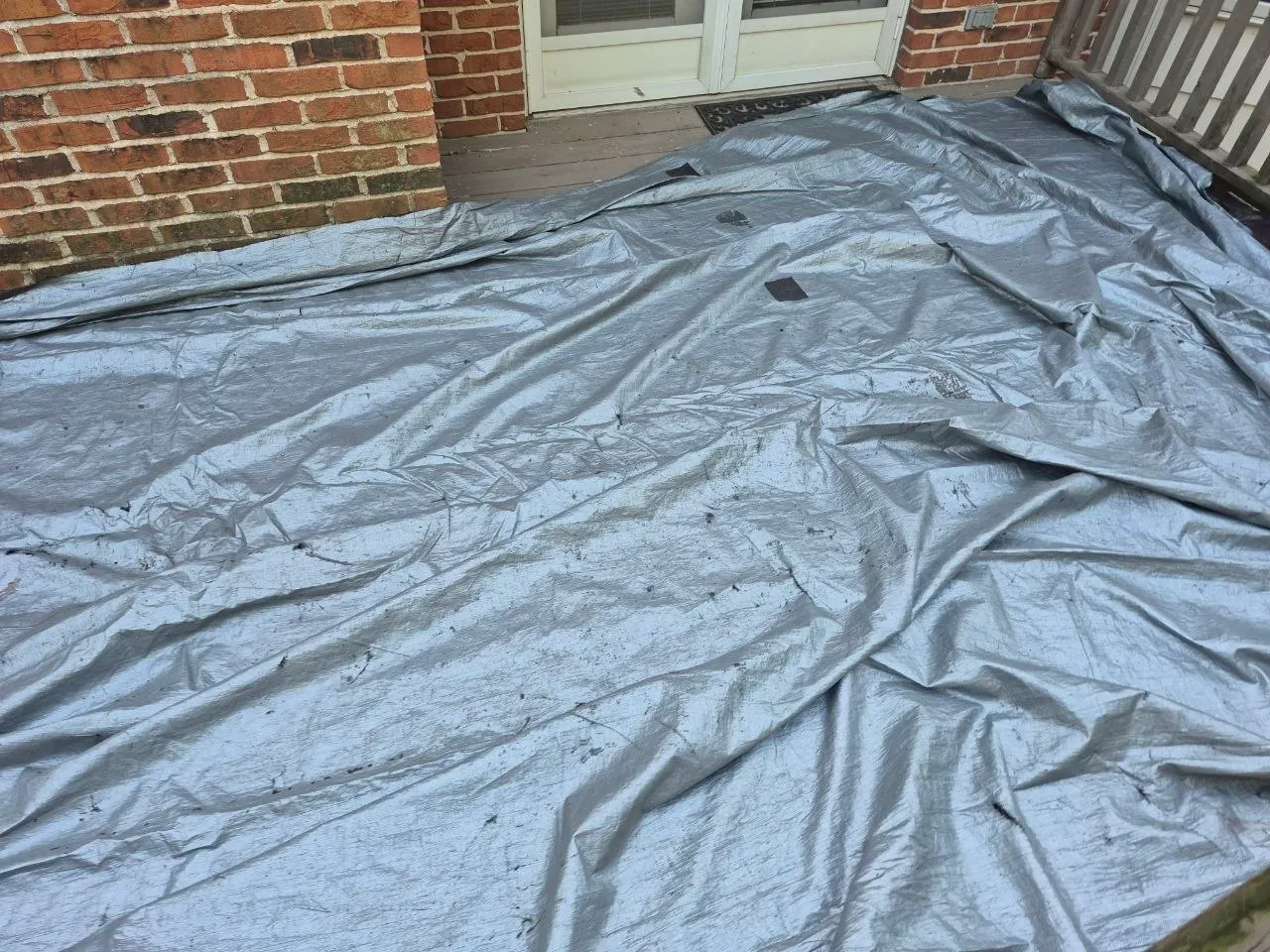
One more thing on timing. If your roof is leaking or exposed after a storm, get it tarped before the next rain. Emergency protection doesn't hurt your claim, and it stops interior damage that the insurer may not fully cover. That's part of what our storm damage crew handles when we get the first call.
Frequently Asked Questions
The questions we hear most from St. Louis homeowners after a hail storm.
Will my rates go up if I file a hail claim?
Hail and wind claims are weather events, not at-fault claims. Most insurers treat them differently than a fault-based claim, though widespread regional losses can nudge everyone's premiums over time. Filing a legitimate storm claim is what your policy is for.
How much does a hail inspection cost?
A reputable local roofer inspects hail damage for free. If someone charges you to look at a storm-damaged roof, find another roofer.
Can I just repair one slope to save money?
Sometimes, if the rest of the roof is genuinely undamaged and young. But if hail hit multiple slopes, patching one leaves the others to fail early, and it can void manufacturer warranty coverage on a mismatched roof.
What if my claim gets denied?
Denials happen, and they're not always final. A second inspection with your roofer present, better photo documentation, and a re-inspection request often change the outcome. Our adjuster inspection guide covers how to prep for that, and our guide to appealing a denied roof claim covers the next step if it sticks.
Do I have to use the contractor my insurance suggests?
No. You choose your own contractor. The insurer sets the payout based on the damage, and you're free to hire the licensed roofer you trust to do the work.
The Bottom Line
A hail repair in St. Louis can be billed anywhere from a few hundred dollars for a small patch to $20,000-plus for a full Class 4 replacement. But if you're insured and the damage is covered, your actual cost is almost always just your deductible, once the recoverable depreciation is paid out.
The homeowners who come out ahead are the ones who get a real inspection early, understand their own deductible and coverage type, and hire a local roofer who'll stand behind the work with the 10 Year Gorilla Guarantee. If a St. Louis storm just rolled through your neighborhood, let us get up there and tell you straight what you're dealing with before you file anything.