Most roof repairs in the St. Louis area cost between $300 and $1,500. A simple leak with a couple of new shingles sits at the low end. Reflashing a chimney or patching a section after a storm sits at the high end. Very few repairs on a shingle roof cross $3,000, and once one does, you are usually in replacement territory.
The wide range is not a dodge. A roof repair is priced by what has to come apart to fix the problem, not by the size of the leak you see in the ceiling. A pinhole around a pipe boot is a one-hour job. A leak at a wall that has been running for two winters means new flashing, new decking, and maybe new siding.
This guide gives you real numbers by repair type, explains what pushes a job up or down, and tells you when to stop repairing and start pricing a new roof. If you want the full-replacement side of the math, our roof replacement cost guide covers it.
Roof Repair Cost by Type of Repair
These are installed prices for asphalt shingle roofs in the St. Louis metro, including materials, labor, and a normal service call. Low is a clean, easy-access job on a walkable roof. High is a steep roof, a second-story wall, or damage that spread before anyone caught it.
| Repair | Low | Typical | High |
|---|---|---|---|
| Minor leak (sealant, a few shingles) | $150 | $350 | $750 |
| Missing or wind-lifted shingles (one area) | $200 | $450 | $1,200 |
| Pipe or vent boot replacement | $150 | $275 | $500 |
| Step or wall flashing repair | $300 | $600 | $1,500 |
| Chimney flashing (full reflash) | $500 | $900 | $2,500 |
| Valley repair | $400 | $800 | $1,500 |
| Skylight leak repair | $300 | $550 | $1,000 |
| Decking patch (per sheet, standalone) | $200 | $300 | $450 |
| Storm damage patch (1 to 2 squares) | $600 | $1,200 | $3,500 |
| Emergency tarp | $200 | $350 | $600 |
A few notes on reading the table. Most contractors carry a minimum service charge of $150 to $300, so a five-minute fix still costs that much. A "square" is 100 square feet of roof. And the decking line is higher per sheet than it is during a full replacement, because on a repair the crew has to peel back good shingles to get to the bad wood and then put it all back.
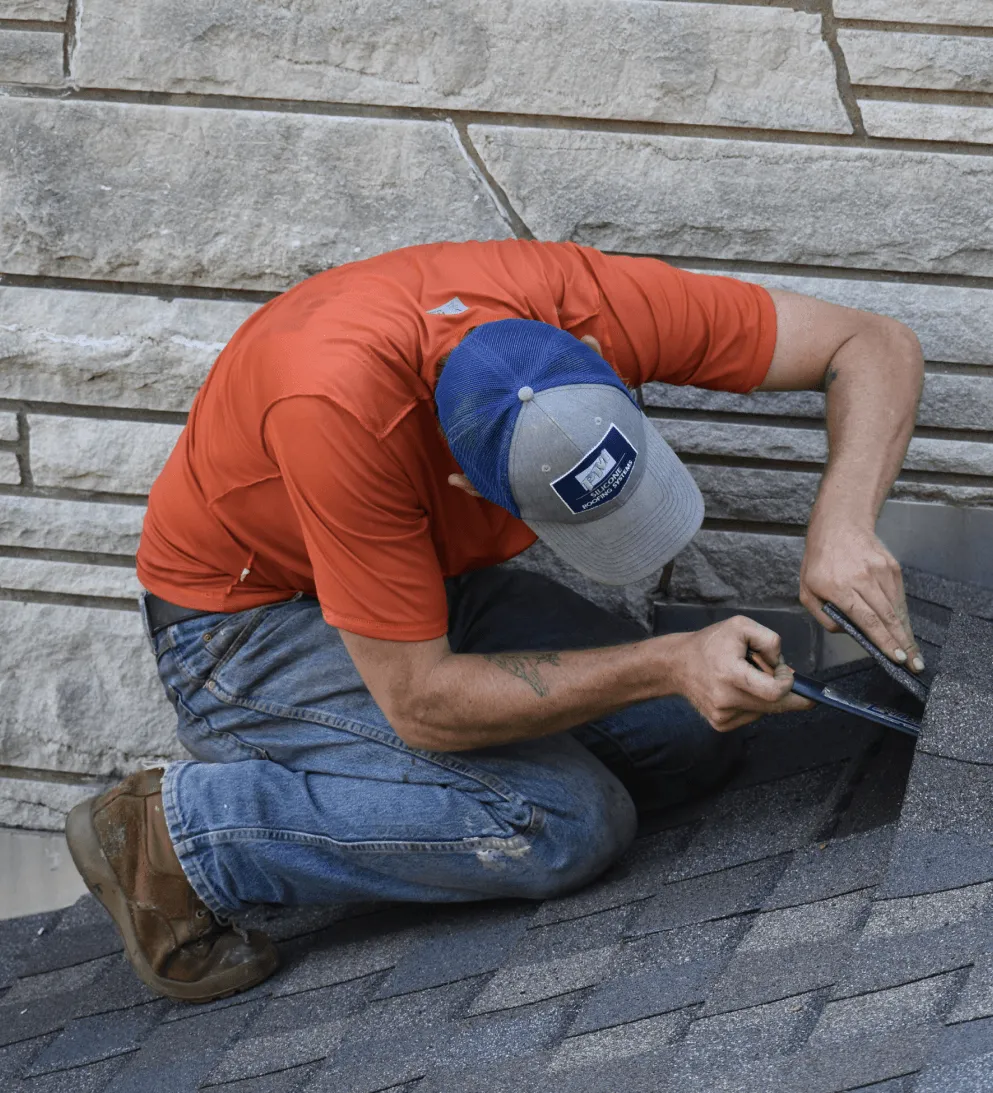
Flashing shows up in three rows because flashing is where most roofs actually leak. Shingles shed water on their own. The metal at walls, chimneys, and valleys is what fails, and it fails quietly. We wrote a whole piece on why flashing gets replaced and why it should never be reused under new shingles.
What Drives the Price Up or Down
Two homeowners can call about the same drip and get quotes $800 apart. Both quotes can be fair. Here is what the roofer is looking at when they price it.
- Access and pitch. A walkable roof over a one-story ranch is the cheapest place to work. A steep roof, a three-story wall, or a spot only reachable by ladder over a deck adds harness time and often a second person.
- How far the water traveled. A leak caught in the first month is a shingle job. The same leak after two seasons is a shingle job plus decking plus insulation, and sometimes drywall.
- Matching shingles. A twelve-year-old roof has faded. New shingles will not match exactly, and discontinued colors take time to source. Some homeowners pay a little extra to patch from a hidden slope and move the mismatched section out of sight.
- Layers. A roof with two layers of shingles costs more to open up and more to close. It also usually cannot be repaired well, because the second layer never sealed right to begin with.
- Season and demand. After a hail event, every roofer in the metro is booked. Small repairs get pushed back or priced to reflect the wait. Late fall and late winter are the quiet months.
- Labor rates. Repair crews bill at a higher rate per hour than replacement crews, because repair is diagnostic work. Our roofing labor cost guide breaks down what those rates look like.
The cheapest repair is the one you call about the week you notice the stain, not the month after.
Repair or Replace: Where the Math Flips
There is a point where paying for a repair is paying twice, because you will be paying for the replacement soon anyway. Here is the rule of thumb we use on estimates.
- The repair costs more than about a third of a new roof. A 1,500-square-foot home replaces for roughly $6,000 to $12,500. If the repair quote is pushing $3,000, put that money toward the new roof.
- The roof is past 20 years. Architectural shingles last 25 to 30 years here, 3-tab less. A $900 chimney reflash on a 22-year-old roof buys you one or two winters at most.
- You have repaired it twice already. A third repair in five years means the roof is failing in general, not in one spot.
- Shingles are brittle. If the shingles crack when the roofer lifts them, every repair damages the shingles around it. The patch causes the next leak.
- There is a second layer. Repairs on a layered roof rarely hold, and insurers increasingly will not write coverage on them.
None of those are hard lines. A 20-year-old roof with one bad pipe boot should get a $275 boot, not a new roof. The point is to weigh the repair against what is left in the roof. We go deeper on that judgment call in how contractors decide between repair and replacement.
What Insurance Will and Will Not Pay For
Homeowners insurance covers sudden damage from a covered event. Hail, wind, a fallen limb, a tree through the decking. It does not cover wear, age, neglect, or a flashing that rusted out over fifteen years. The cause of the leak decides the claim, not the size of the bill.
The other number that matters is your deductible. Most policies in Missouri and Illinois now carry a wind and hail deductible of $1,000 to $2,500, and many are written as 1% or 2% of the home's insured value. On a $300,000 house, a 1% deductible is $3,000. If the repair costs less than the deductible, there is nothing to file. You pay the roofer, and your claim history stays clean.
- Usually covered: storm patches, wind-lifted shingles after a named event, decking punctured by debris, emergency tarping after storm damage.
- Usually not covered: worn pipe boots, aged flashing, valley wear, leaks from a roof past its rated life, anything the adjuster can tie to maintenance.
- Worth filing: damage across multiple slopes, or any repair that lands well above your deductible. Get a roofer's inspection first so you know what you are filing.
If a storm is involved, read our roof insurance claims guide before you call the carrier. The order you do things in changes what gets paid.
How to Get an Honest Repair Quote
A repair quote should tell you three things: what is causing the leak, what will be replaced, and what it costs if the roofer finds more once the shingles are up. If a quote is one line and one number, ask for those three.
- Get the inspection before the price. A roofer who quotes a repair from the driveway is guessing. Most reputable companies, including our roof inspection team, look at the attic side as well as the roof side.
- Ask what happens if the decking is soft. A good quote lists a per-sheet price for decking up front so there is no surprise.
- Ask about the warranty on the repair. One to two years on workmanship is standard for a repair. A lifetime warranty on a patch is a sales line.
- Ask whether they recommend a repair at all. A roofer who says "I can fix this, but here is why I would not" is the one to trust.
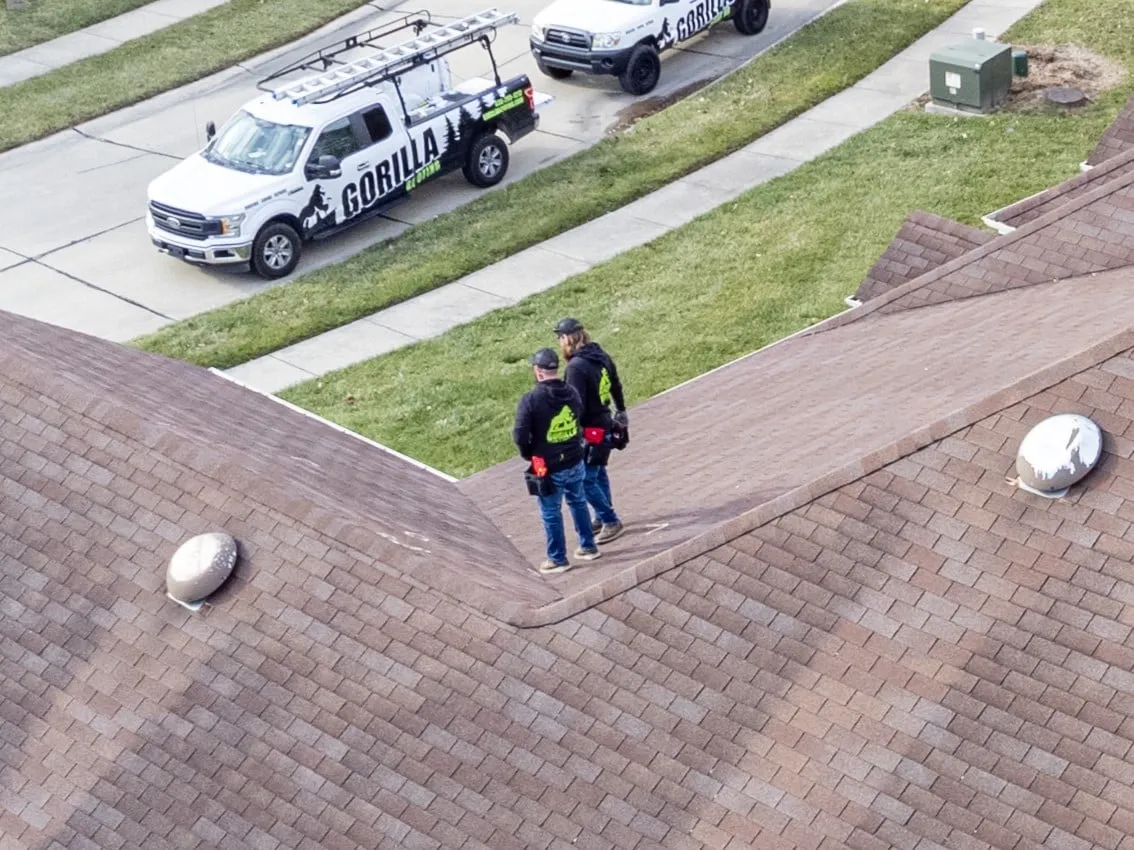
If water is coming in right now, the order changes: stop the water first, price the fix second. Our emergency roof leak guide walks through what to do in the first hour. Then call our roof repair team and we will get eyes on it.
Roof Repair Cost: Common Questions
What is the average cost of a roof repair in St. Louis?
Most roof repairs in the St. Louis area land between $300 and $1,500, with the typical single-issue repair around $500 to $700. Minor fixes like a pipe boot or a few shingles run $150 to $450. Chimney reflashing and storm patches run $900 to $3,500.
How much does it cost to fix a roof leak?
A simple leak with an obvious cause costs $150 to $750 to fix. If the leak is at flashing or a chimney, plan on $500 to $1,500. If the leak has been running long enough to rot the decking, add $200 to $450 per sheet of plywood that has to be replaced.
Is it worth repairing a 20-year-old roof?
For a small, isolated problem like one pipe boot or a few lifted shingles, yes. For a repair over about $1,000, or a second repair in a few years, usually not. A 20-year-old shingle roof is near the end of its life, and that money is better spent toward replacement.
Does homeowners insurance cover roof repairs?
It covers repairs caused by a sudden event such as hail, wind, or a fallen tree, minus your deductible. It does not cover wear, age, or maintenance problems like a worn boot or old flashing. Since many wind and hail deductibles are now $1,000 to $2,500 or more, a lot of repairs are cheaper than the deductible and not worth filing.
Why do roofers charge a minimum for small repairs?
A repair means a truck, a ladder, a trained roofer, and usually an hour of diagnosis before any work starts. Most St. Louis roofers set a minimum service charge of $150 to $300 to cover that trip. A ten-minute fix still costs the minimum.
Get a Repair Estimate
If you have a leak, a stain, or shingles in the yard, we will come look at it, tell you what is wrong, and give you a written price for the repair. If we think the roof is past repairing, we will say that too, and show you the numbers so you can decide. Schedule a free roof inspection and we will get it on the calendar.