

After a winter storm rolls through, most homeowners do a quick visual check from the driveway and move on.
No shingles in the yard?
No obvious leaks?
Good enough.
That’s understandable. It’s cold. The roof looks mostly fine. And small storm damage doesn’t feel urgent — especially when everything is frozen and quiet.
The problem is that minor damage rarely stays minor once spring weather arrives.
In Missouri and Illinois, late-winter and early-spring conditions tend to expose weaknesses that winter storms created but didn’t immediately reveal. Ignoring small storm damage doesn’t always cause instant problems. It just delays them until water starts moving again.
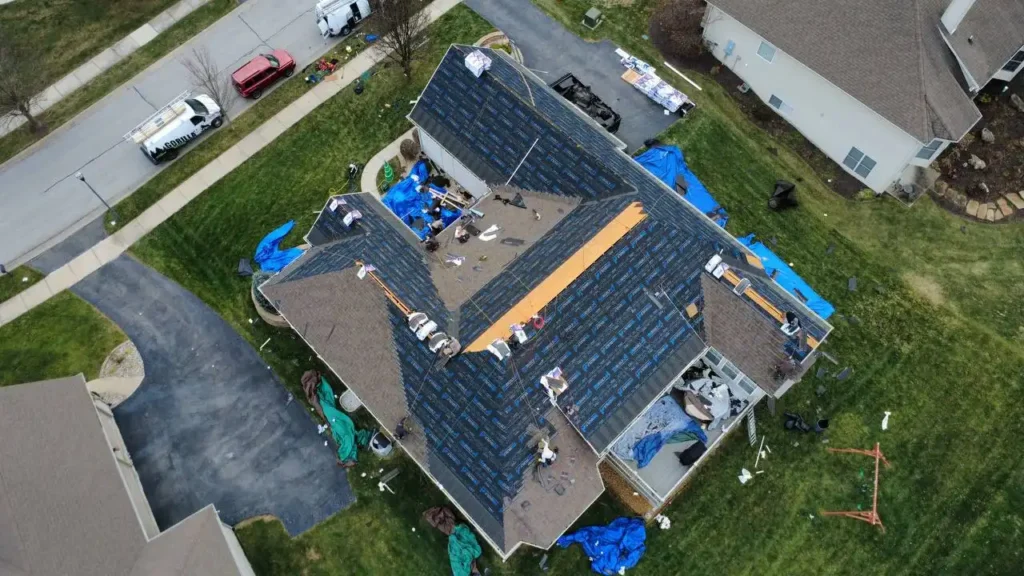
Small Damage Rarely Fails Immediately
When storms hit during winter, damage often starts subtly.
A shingle lifts slightly.
Granules loosen.
Flashing shifts a fraction of an inch.
Seal strips weaken.
While everything stays frozen, those weaknesses may not cause visible leaks. Snow sits. Ice holds things in place. Water doesn’t move much.
But once temperatures begin to fluctuate, those small gaps turn into entry points.
Storm damage doesn’t need to be dramatic to be effective. It just needs to create a path.
Freeze-Thaw Cycles Make Minor Damage Worse
Missouri and Illinois winters are rarely steady. Temperatures swing above and below freezing constantly in late winter and early spring.
That pattern matters.
When snow melts during the day and refreezes at night, water seeps into small cracks created by storm damage. As it freezes, it expands. That expansion widens the crack. The next thaw allows more water in. The cycle repeats.
What started as a lifted shingle corner in January can become a clear moisture entry point by March.
The roof didn’t suddenly fail. It slowly lost its margin.
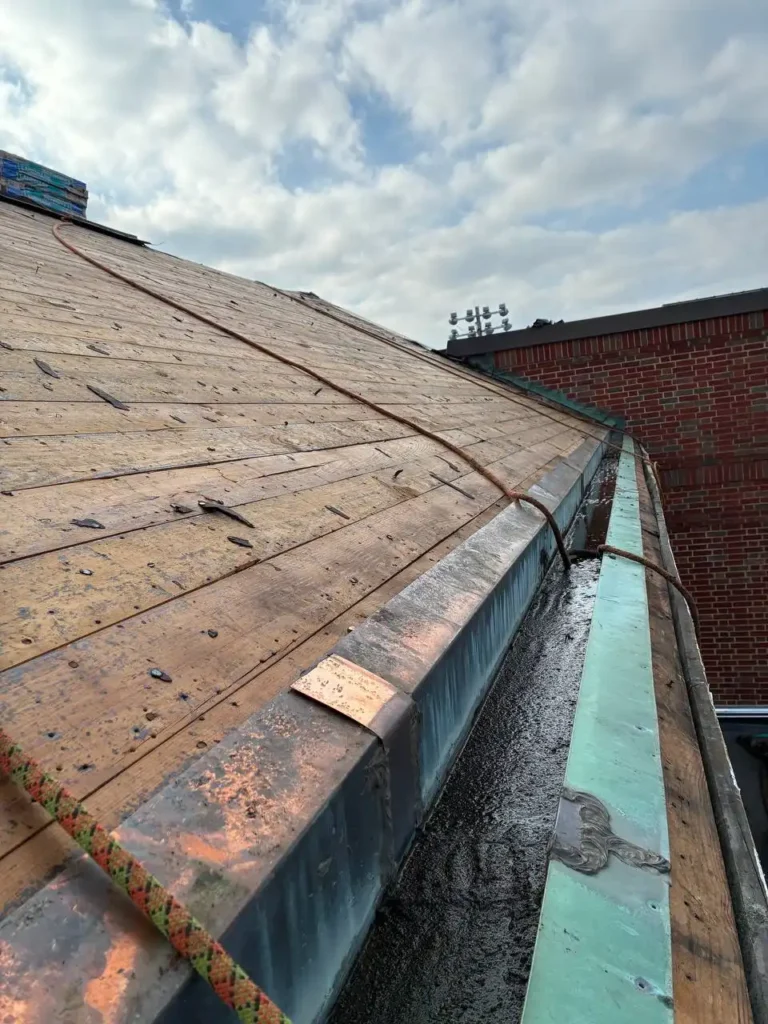
Why Spring Rain Is the Real Test
Spring storms bring something winter often doesn’t: sustained, wind-driven rain.
Unlike snow, rain moves immediately. It flows. It pushes sideways under shingles. It finds flashing details that were slightly disturbed months earlier.
Many homeowners discover storm-related leaks not during the winter storm itself, but during the first heavy spring rain.
That timing leads to confusion. The roof “looked fine” all winter. But the damage was already there — waiting for water to move.
Granule Loss and Aging Acceleration
Storm damage isn’t always structural. Sometimes it’s surface-level — and still important.
High winds and hail can dislodge granules from shingles. Granules protect the asphalt layer beneath from UV exposure and moisture breakdown. When they’re stripped away, shingles age faster.
Ignoring minor granule loss doesn’t cause immediate leaks. It shortens the roof’s lifespan gradually. By the time spring heat arrives, exposed areas may deteriorate faster than expected.
It’s not dramatic. It’s just expensive over time.
Flashing Is Often the First Casualty
Flashing around chimneys, vents, and wall transitions takes a beating during storms.
Strong winds can shift flashing slightly. Ice buildup can pry at edges. Thermal expansion and contraction stress sealants. None of this necessarily causes immediate dripping.
But flashing doesn’t need to detach completely to fail. A small separation is enough for spring rain to work its way inside.
Once water bypasses flashing, it can travel along framing and show up far from the original entry point.
That’s when homeowners assume the roof itself has failed.
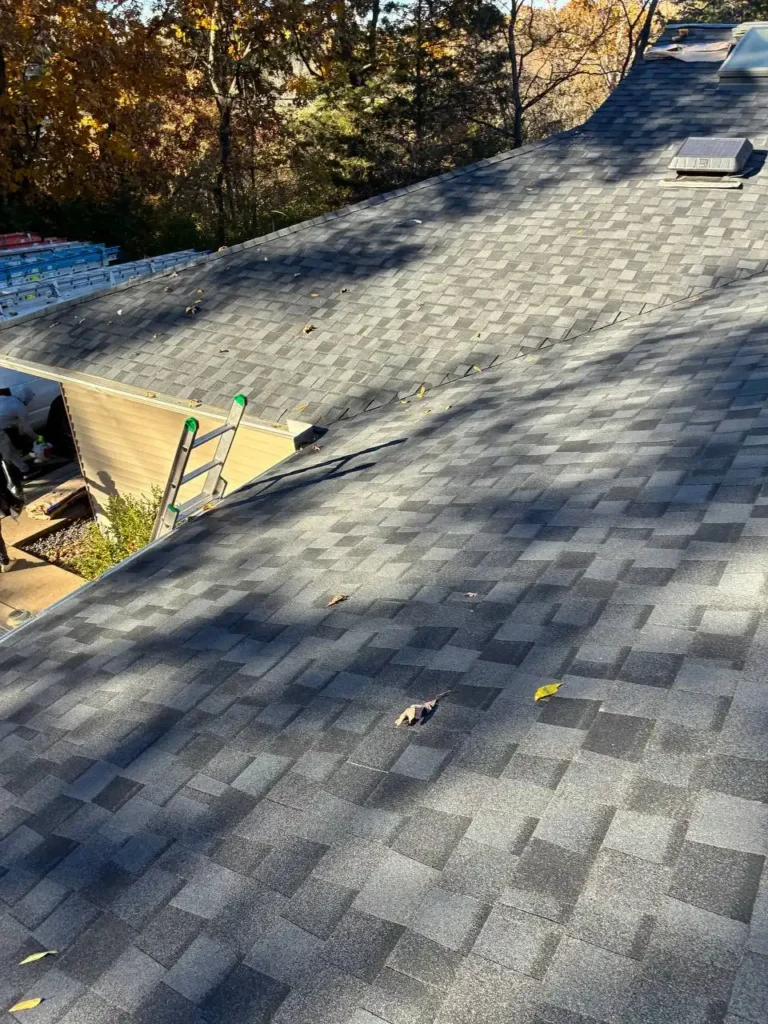
Why Moisture Damage Often Stays Hidden Until It’s Expensive
One of the biggest risks of ignoring small storm damage is hidden moisture.
Water that enters in small amounts doesn’t always drip through ceilings right away. It can dampen insulation, soak decking, or linger along framing.
According to the U.S. Department of Energy, prolonged moisture exposure in building assemblies increases the risk of mold growth and material deterioration, particularly when drying conditions are limited.
https://www.energy.gov/energysaver/moisture-control
Winter provides limited drying conditions. By the time spring warmth accelerates microbial growth, the damage has already been underway for weeks.
Insurance Timing Can Work Against You
Another issue homeowners don’t consider is timing.
Many insurance policies have reporting windows for storm damage. If you wait until spring to investigate winter storm damage, you may find it harder to document when it occurred.
Small damage that could have been addressed early may become larger, more complicated — and more difficult to claim.
Proactive inspections create documentation. Waiting creates uncertainty.
Why “It’s Just One Shingle” Isn’t Always Accurate
It’s common to hear, “It’s only one missing shingle.”
That may be true. But a missing or lifted shingle often signals that surrounding shingles experienced similar stress. Wind pressure doesn’t target just one spot.
If one section failed, nearby areas may be weakened. Replacing a single shingle without evaluating the broader impact sometimes delays the inevitable rather than preventing it.
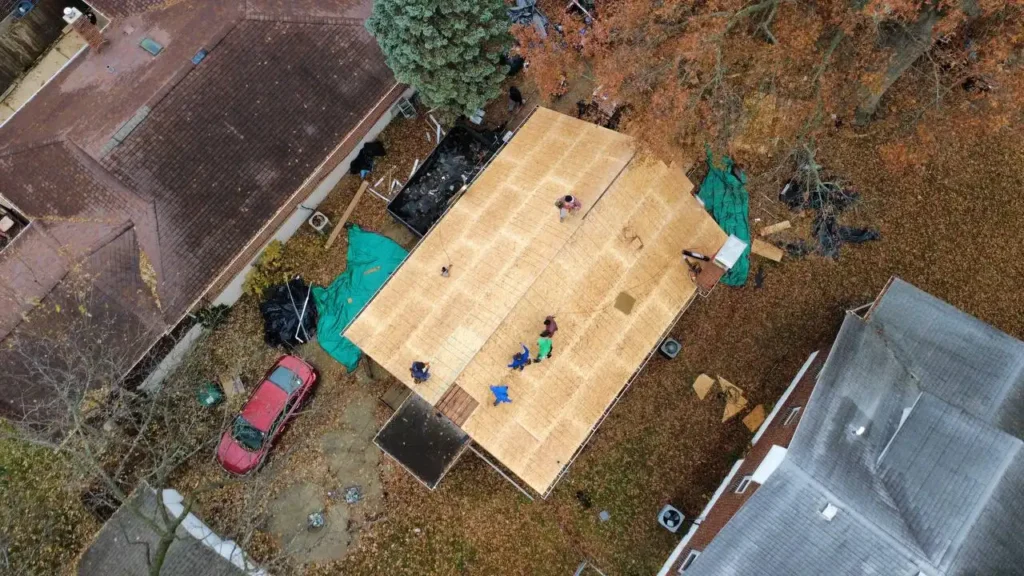
The Cost Difference Between Early Repairs and Late Repairs
Addressing minor storm damage before spring typically means small, localized repairs.
Waiting until water intrusion spreads often means:
-
Replacing decking
-
Addressing insulation damage
-
Repairing interior drywall
-
Mitigating mold
The price difference isn’t subtle.
The frustrating part is that the original damage often looked minor.
What a Late-Winter Inspection Actually Looks For
A proper inspection doesn’t just look for missing shingles. It checks:
-
Seal strip integrity
-
Flashing alignment
-
Shingle lifting or creasing
-
Granule loss patterns
-
Vent and penetration seals
-
Signs of attic moisture
Small storm damage is easier to see up close than from the ground.
That’s why inspections are preventive, not reactive.
When Small Damage Signals a Bigger Problem
Occasionally, what looks minor from the outside reveals deeper aging or systemic issues.
If storms expose widespread granule loss or repeated flashing failures, it may indicate that the roof is nearing the end of its useful life. In those cases, repeated small repairs may not be the most cost-effective path.
That’s when replacement discussions become practical rather than premature.
Final Thoughts: Small Damage Rarely Stays Small
Ignoring small storm damage before spring doesn’t guarantee disaster. But it does increase the odds that a manageable repair turns into a larger project once rain and temperature swings return.
Winter damage hides well. Spring exposes it.
Addressing issues early protects your roof’s lifespan, reduces interior risk, and gives you control over timing instead of reacting to the first heavy rainstorm.
If your home has experienced recent winter storms — even without visible leaks — a professional inspection can confirm whether you’re in the clear or whether small damage needs attention before spring arrives.
Sometimes peace of mind is the most valuable repair.