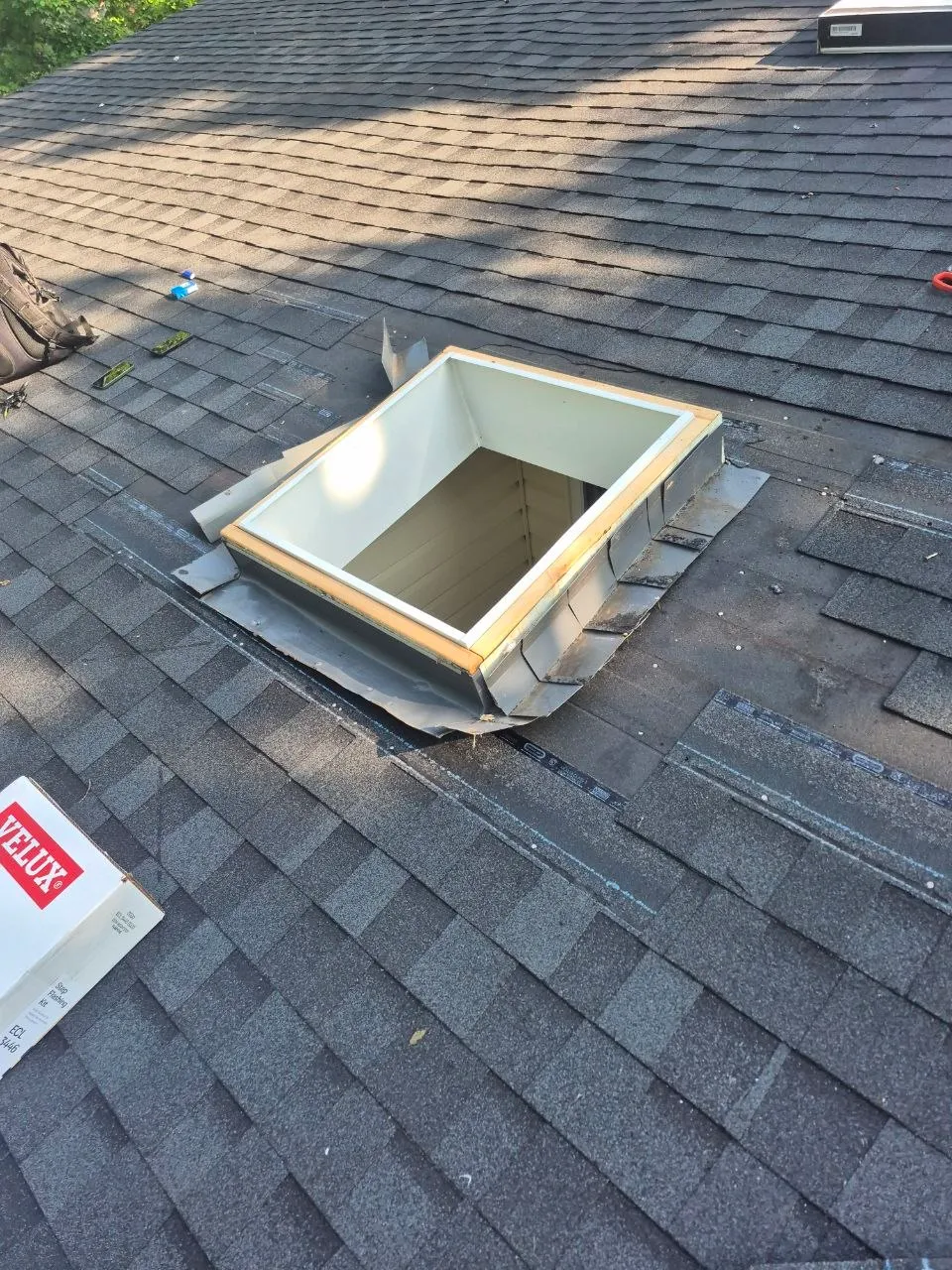
A skylight is a great idea right up until it isn't. Natural light, a peek at the stars, that Instagram-worthy sunbeam across the kitchen floor. Then one rainy Tuesday you notice a brown ring on the ceiling, and suddenly your fancy window in the roof is a fancy hole in the roof.
Here's the good news: most skylight leaks aren't the skylight's fault. And most of them are fixable. The trick is knowing what's actually leaking, because the water spot on your drywall is almost never directly under the real problem. Water is sneaky like that. It runs sideways, follows a rafter, and shows up three feet from where it got in.
Why Skylights Leak In The First Place
A skylight has to do something no other part of your roof does. It interrupts the shingles. Every shingle on a roof overlaps the one below it so water sheds downhill and never gets a chance to sit still. A skylight breaks that chain, and the only thing keeping water out at that break is the flashing and the seals around the unit.
So when a skylight leaks, it's usually one of these:
- Failed or improperly installed flashing — the metal that channels water around the skylight and back onto the shingles
- Cracked or dried-out sealant around the frame that finally gave up after a decade of St. Louis summers
- A worn pipe boot, gasket, or the skylight's own factory seal breaking down with age
- Condensation — which isn't a leak at all, but sure looks like one on your ceiling
- The glass or dome itself being cracked, hailed on, or just plain old
If your skylight is over 15 years old and the flashing has never been touched, the flashing is the first thing we look at. Nine times out of ten, that's the story.
The Condensation Impostor
Before you panic, check whether you actually have a leak. Condensation on a skylight is incredibly common, especially in winter when warm, humid indoor air meets cold glass. You get droplets, they run down, and they pool at the bottom of the frame like a real leak would.
The tell: condensation shows up during cold weather or after a steamy shower, not necessarily during rain. A real leak tracks with the weather. If your "leak" only appears when it's freezing outside and dry, you probably have a ventilation or humidity problem, not a roofing one. Better bathroom fans, an attic that breathes properly, and lower indoor humidity usually solve it.
That said, chronic condensation can rot the framing around a skylight over time, so it's not nothing. It's just a different fix than what most people expect.
Repair Or Replace? The Honest Answer
Everybody wants the cheap answer, and sometimes the cheap answer is the right one. Here's how we think about it.
A repair makes sense when the skylight unit itself is in good shape and the problem is bounded — new flashing, fresh sealant, a replacement gasket. If the glass is fine, the frame is solid, and the unit is under about 15 years old, patching the flashing and re-sealing is often all it needs.
- Skylight under ~15 years old with a localized flashing or seal issue: repair
- Cracked glass or dome, fogged-up double-pane glass, or a warped frame: replace the unit
- Skylight older than the roof it sits in and you're re-roofing anyway: replace it during the roof job, every time
- Multiple leaks or water damage spreading into the ceiling: get eyes on it before it becomes a decking problem
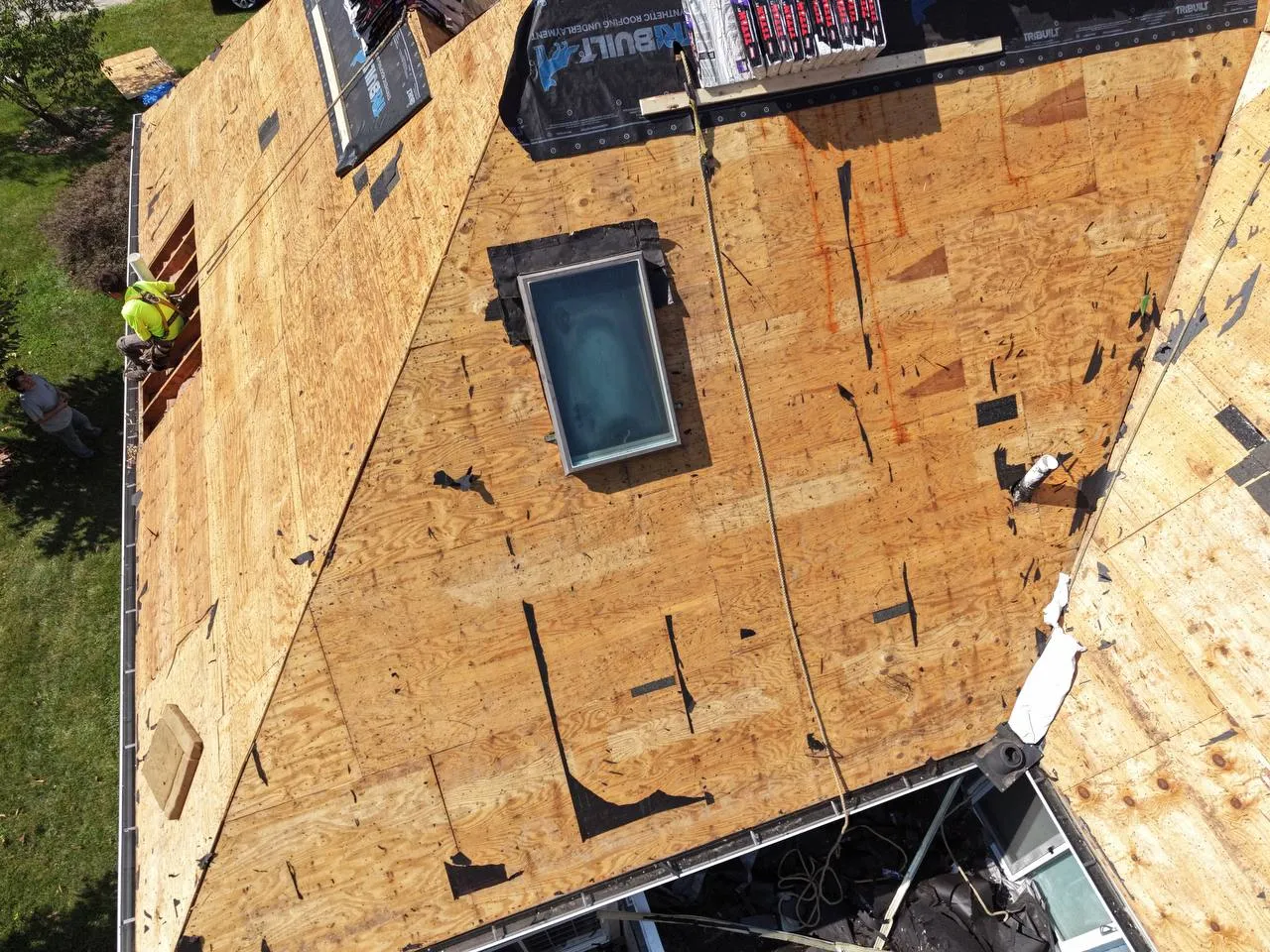
That last point deserves a second read. The single biggest mistake we see is a homeowner spending good money re-sealing a 20-year-old skylight, then replacing the whole roof two years later and having to disturb that skylight all over again. If the roof is going, the skylight goes with it. It's the roofing version of buying new tires for a car you're about to trade in.
Why Timing On A Skylight Leak Matters
Skylight leaks love to hide. Because the water enters at the roofline and travels down through the framing, the damage does its work quietly before you ever see a stain. By the time there's a visible mark on your ceiling, water has usually been living in your decking and insulation for a while.
Left alone, a small skylight leak turns into rotted roof decking, ruined insulation, mold in the attic, and eventually drywall you have to cut out and replace. What started as a $400 flashing job becomes a much bigger conversation. If you catch it early, it stays small. If you ignore it, it does not.
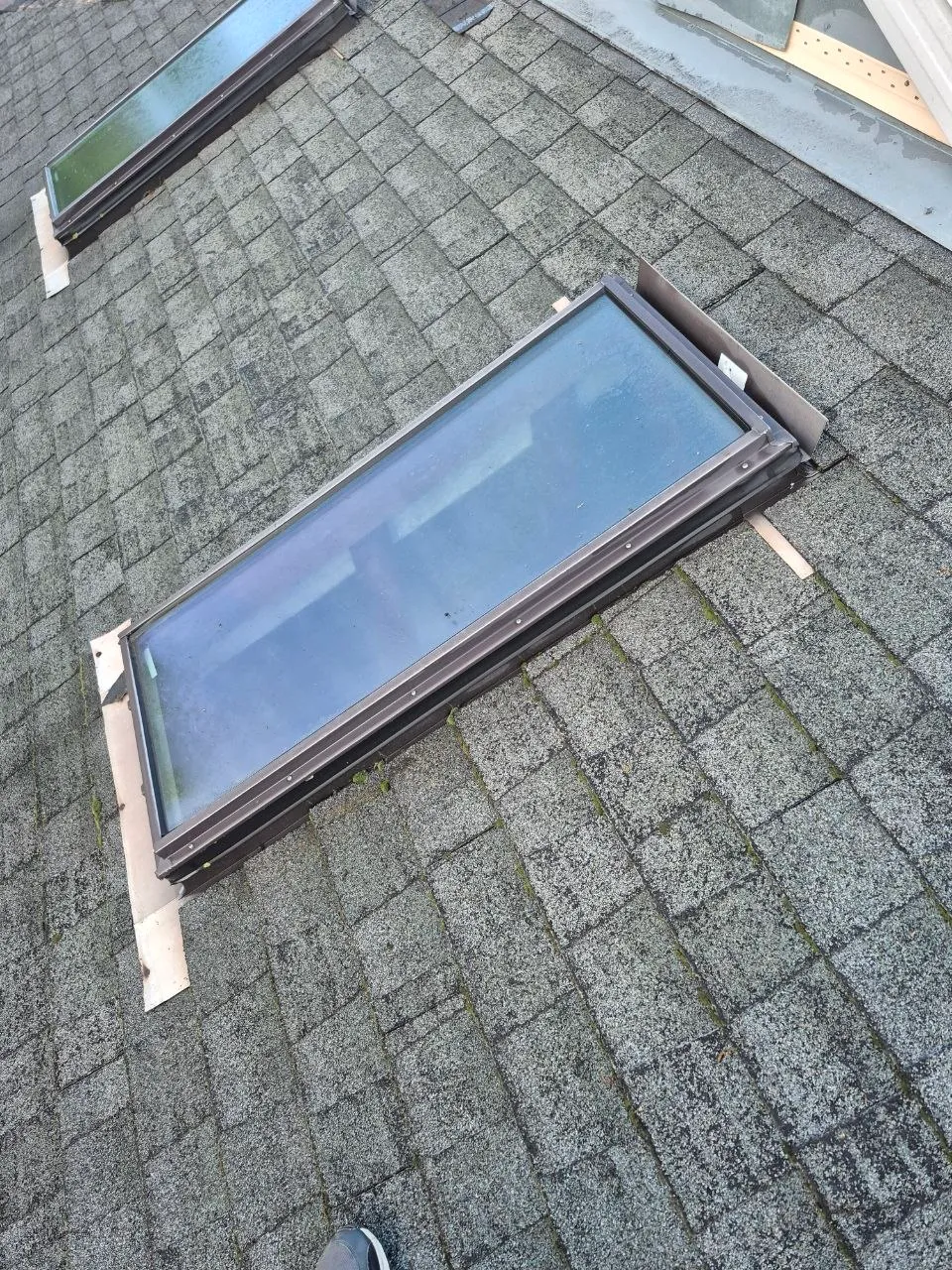
The question we get most: "Can it wait until spring?" Sometimes yes. But water damage compounds, and Missouri weather doesn't take a season off. We'd rather look at it now than tear out your ceiling later.
How A Proper Skylight Replacement Actually Works
A skylight isn't a window you screw into a hole and caulk into submission. Done right, it's integrated into the roof system so water sheds around it the same way it sheds off everything else.
On a real replacement, the shingles around the opening come up, the old flashing comes off, and the new unit gets set with a proper flashing kit that layers under the shingles above and over the shingles below. Ice-and-water shield goes down around the curb for extra insurance. Then the shingles get woven back in so the whole thing looks and behaves like it grew there. Sealant is the last line of defense, not the first — if a skylight depends on caulk to stay dry, it was installed wrong.
This is also why we replace skylights during a full roof job whenever it makes sense. When the shingles are already off, integrating a new unit is clean and straightforward. If your skylight is limping along and a new roof is on the horizon, the smart play is often to bundle them. Our storm damage repair crews handle this all the time, and if the leak traces back to a covered event, our insurance-claims team can help you sort out what the adjuster will and won't cover.
When To Call Somebody
If you've got an active drip, a spreading ceiling stain, or foggy glass you can't wipe clear, don't wait it out. Those aren't cosmetic. Get the skylight and the surrounding roof looked at, ideally by someone who'll climb up, take photos, and show you what's actually happening instead of just quoting you a number from the driveway.
A good inspection tells you which camp you're in — cheap repair, unit replacement, or bundle-it-with-the-roof. And if the answer really is just a tube of sealant and some new flashing, an honest roofer will tell you that too. Even when the bigger job would pay us more. If you're not sure where your leak is coming from, that's exactly the kind of thing a walk-the-roof inspection sorts out fast, and it beats guessing while the water keeps working.