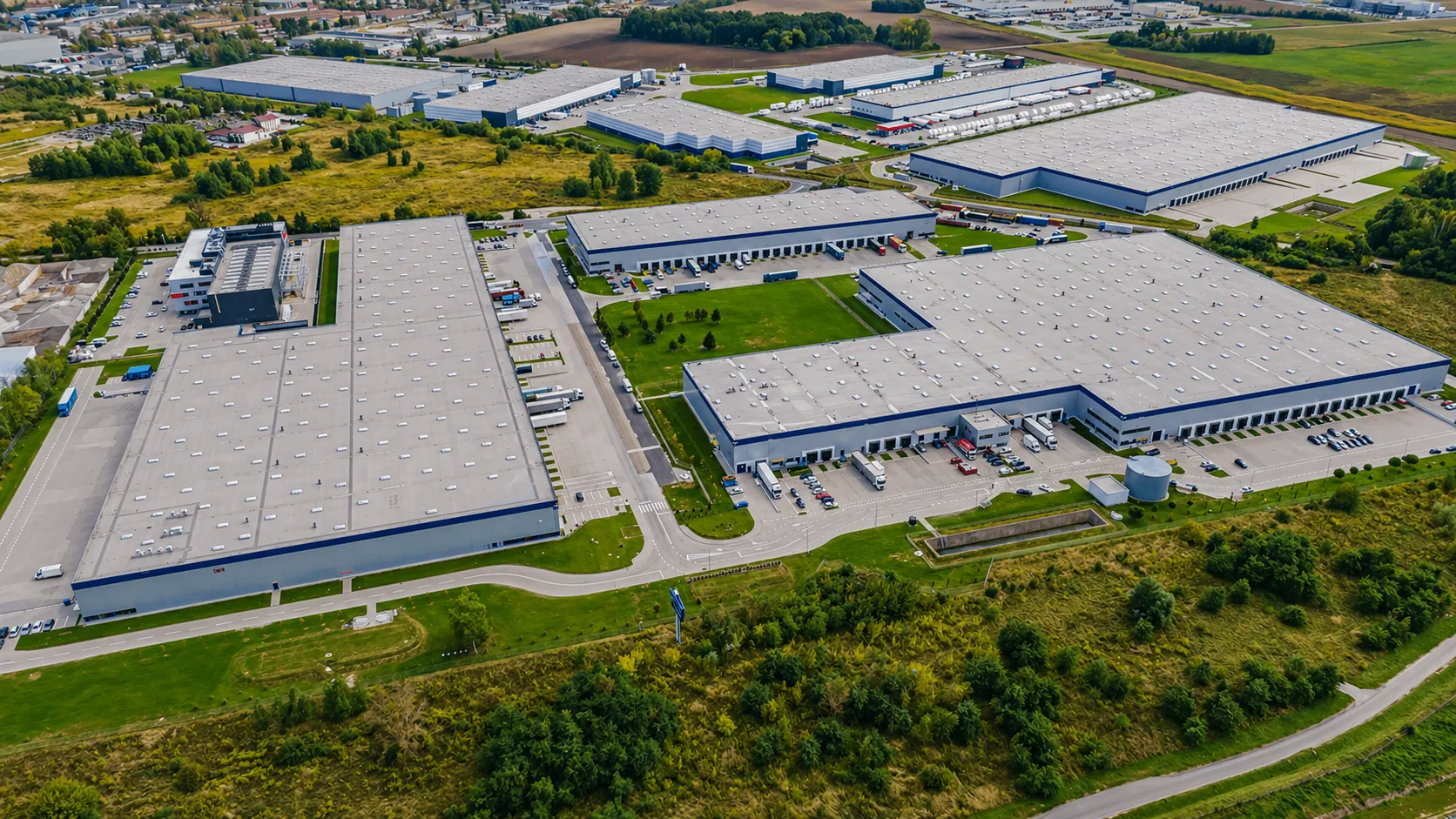
A flat roof has to do something a pitched roof never does: hold water for a while and not care. Rain sits. Snow melts slowly. Sun beats straight down on the same spot all day. So the material matters more than it does on a steep roof, where gravity does half the work for you.
There are four materials worth considering for most flat roofs in the St. Louis area: EPDM, TPO, PVC, and modified bitumen. Here's what each one is, what it costs, how long it lasts, and when it's the right pick.
The Short Version
- EPDM is black rubber. Affordable, proven, lasts 20 to 30 years. Best all-around choice for most homes.
- TPO is a white reflective membrane. Lasts 15 to 20 years. Best when summer cooling costs are your concern.
- PVC is the toughest and priciest. Lasts 20 to 30 years. Best where grease or chemicals hit the roof.
- Modified bitumen is asphalt in rolled layers. Lasts 10 to 20 years. Best on a tight budget or a small roof.
If you want one answer: EPDM is the material we install most on residential flat roofs, because it holds up well here and the price is fair. But the right pick depends on your roof, and the rest of this page explains why.
EPDM (Ethylene Propylene Diene Monomer)
EPDM is a synthetic rubber membrane. It comes in wide sheets, so a small roof can often be covered with very few seams, and seams are where flat roofs usually fail. It has been in use for decades, which means nobody is guessing about how it ages.
Pros:
- Lasts 20 to 30 years with normal maintenance
- One of the cheaper options, roughly $5 to $9 per square foot installed
- Wide sheets mean fewer seams and fewer leak points
- Straightforward to repair — a patch is a patch
Cons:
- Almost always black, so it absorbs heat instead of reflecting it
- Seams are glued or taped rather than heat-welded, which is a weaker bond than TPO or PVC
- Can be punctured by dropped tools or heavy foot traffic
Best for: most residential flat roofs, especially when you want proven performance without paying a premium.
TPO (Thermoplastic Olefin)
TPO is a single-ply membrane, usually white, with seams that are heat-welded rather than glued. That weld is the selling point: done right, the seam is as strong as the sheet itself. The white surface bounces sunlight back off the roof instead of soaking it up.
Pros:
- Reflective surface can meaningfully lower summer cooling bills
- Heat-welded seams are very strong
- Resists dirt, algae, and debris buildup
- Roughly $6 to $9 per square foot installed
Cons:
- Shorter life than EPDM or PVC, usually 15 to 20 years
- Newer material, and quality varies more between manufacturers
- Seam welding has to be done right, so the installer matters more than with EPDM
Best for: buildings where summer heat and cooling costs are the main concern. If you want to read further, we have a longer piece on what TPO roofing material is and one on TPO roof repair costs.
PVC (Polyvinyl Chloride)
PVC is the strongest of the single-ply membranes. Like TPO, its seams are heat-welded. Unlike the others, it shrugs off grease and chemicals, which is why you see it on restaurants and anywhere a kitchen exhaust vents onto the roof.
Pros:
- Lasts 20 to 30 years
- Handles grease, chemicals, and fire better than the alternatives
- Heat-welded seams create a watertight bond
- Reflective, so it helps with cooling costs like TPO
Cons:
- The most expensive option, roughly $5 to $12 per square foot depending on the system
- Can grow brittle over many years of cold cycles
- Overkill for a typical house with nothing venting onto the roof
Best for: restaurants, commercial kitchens, and any roof that takes chemical exposure — classic commercial roofing territory.
Modified Bitumen
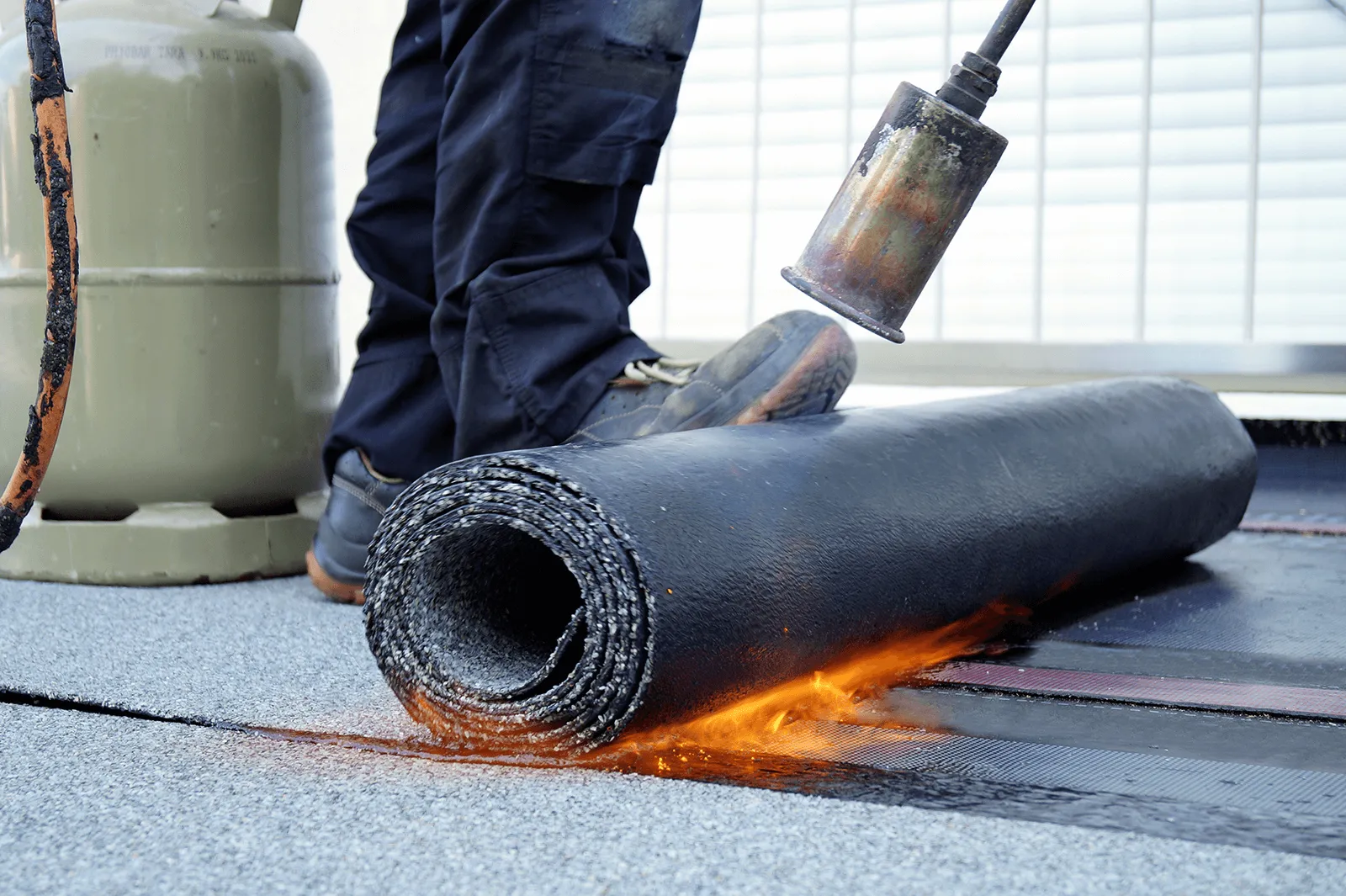
Modified bitumen is the modern version of the old tar-and-gravel roof. It's asphalt reinforced with polymers and fiberglass or polyester, applied in rolled layers. It can be torched down, set in cold adhesive, or self-adhered.
Pros:
- Cheapest to install, roughly $4 to $8 per square foot
- Layered construction handles foot traffic well
- Easy to patch in a small area
- Several installation methods, so it fits awkward roofs
Cons:
- Shortest lifespan of the four, usually 10 to 20 years
- Needs more regular maintenance to reach the top of that range
- Heavier than single-ply membranes
- Torch-down installation involves an open flame, so crew experience matters
Best for: tight budgets, small roofs, and additions where you don't need thirty years out of it.
How They Compare
Side by side, on the three things people actually decide on:
- Lifespan: EPDM and PVC lead at 20 to 30 years. TPO runs 15 to 20. Modified bitumen runs 10 to 20.
- Cost per square foot installed: modified bitumen is cheapest at roughly $4 to $8, then EPDM at $5 to $9, then TPO at $6 to $9, with PVC highest at $5 to $12.
- Heat: TPO and PVC are reflective and help in summer. EPDM is black and absorbs heat. Modified bitumen sits in between depending on the surface.
- Seams: TPO and PVC are heat-welded, which is the strongest joint. EPDM is taped or glued. Modified bitumen is layered and sealed.
- Chemical exposure: PVC is the only one built for it.
Cost per square foot is a starting point, not a quote. The condition of the deck underneath, the size and shape of the roof, how much tear-off is involved, and the flashing details all move the real number.
How to Choose
- Start with how long you plan to own the building. A roof you'll hand off in five years is a different decision than one you'll live under for twenty-five.
- Look at what's on your roof. Kitchen exhaust or chemical venting points to PVC. A bare roof with nothing on it opens up every option.
- Think about summer. If the rooms under the flat section run hot, a reflective membrane like TPO pays you back every July.
- Check the deck before you shop materials. If there's rot or standing water from a low spot, that gets fixed first, and it affects the budget more than the membrane choice does.
- Get the estimate in writing with the material named on it. "Flat roof membrane" is not a spec.
Common Questions
What is the best material for a flat roof?
For most residential flat roofs, EPDM rubber is the best balance of cost and lifespan — 20 to 30 years at roughly $5 to $9 per square foot. TPO is better if summer cooling costs are your priority, and PVC is better if grease or chemicals reach the roof.
How long does a flat roof last?
It depends on the material. EPDM and PVC typically last 20 to 30 years, TPO 15 to 20, and modified bitumen 10 to 20. Installation quality and drainage matter as much as the material — water that never drains will shorten any of them.
Which flat roof material is cheapest?
Modified bitumen is usually the cheapest to install, around $4 to $8 per square foot. It also has the shortest lifespan, so over thirty years it often costs more than EPDM does.
Can you put a new flat roof over an old one?
Sometimes, but it's usually a bad trade. A recover hides whatever is wrong with the deck underneath and adds weight. We'd rather tear off, look at the deck, and fix what we find.
Do flat roofs always leak?
No. Flat roofs leak when water has nowhere to go or when a seam fails. A roof with proper slope to the drains, good flashing, and sound seams stays dry for decades.
Not Sure Which One Fits Your Roof?
We'll walk your roof, check the deck and the drainage, and tell you plainly which material makes sense and what it costs. If your current roof has years left in it, we'll tell you that too — sometimes a maintenance plan is the smarter spend. Either way, every membrane we install is backed by the 10 Year Gorilla Guarantee.
If you're earlier in the process and just want to know what an inspection runs, read our roof inspection cost guide. Otherwise, get a free roof inspection and we'll take a look.