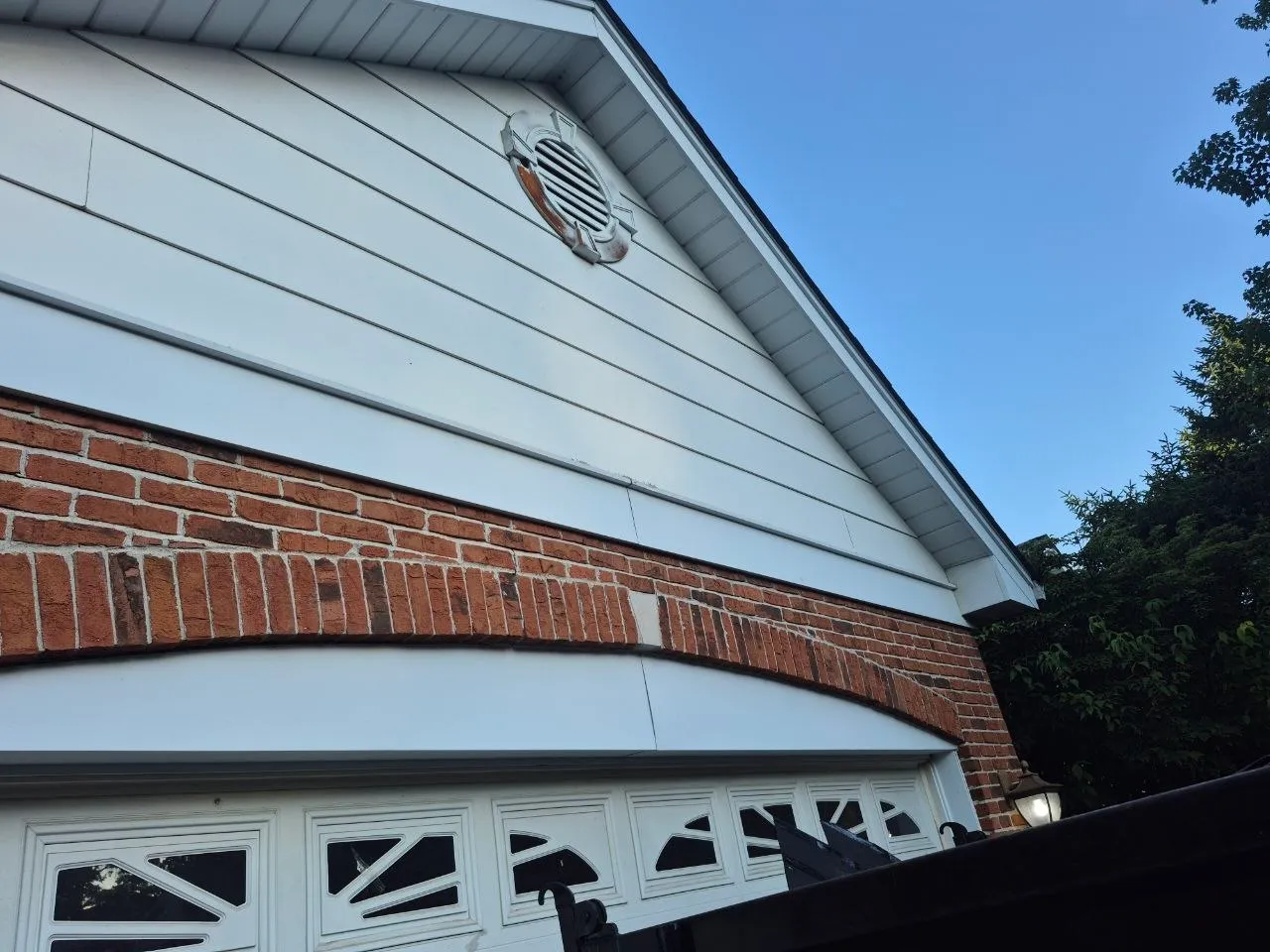
Soffit and fascia are the two parts of your roof nobody thinks about until a squirrel moves in or the paint starts peeling in a way that looks suspiciously like a stain. They live up under the edge of your roof, quietly doing their jobs, and they only get attention when they start failing.
Here's the good news: they're one of the more affordable exterior repairs, and they almost never fail without warning. Here's the rest of the news: if you ignore them, the damage marches inward toward your roof deck and rafters, and that's a much bigger conversation. Let's cover what these parts do, how to tell when they're in trouble, and what it costs to fix in the St. Louis area.
What Soffit and Fascia Actually Do
Fascia is the vertical board that runs along the edge of your roof, right where the roofline ends. It's the flat surface your gutters bolt to, and it's the trim that gives the roof edge a finished look instead of leaving your rafter ends hanging out for everyone to see.
Soffit is the panel underneath the overhang, tucked up beneath the fascia. It's usually vented, and that venting is a big deal. Soffit vents pull fresh air into the attic, which is half of the equation for keeping your attic from turning into a swamp. If you've ever wondered why your attic feels like an oven or why your energy bills spike in July, poor soffit ventilation is often part of the story. We get into that more in our piece on roof ventilation and energy bills.
- Fascia: holds the gutters, seals the roof edge, keeps water and pests out of the rafter cavity
- Soffit: ventilates the attic and closes off the underside of the overhang so critters can't set up shop
Think of fascia as the roof's front bumper and soffit as its air intake. Neither one is glamorous, but the roof runs a lot worse without them.
Signs Your Soffit or Fascia Is Failing
The failures here are usually slow and visible, which is a nice change from the surprise leaks a roof likes to spring on you. Walk the perimeter of your house and look up. You're checking for a few specific things.
- Peeling or bubbling paint on the fascia board, often the first hint of moisture behind it
- Soft, spongy, or crumbling wood when you press on it (a screwdriver that sinks in is a bad sign)
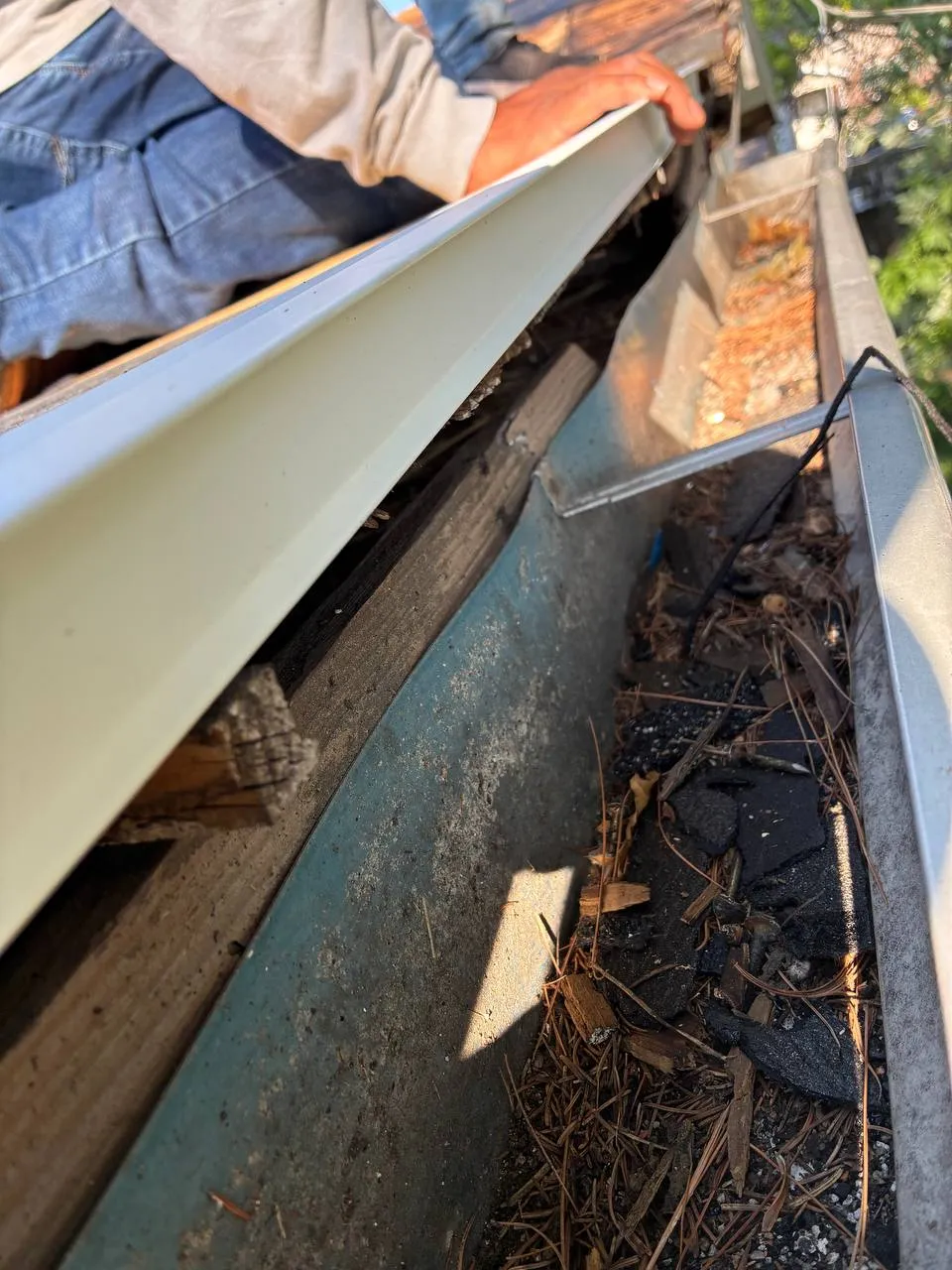
- Dark staining or streaks running down the fascia, usually from an overflowing gutter
- Gaps or holes in the soffit panels where birds, squirrels, or wasps have moved in
- Sagging gutters that are pulling away from the house because the fascia behind them has rotted
- Visible daylight or nesting material peeking through soffit vents
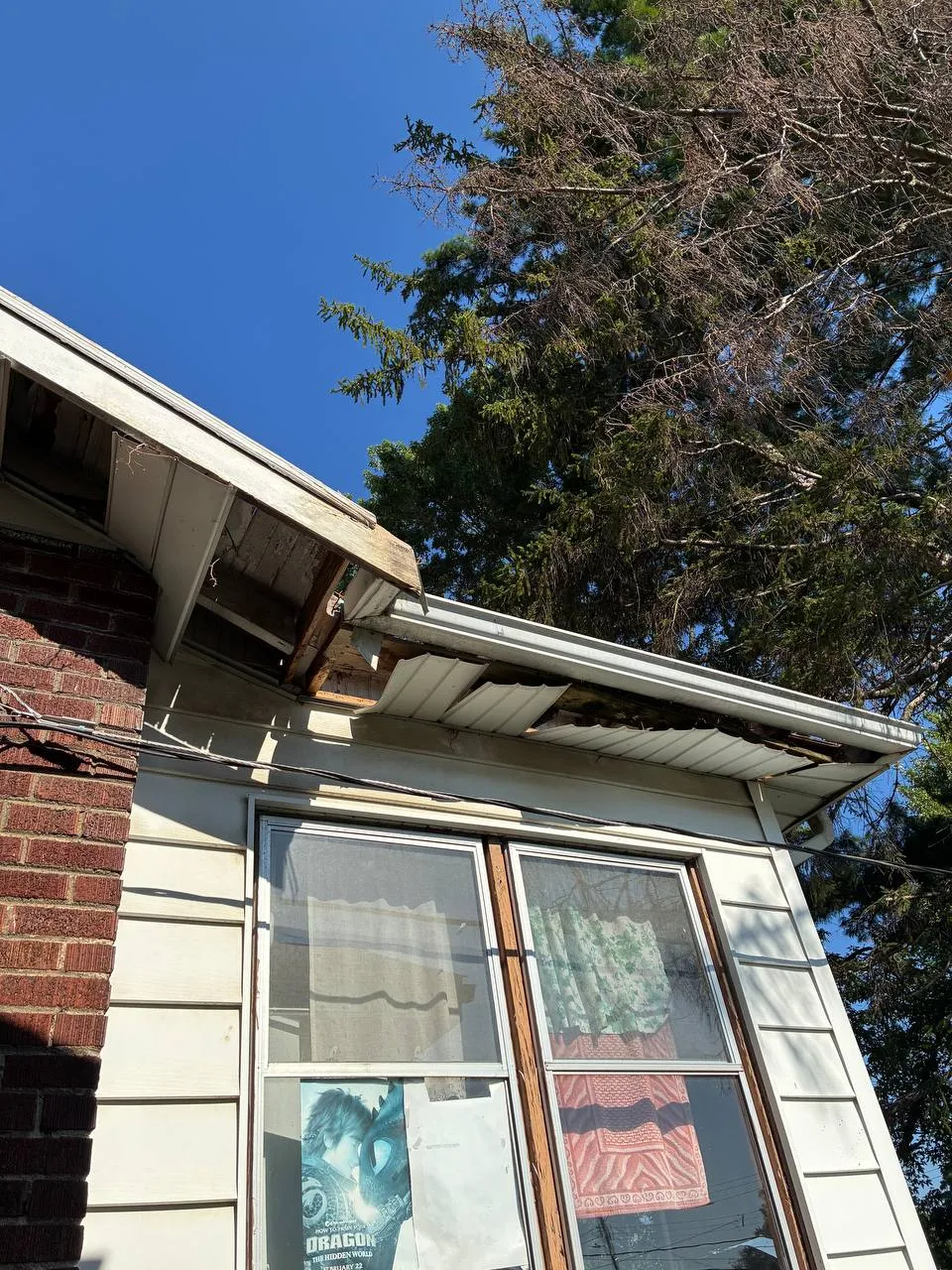
Pest damage deserves its own mention. Squirrels and birds treat a small soffit gap like an open door with a welcome mat. Once they're in the attic, they chew wiring, tear up insulation, and generally lower your property value one acorn at a time. If you see a hole in your soffit, close it before the tenants sign a lease.
Why the Gutters Are Usually the Culprit
Nine times out of ten, rotted fascia traces back to a gutter problem. When gutters clog and overflow, water pours straight down the back of the gutter and onto the fascia board, which soaks it day after day until the wood gives up. That's why fascia rot and gutter trouble tend to show up together.
If your gutters are sagging, clogging, or dumping water where they shouldn't, fix that root cause or you'll be replacing fascia again in a few years. Our gutter repair and replacement guide walks through when to patch versus replace, and if clogs are the ongoing issue, our notes on solving gutter clogging problems cover guards and maintenance that actually help.
Repair or Replace?
The deciding factor is how far the damage has spread. A small soft spot on one section of fascia is a repair. Rot that runs the length of a wall, or damage that's crept into the roof decking behind the fascia, is a replacement.
- Repair makes sense when: damage is localized to one or two boards, the wood is mostly sound, and the gutters behind it are fine
- Replace makes sense when: rot spans multiple sections, pests have hollowed out the wood, or the fascia is failing everywhere because the whole run is the same age
One honest note: patching a single rotted board on an old wood fascia often looks like a patch. New paint next to sun-faded paint rarely blends. If the whole run is tired, doing it all at once usually looks better and costs less per foot than a series of one-off repairs.
Material Options and What They Cost
Soffit and fascia come in a few materials, and the one you pick affects both the price and how often you'll be back up on a ladder with a paintbrush.
- Wood: the traditional look and the cheapest material up front, but it needs regular paint and it rots if water gets to it. It's the stuff most rotted fascia was made of in the first place.
- Aluminum: lightweight, rust-proof, and low maintenance. It's the most common wrap-and-cap choice, where aluminum coil is bent to cover existing or new fascia. Dents if a ladder leans wrong, but otherwise durable.
- Vinyl: affordable, never needs paint, and popular for soffit panels because vented vinyl is easy to install. Can get brittle in extreme cold, and St. Louis winters test that.
- Fiber cement: the tough one. Resists rot, pests, and fire, holds paint for years, and looks like wood. Costs more and is heavier to install. If you're already weighing siding, our comparison of vinyl versus fiber cement siding in Missouri applies to trim too.
Here are typical installed price ranges for the St. Louis area. These cover material plus labor and assume normal single-story to two-story access. Steep pitches, tall walls, and extensive rotted decking behind the boards push costs up.
| Work | Typical installed cost |
|---|---|
| Wood fascia (replace and paint) | $8 - $18 per linear foot |
| Aluminum-wrapped fascia (capping existing board) | $6 - $14 per linear foot |
| Vinyl soffit panels (vented) | $6 - $13 per linear foot |
| Aluminum soffit panels | $8 - $16 per linear foot |
| Fiber cement fascia | $12 - $22 per linear foot |
| Small localized rot repair (one to two boards) | $200 - $600 total |
| Full soffit and fascia replacement, average home (150 - 200 linear feet) | $2,500 - $6,500 |
A single rotted board might run a couple hundred bucks. Waiting until it spreads into the roof deck turns that into a four-figure repair. The math rewards the impatient here.
Why It Gets Done with a Roof or Gutter Job
There's a practical reason soffit and fascia work so often rides along with a roof replacement or gutter install: the ladders, the access, and the crew are already there. Fascia sits right at the roof edge, which means it's exposed and easy to reach the moment old shingles come off and gutters come down.
Doing it as a standalone job means paying for setup, ladders, and mobilization all over again. Bundling it with a roof replacement spreads that overhead across a bigger project, so the per-foot cost usually drops. It also means you're not tearing off brand-new gutters six months later to fix the rotted board they were bolted to.
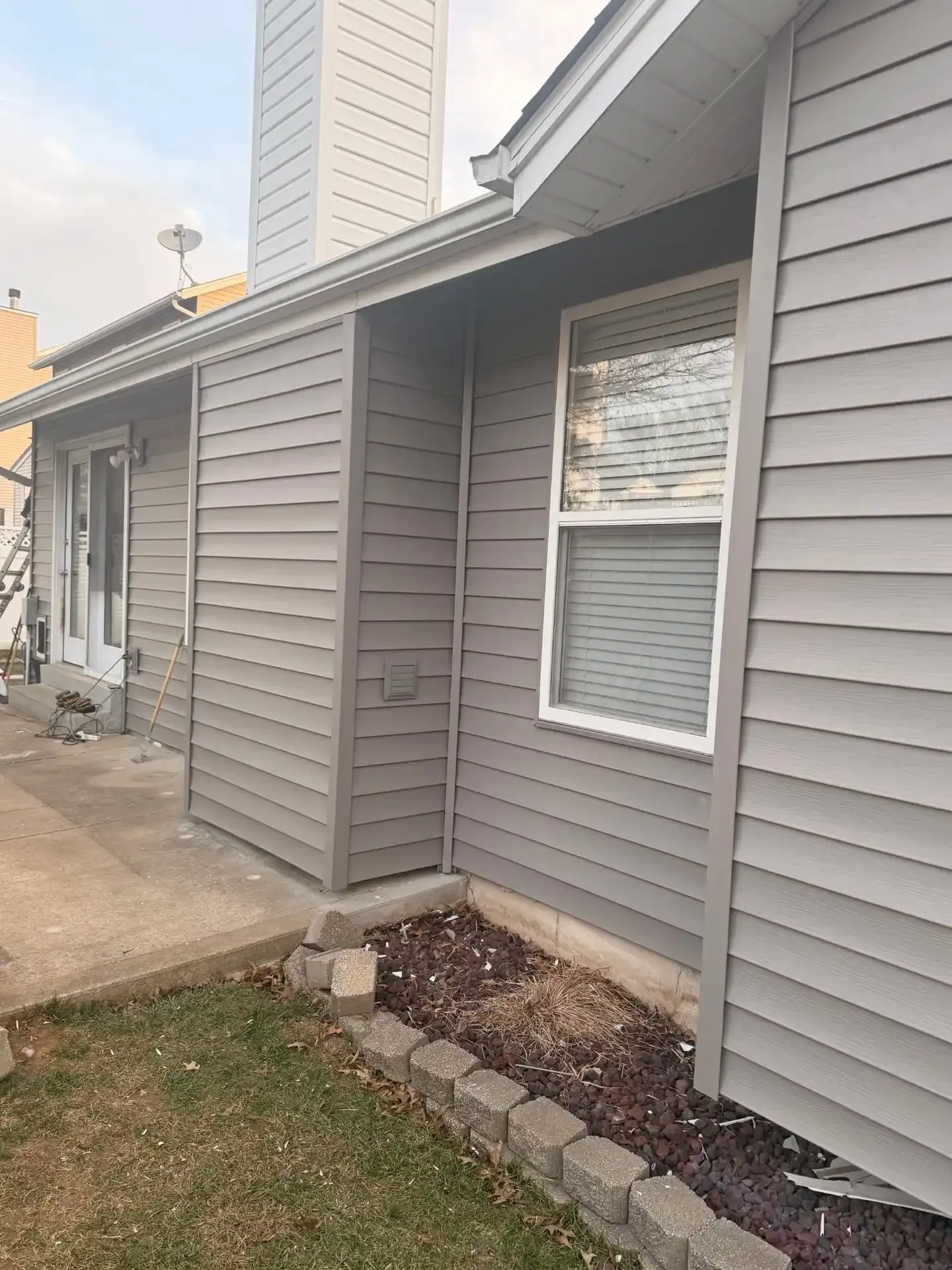
If we're already on your roof, we'll flag any soft fascia or pest-damaged soffit we spot and give you a straight answer on whether it needs doing now or can wait a season. No pressure, and no upselling you a full wrap when a two-board repair will do.
Frequently Asked Questions
The questions we hear most often about soffit and fascia work.
How long does soffit and fascia last?
Wood typically lasts 15 to 25 years with paint and good gutters. Aluminum and vinyl often go 30 to 40 years, and fiber cement can last 50 or more. Water and clogged gutters are what cut those numbers short.
Can I just paint over rotted fascia?
No. Paint hides the problem for a little while, but the wood keeps rotting underneath and the damage spreads. Replace the bad wood, then paint the new board.
Does damaged soffit really affect my energy bills?
Yes. Blocked or damaged soffit vents choke off attic airflow, which traps heat and moisture. That makes your AC work harder in summer and can shorten your roof's life. Our piece on roof ventilation and energy bills has the full picture.
Will insurance cover soffit and fascia damage?
It depends on the cause. Storm or wind damage is often covered; slow rot from years of clogged gutters is considered maintenance and usually isn't. We can help document storm damage for a claim.
How long does a full soffit and fascia replacement take?
For an average home, most jobs finish in one to two days, especially when done alongside a roof or gutter project that's already staged and running.
If you've got peeling paint, a soft board, or an uninvited squirrel, get it looked at before the damage travels. It's a small fix today and a big one if you wait, and we're happy to tell you honestly which one you're looking at.