Yes, a roof leak can cause mold, and it can start fast. Mold can begin growing on wet drywall, insulation, or wood within 24 to 48 hours. You usually see or smell it one to three weeks later. The fix always goes in the same order: stop the leak, dry everything out, then clean up or remove what the mold got into.
The good news is that a leak caught early is usually a small repair and a small cleanup. This guide covers how quickly mold shows up after a roof leak, what it looks like on a ceiling and in an attic, what to do first, what it costs, and what insurance will and will not pay for.
How Fast Does Mold Grow After a Roof Leak?
Mold needs three things: moisture, something to eat, and a little warmth. Your attic and ceiling already have the food (wood, paper-faced drywall, dust) and the warmth. A roof leak supplies the moisture. The EPA's guidance is to dry wet materials within 24 to 48 hours to keep mold from growing.
| Time since the leak started | What is usually happening |
|---|---|
| 0 to 24 hours | Materials are wet but mold has not taken hold. Dry it now and you usually avoid mold completely. |
| 24 to 48 hours | Spores start to grow on damp drywall, insulation, and wood. Nothing is visible yet. |
| 3 to 12 days | Colonies spread. A musty smell often shows up before any spots do. |
| 1 to 3 weeks | Visible spots appear: gray, green, or black specks on the ceiling, attic decking, or rafters. |
| A month or more | Insulation is matted, drywall is soft, and decking may be starting to rot. Cleanup turns into replacement. |
A slow drip is often worse than one big leak. A big leak gets noticed and fixed. A slow one can keep the attic damp for months before a stain reaches the ceiling. That is how a small leak turns into an expensive one.
Early Signs of Mold From a Roof Leak
Mold from a roof leak shows up in two places: on the ceiling and walls below, and in the attic above. Check both.
- A musty, earthy smell: often the first sign, strongest in the attic, a closet, or an upstairs room after rain.
- A water stain with a ring: a yellow or brown circle on the ceiling means water has been there. Fuzzy or speckled growth inside the ring means mold has started.
- Small dark specks on the ceiling: early mold looks like a dusting of gray, green, or black dots, often in a corner or along a wall.
- Bubbling or peeling paint: moisture behind the paint lifts it. Mold is often underneath.
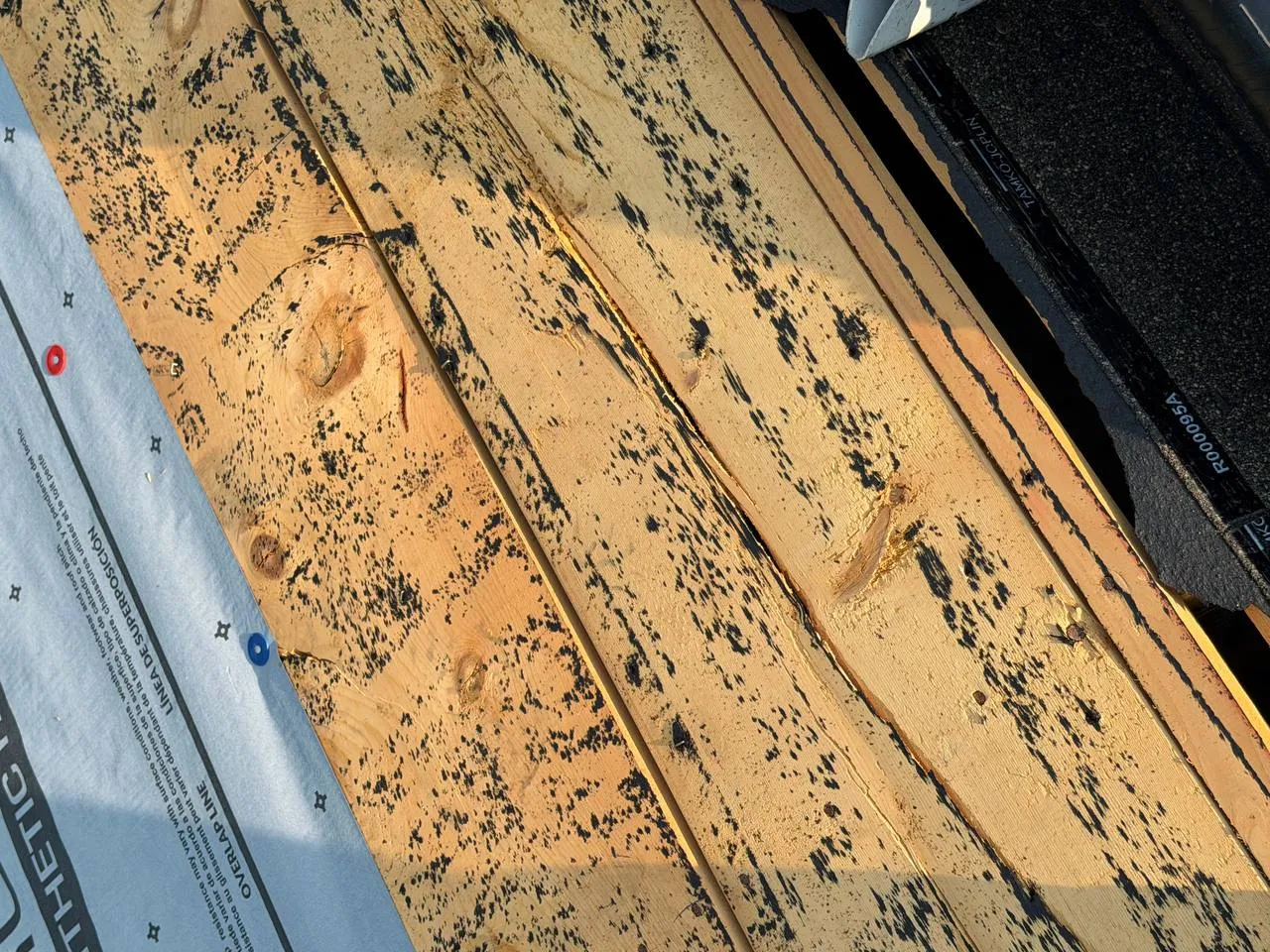
- Dark patches on attic wood: black or gray staining on the underside of the roof deck or on rafters, usually near a vent, chimney, or valley.
- Damp or matted insulation: wet insulation clumps, flattens, and darkens. It holds water against the wood like a sponge.
- Rusty nail tips in the attic: a sign of moisture hanging around, from a leak or from poor ventilation.
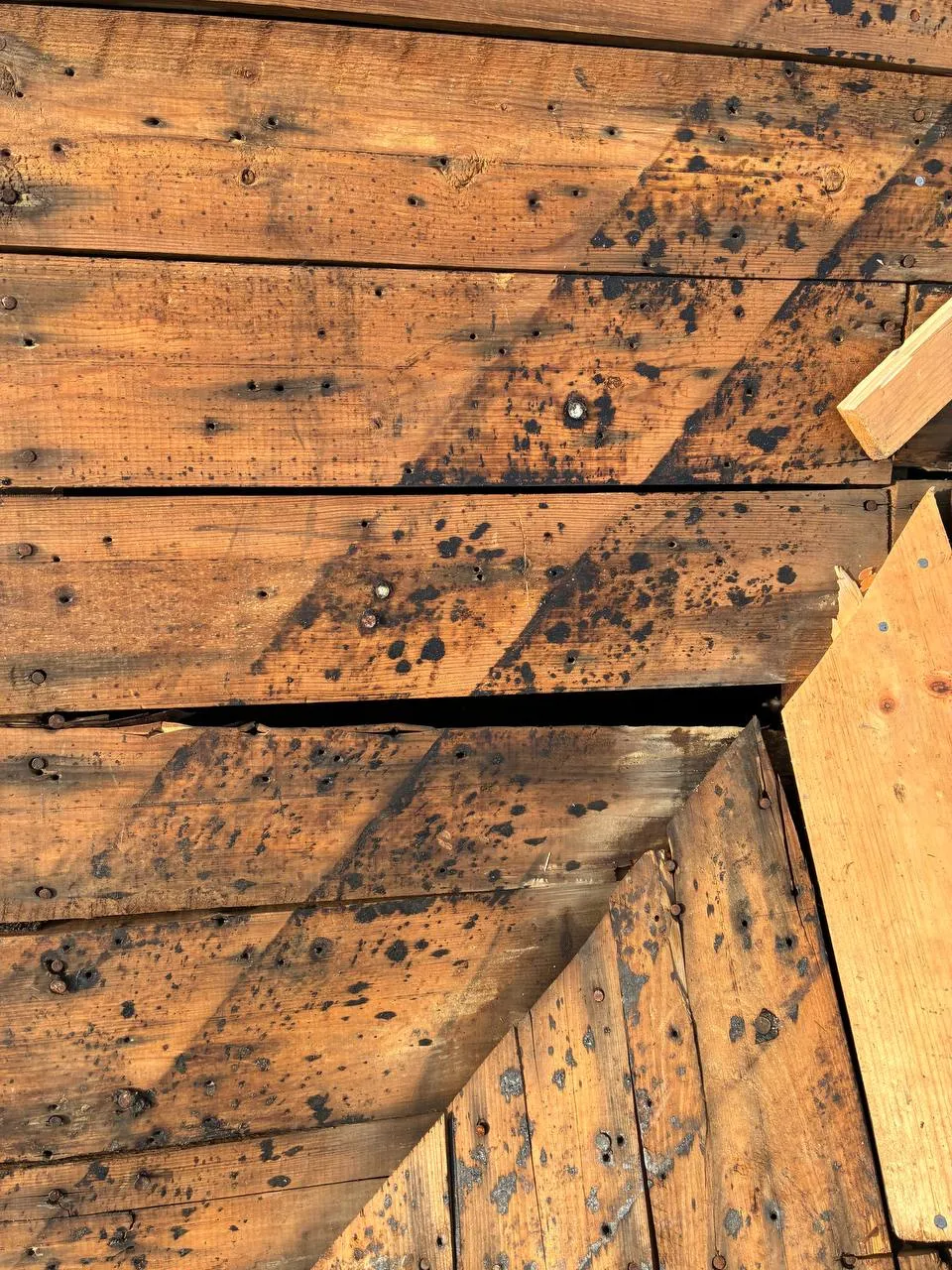
Not every dark spot is mold, and not every mold problem comes from a leak. Attic mold spread evenly across the whole roof deck usually points to poor ventilation, not a hole in the roof. Mold in one area, below a stain, points to a leak. For a full walk-through of what to look for up there, see our guide to the signs of a roof leak in your attic.
Is Mold From a Leaky Roof Dangerous?
It can be, and it depends on who lives in the house and how much mold there is. Mold releases spores into the air. For many people that means a stuffy nose, coughing, itchy eyes, or headaches. For people with asthma, allergies, or a weak immune system, and for young children and older adults, the reaction can be stronger.
"Black mold" gets most of the attention, but color does not tell you much. Many common molds are black, and the EPA's advice is the same for all of them: fix the water problem and remove the mold. You do not need a lab test to know that mold on your ceiling should come out.
The mold is the symptom. The leak is the problem. Clean the mold without fixing the roof and it will be back after the next good rain.
We are roofers, not doctors. If someone in your home has breathing trouble or symptoms that get better when they leave the house, talk to a physician and get the mold handled by a remediation company.
What to Do When a Roof Leak Causes Mold
Work in this order. Each step makes the next one cheaper.
- Stop the water. Put a bucket under the drip and move what you can out of the way. If water is coming in during a storm, follow our emergency roof leak steps and call for a tarp.
- Take photos. Get the stain, the mold, the wet insulation, and the roof from the ground. Date them. Your insurance company will ask.
- Dry it within 48 hours. Run fans and a dehumidifier. Pull out soaked insulation, since it will not dry in place.
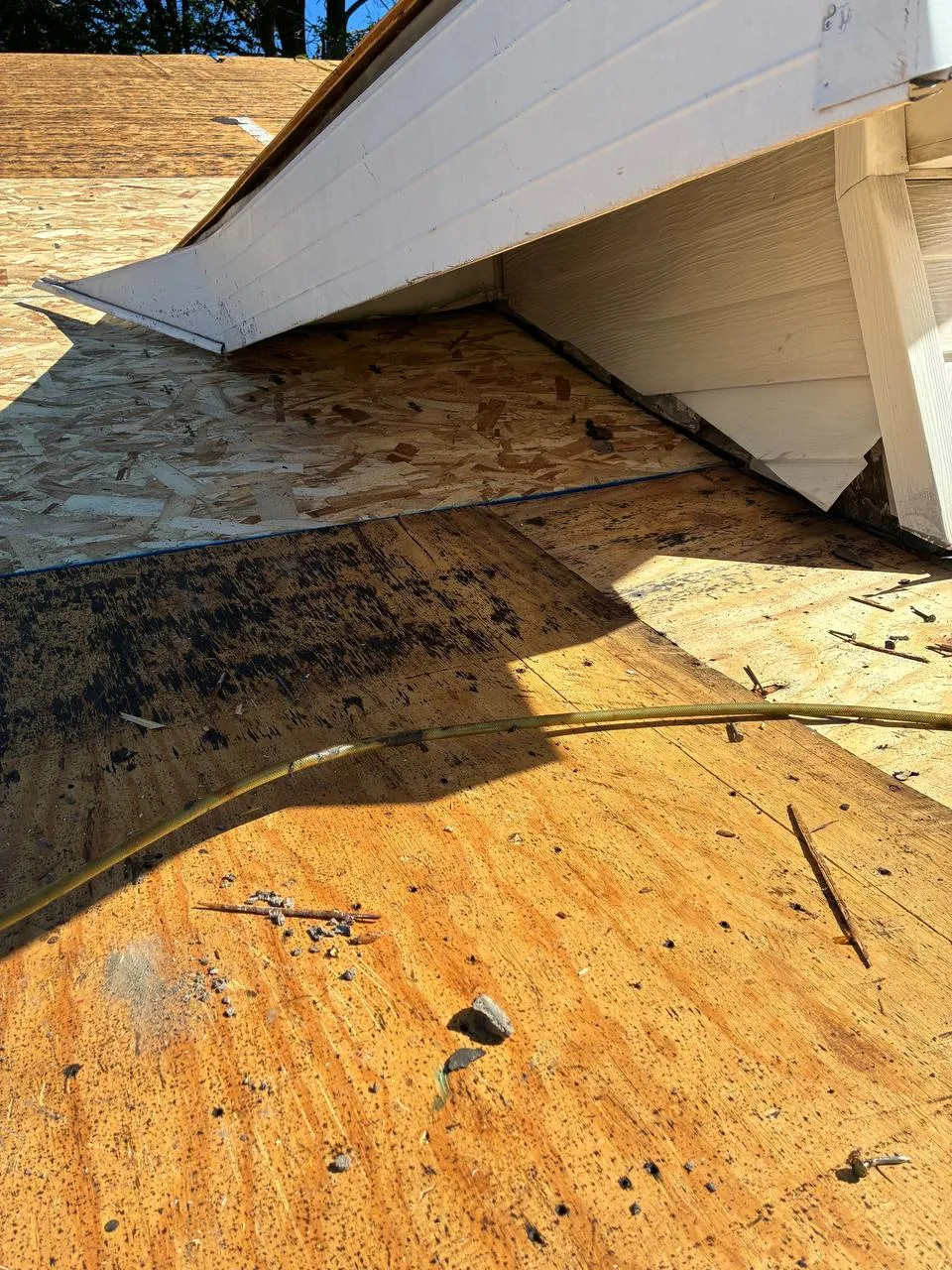
- Get the roof inspected and repaired. Water travels, so the hole is often several feet from the stain. A roofer traces it back to the shingle, flashing, pipe boot, or valley that failed.
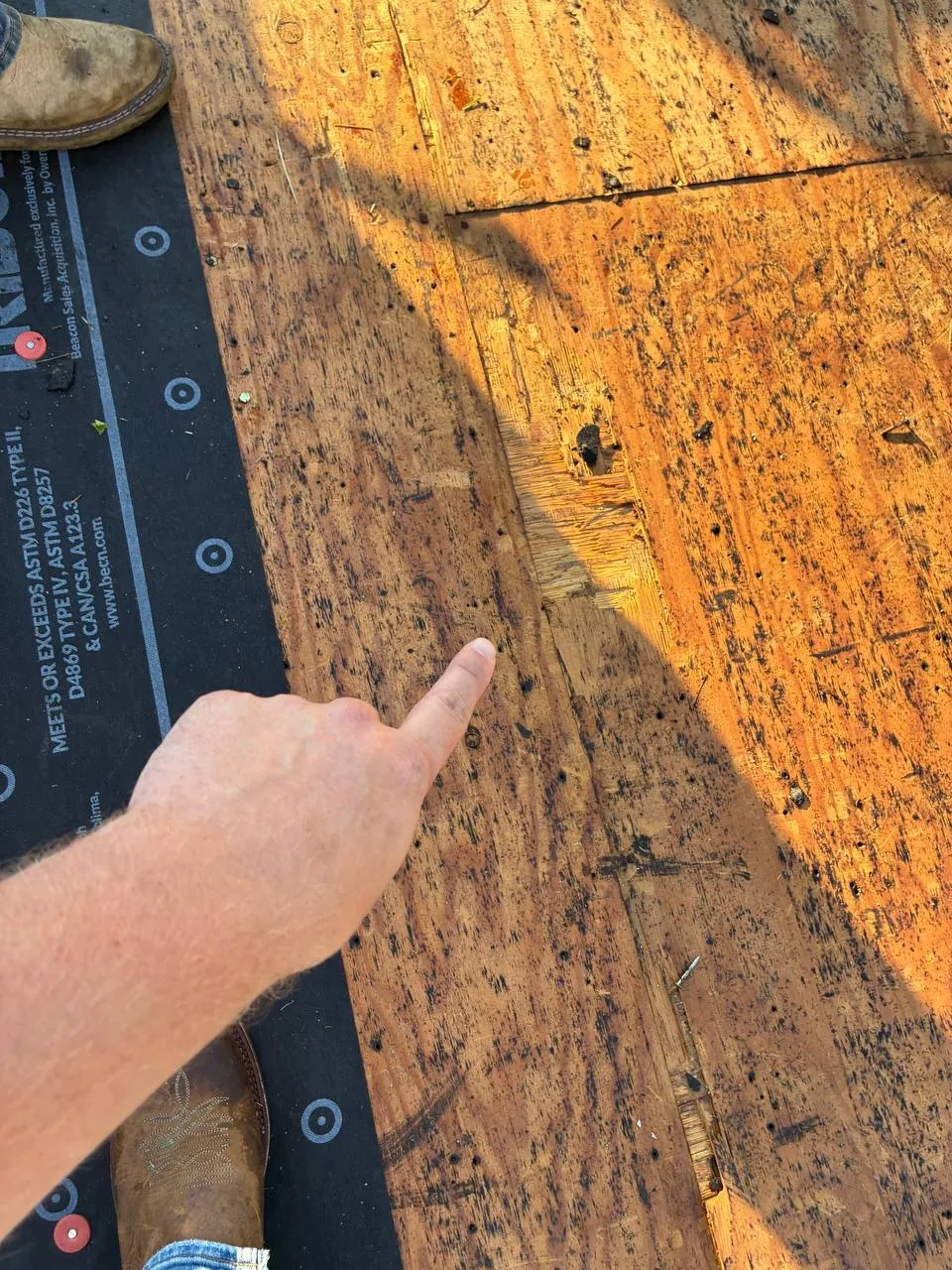
- Clean or remove the moldy material. Small areas can be cleaned. Soaked drywall and insulation get replaced. Moldy decking gets replaced during the roof repair.
- Check it again after the next rain. A dry attic and no new smell means the fix held.
Can you clean it yourself? The EPA's rule of thumb is that a patch smaller than about 10 square feet (roughly 3 feet by 3 feet) is a homeowner-sized job on hard surfaces. Wear gloves, goggles, and an N95 mask, scrub with detergent and water, and dry it fully. Do not paint over mold. Anything larger, anything inside the HVAC system, or anything that keeps coming back is a job for a remediation company.
What It Costs to Fix a Roof Leak and the Mold
There are two bills: the roof repair and the cleanup inside. We do the roof side. Mold remediation is a separate trade, and the ranges below for that work are typical national prices so you know what to expect.
| Work | Typical cost | Who does it |
|---|---|---|
| Roof leak repair (shingles, pipe boot, flashing) | $300 - $1,500 | Roofer |
| Decking replacement, per sheet | $200 - $450 | Roofer |
| Emergency tarp | $200 - $600 | Roofer |
| Small mold cleanup, under 10 sq ft | $50 - $150 in supplies | Homeowner |
| Mold inspection and testing | $300 - $700 | Mold inspector |
| Professional remediation, one ceiling or attic area | $1,200 - $3,500 | Remediation company |
| Whole-attic remediation | $3,000 - $7,500+ | Remediation company |
| Replace wet attic insulation, one section | $300 - $1,000 | Insulation or remediation company |
| Ceiling drywall repair and paint | $400 - $1,500 | Drywall contractor or painter |
The pattern is simple. A leak caught in the first week is usually a few hundred dollars on the roof and a little drying inside. The same leak left for a season can add a remediation bill, new insulation, and a ceiling repair, and the total can pass $5,000. If the decking has been wet long enough to rot, the roofer may also need to talk with you about repair versus replacement.
Does Homeowners Insurance Cover Mold From a Roof Leak?
Sometimes. It comes down to what caused the leak and how long it went on.
- Usually covered: mold that follows a sudden, accidental event the policy covers, such as hail, wind, or a fallen limb that opens the roof.
- Usually not covered: mold from a slow leak, an old worn-out roof, or maintenance that was put off. Insurers call this gradual damage.
- Often capped: many policies limit mold coverage to a set amount, commonly $1,000 to $10,000, even when the cause is covered. Some offer more as an add-on.
- Time matters: most policies expect you to act quickly to limit the damage. Photos, a tarp, and a prompt repair all help your claim.
Every policy is different, so read the mold or fungus section of yours or ask your agent. If a storm caused the leak, our roof insurance claims guide walks through the process, and we can document the roof damage for your adjuster.
How to Keep It From Coming Back
- Fix the source, not just the stain. A patch of sealant over a failed pipe boot buys a season. Replacing the boot fixes it.
- Look in the attic twice a year and after big storms. Bring a flashlight and check around vents, the chimney, and valleys. Our roof inspection checklist lists what to look for.
- Keep gutters clear. Backed-up gutters push water under the roof edge and rot the decking there.
- Make sure the attic can breathe. Good intake and exhaust ventilation carries moisture out before it settles on the wood.
- Vent bathroom and dryer fans outside, not into the attic.
- Replace failing flashing when you reroof. Most leaks start where the roof meets something else: a chimney, a wall, a skylight.
For mold that grows on the outside of the roof or across the whole attic, which is a different problem with different causes, see why your roof has mold and how to prevent it.
Roof Leak and Mold: Common Questions
Can a roof leak cause mold?
Yes. A roof leak wets drywall, insulation, and wood, and mold can start growing on those materials within 24 to 48 hours. It is one of the most common results of a leak that goes unrepaired.
How long does it take for mold to grow after a roof leak?
Growth can begin in 24 to 48 hours if the material stays wet. Most homeowners see spots or notice a musty smell one to three weeks after the leak starts.
What does early stage mold on a ceiling from a roof leak look like?
Small gray, green, or black specks, often inside or along the edge of a yellow or brown water stain. The paint may bubble or peel, and the spot may feel soft or damp to the touch.
Is mold from a leaky roof dangerous?
It can be. Mold can cause congestion, coughing, and irritated eyes, and it is harder on people with asthma, allergies, or weak immune systems. Any mold growing indoors should be removed and the leak that feeds it repaired.
Can a leaky roof cause black mold?
Yes. The mold people call black mold grows on materials that stay wet for a long time, like drywall and wood under a slow leak. Many other molds are also dark in color. The response is the same for all of them: stop the water and remove the mold.
Will mold go away once the roof leak is fixed?
No. Fixing the leak stops mold from spreading, and dry mold goes dormant, but it stays in the material and can start growing again when moisture returns. It still needs to be cleaned off or removed.
Does homeowners insurance cover mold from a roof leak?
Often yes when the leak came from a sudden covered event like a storm, and usually no when it came from a slow leak or an aging roof. Many policies also cap mold coverage, commonly between $1,000 and $10,000.
Who do I call first, a roofer or a mold company?
Call a roofer first. Until the leak is found and stopped, any cleanup is temporary. Once the roof is dry, a remediation company can treat or remove what the mold reached.
Find the Leak Before the Mold Spreads
If you have a ceiling stain, a musty attic, or spots you are not sure about, we will come look. We will find where the water is getting in, show you photos, and give you a written price for the repair. If the roof is fine and the moisture is coming from somewhere else, we will tell you that too. Schedule a free roof inspection and we will get it on the calendar.